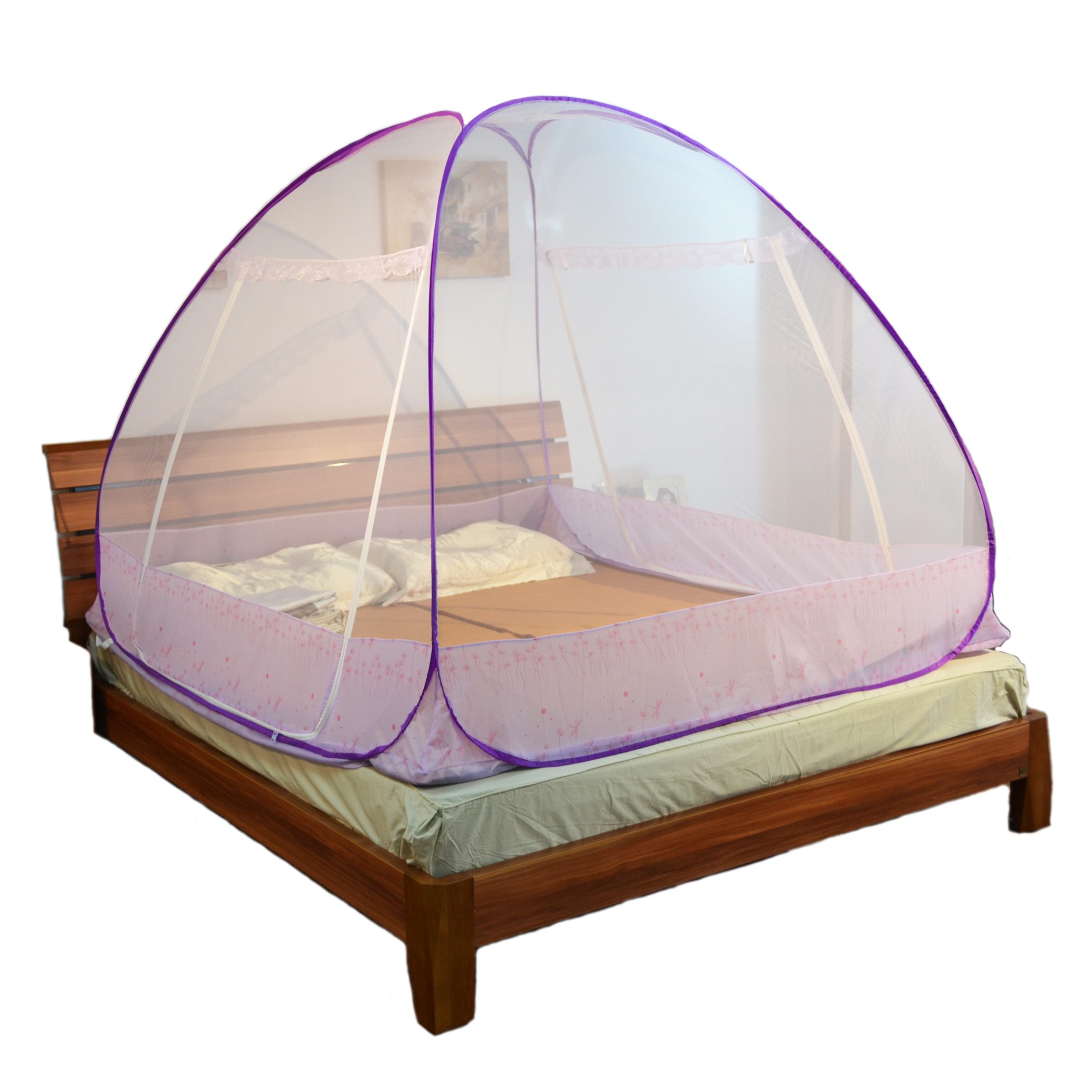
Vector-borne diseases continue to threaten millions across tropical and subtropical regions. Moving into 2026, climate events and regional conflicts trigger rapid population displacement. Emergency health teams face an immediate challenge: deploying malaria defense tools that set up in seconds without trees, posts, or ceiling hooks.
This reality has sparked explosive demand for pop-up long-lasting insecticidal nets across humanitarian relief agencies, defense forces, and national health ministries. However, sourcing a reliable foldable pop mosquito net supplier is filled with compliance risks. Procuring uncertified canopy units exposes field teams to rapid tear failures, chemical toxicity risks, and catastrophic malaria transmission spikes.
As veteran manufacturers like YAHE LN have proven over decades of field deployment, sourcing life-saving bed nets requires strict technical scrutiny. Buyers must know how to audit manufacturing assets, confirm laboratory performance, and verify international credentials before committing institutional funds.
1. Demystifying LLIN Certifications: Why WHO PQ is Non-Negotiable in
2026
The global market features thousands of consumer-grade pop-up canopies. Most are treated with basic surface sprays that wash out after three rinses. These commercial items do not meet humanitarian or clinical standards for malaria control programs.
A certified foldable pop mosquito net supplier must provide World Health Organization Prequalification (WHO PQ). WHO PQ status is the non-negotiable benchmark for institutional tenders managed by the Global Fund, USAID, and national ministries of health. It guarantees that the netting maintains lethal vector efficacy throughout its stated operational lifespan.
To avoid non-compliant shipments, procurement teams should require the following documentation:
WHO PQ Listing: Active registration under vector control prequalification directives, verifying chemical formulation stability.
Integrated Management Certifications: Current ISO 9001 (Quality Management), ISO 14001 (Environmental Standards), and ISO 45001 (Occupational Health and Safety) audits.
Independent Laboratory Validation: Full bioassay and chemical content reports from accredited facilities, such as the French TEC Laboratory or certified GLP (Good Laboratory Practice) institutions.
YAHE LN achieved WHO PQ certification back in 2015. Through proprietary chemical integration technology, our pop up long lasting insecticidal net designs withstand more than 21 standard WHO-wash cycles. The insecticide remains biologically active for 3 to 5 years of continuous field use, protecting vulnerable individuals in harsh environments.
2. Engineering the "Pop-Up" Advantage: Durability Meets Insecticidal Tech
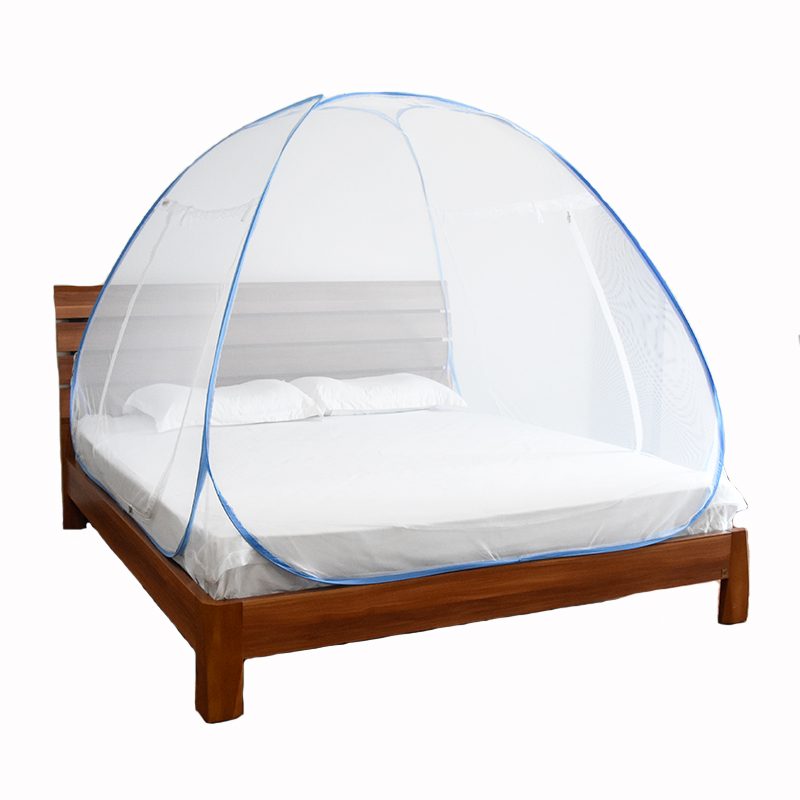
Standard rectangular and conical nets remain static once hung. In contrast, self-erecting shelters experience continuous mechanical stress. Every deployment, collapse, packing cycle, and transport shift strains both the textile and the structural frame.
When selecting a foldable pop mosquito net supplier, technical teams must examine how structural engineering integrates with pesticide retention chemistry. A failure in the frame can puncture the net, while poor yarn treatment leads to rapid chemical loss.
Frame Resilience and Memory Steel Mechanics
Low-tier manufacturers frequently utilize brittle carbon-steel wire to cut production costs. These cheap frames warp, rust in humid field conditions, or snap after fewer than twenty folding cycles. A snapped wire cuts through mesh instantly, leaving users unprotected.
High-performance designs use high-tensile, galvanized memory steel or high-density polymer fiberglass frames. These materials must undergo mechanical fatigue testing, demonstrating the ability to handle over 1,000 rapid folding cycles without torsion deformation or joint breakage.
Molecular-Level Chemical Binding
A pop-up frame creates localized surface tension across the netting. If an insecticide is merely sprayed onto finished polyester yarn, mechanical abrasion will strip the active ingredient from the fibers in weeks.
Professional production requires a dedicated chemical preparation environment. YAHE LN operates a 200-square-meter standardized chemical formulation workshop. Using proprietary binding techniques and national invention patents, the insecticide incorporates directly into the polymer matrix or binds to fibers via wash-resistant cross-linkers.
This process ensures precise chemical distribution across every square centimeter of the net, even at stress points along the pop-up frame seams.
3. Evaluating Manufacturing Capacity: Beyond Just a "Trading Middleman"
Global supply networks face constant disruptions, including port bottlenecks, raw material shortages, and sudden border closures. Working through domestic trading intermediaries or assembly-only workshops introduces severe procurement risks. Middlemen rarely control production timelines, yarn extrusion quality, or chemical bath consistency.
For large-scale emergency tenders, institutional buyers must partner with an authentic, vertically integrated certified LLINs manufacturer. Complete supply chain visibility—from raw polymer granulate to packaged carton—is vital for bulk mosquito net procurement 2026 operations.
Auditing manufacturing capacity requires checking four key operational stages:
Yarn Extrusion & Weaving: Does the factory spin its own monofilament or multifilament polyester/polyethylene yarns? In-house weaving prevents fabric weight fluctuations.
Standardized Treatment Lines: Does the factory control its own dipping, heat-setting, and curing lines with digital chemical dosing controls?
Automated Cut and Sew: Can the stitching department handle heavy-gauge reinforcement webbing along spring-steel channels?
Batch-Level Quality Control: Does the plant have internal drop-weight, burst-strength (ISO 13938), and gas chromatography testing capabilities?
YAHE LN eliminates intermediary risks through complete operational scale. Our primary production base spans 66,700 square meters (over 100 acres), representing a total facility investment exceeding 100 million RMB and generating an annual production value over 200 million RMB.
Our daily output exceeds 100,000 finished mosquito nets and 500,000 square meters of high-density textile fabric. This vertical infrastructure guarantees rapid surge production during disease outbreaks, military mobilizations, and natural disasters.
4. Track Record with Global Relief Agencies (UNICEF, UNHCR)
The truest test of an industrial manufacturer is its historical performance under humanitarian pressure. Humanitarian relief mosquito nets face harsh transport channels, monsoonal weather, and aggressive daily wear in refugee camps and conflict zones.
When reviewing potential suppliers, request audited proof of completed deliveries to major aid agencies. A qualified foldable pop mosquito net supplier understands the rigorous logistics, third-party pre-shipment inspections (such as SGS or Bureau Veritas), and specialized palletization requirements demanded by international relief organizations.
YAHE LN has specialized in eco-friendly vector control solutions since 2003. Over the past two decades, we have served as a trusted long-term designated supplier for global entities, including the United Nations Children's Fund (UNICEF) and the United Nations High Commissioner for Refugees (UNHCR).
Our products protect displaced families across Sub-Saharan Africa, Southeast Asia, and Latin America. We navigate complex regional delivery routes, customs protocols, and urgent emergency fulfillment schedules while maintaining total product consistency across every shipment.
5. 2026 Buyer’s Checklist: Step-by-Step Guide to Vetting Suppliers
Before releasing milestone payments or finalizing contractual agreements for foldable LLINs, procurement teams should follow this systematic verification checklist:
Step 1: Check the Active WHO PQ Directory
Do not accept scanned PDF certificates provided via email. Cross-reference the supplier's corporate name, manufacturing facility, and specific product model against the official, publicly updated WHO Prequalification of Vector Control Products list.
Step 2: Request Full TEC / GLP Lab Documentation
Demand complete, unredacted laboratory test results from the French TEC Laboratory or an equivalent GLP-certified facility. Confirm that the mortality rate of target mosquitoes (e.g., Anopheles gambiae) remains above 80%, and knock-down rates exceed 95% after 20 standardized washings.
Step 3: Audit Factory Capacity and Lead Times
Review the plant's true daily net output and square-meter weaving capacity. Ensure the factory maintains sufficient raw polymer and spring wire reserves to handle sudden order expansions without subcontracting to unverified third parties.
Step 4: Conduct Physical Fatigue and Tear Tests on Pre-Production Samples
Request physical production samples. Subject the structural steel to repeated collapse testing (minimum 50 cycles upon receipt). Inspect stitching lines around the tension ring to verify that double-needle lockstitches reinforce the net against friction tears.
Frequently Asked Questions (FAQs)
Q1: What makes a pop up long lasting insecticidal net different from a standard treated pop-up net?
A1: Standard treated pop-up nets usually rely on superficial post-production insecticide sprays that wash off after 2 to 3 basic cleanings. A true long-lasting insecticidal net incorporates the active pesticide directly into the yarn polymer matrix or bonds it with advanced wash-resistant resins. This allows the net to survive at least 20 to 21 standard washes and provide 3 to 5 years of active protection without retreatment.
Q2: Why is memory steel wire preferred over regular steel in foldable mosquito nets?
A2: Regular carbon wire bends easily under stress, rusts quickly in humid climates, and can snap, puncturing the netting. High-grade galvanized memory steel wire bends and pops open repeatedly without losing its circular tension. It also resists oxidation, ensuring the pop-up frame remains intact through years of daily field use.
Q3: How do institutional procurement teams verify a supplier's WHO PQ status?
A3: Procurement officers can verify claims directly through the World Health Organization Prequalification Vector Control website. The directory lists approved manufacturers, trade names, and manufacturing sites. Authentic manufacturers like YAHE LN will also provide verifiable PQ listing codes and corresponding inspection reports upon request.
Q4: Can certified foldable pop mosquito net suppliers handle custom dimensions for field cots?
A4: Yes. Fully integrated manufacturers can tailor pop-up dimensions to match field stretchers, humanitarian camp cots, military bunks, or personal ground mats. Customization includes adjusting door access positions, adding heavy-duty floor skirts, and reinforcing base panels against rocky terrain.
Q5: What lead times should buyers expect for bulk humanitarian relief mosquito nets?
A5: Lead times depend heavily on the manufacturer's vertical scale. Trading companies often require 60 to 90 days for medium orders. Vertically integrated factories with daily outputs of 100,000 units can often complete container-level emergency orders within 15 to 30 days, including custom labeling and export packing.
Secure Your 2026 Supply Chain with YAHE LN
Sourcing institutional vector control equipment requires working with proven production partners. A failure in net durability or insecticidal efficacy directly impacts human safety in malaria-endemic zones. Choosing an experienced, certified foldable pop mosquito net supplier ensures field teams receive dependable, compliant protective equipment.
YAHE LN provides the manufacturing scale, patented chemical integration, and international agency experience required for modern vector control programs. Whether planning nationwide institutional distribution or responding to immediate humanitarian emergencies, our engineering and production teams stand ready to support your mission.
Take the next step in securing your vector control pipeline: Contact the technical sales team at YAHE LN today to request official WHO PQ documentation, comprehensive GLP laboratory reports, or custom production samples for your 2026 procurement evaluations.