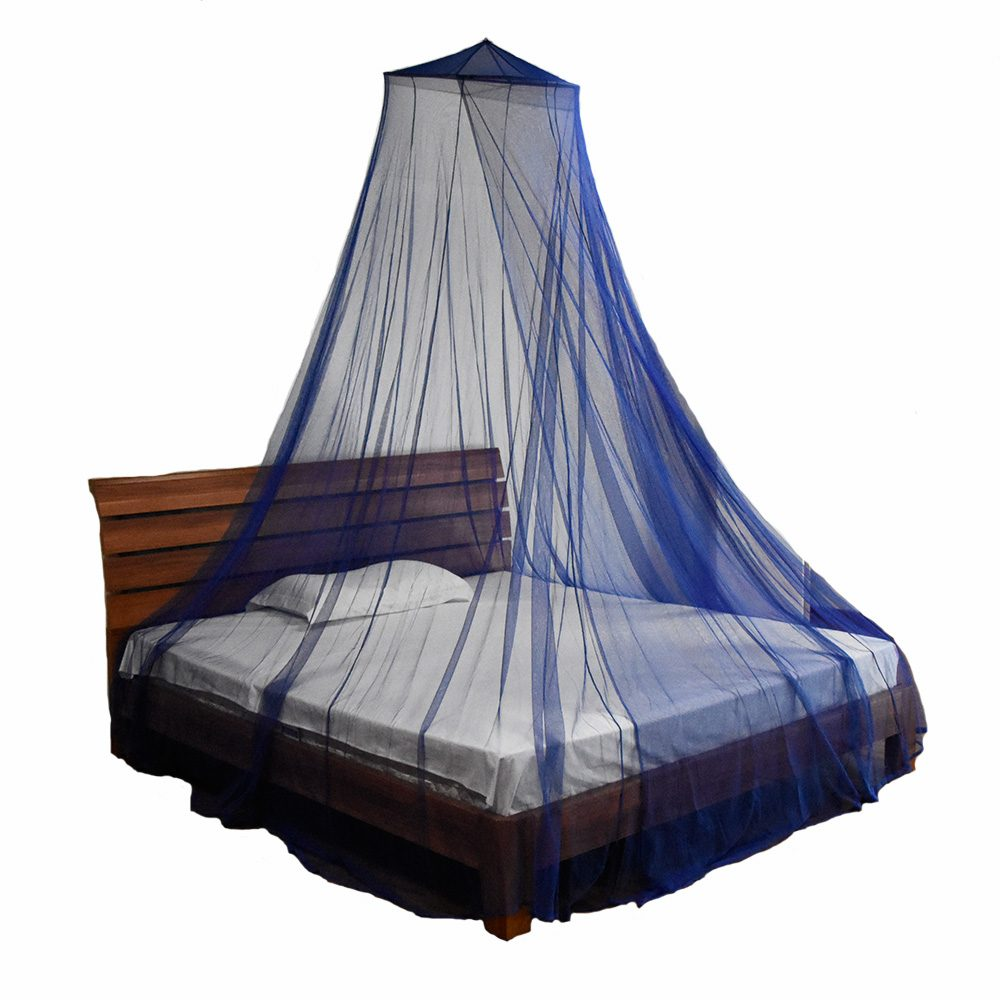
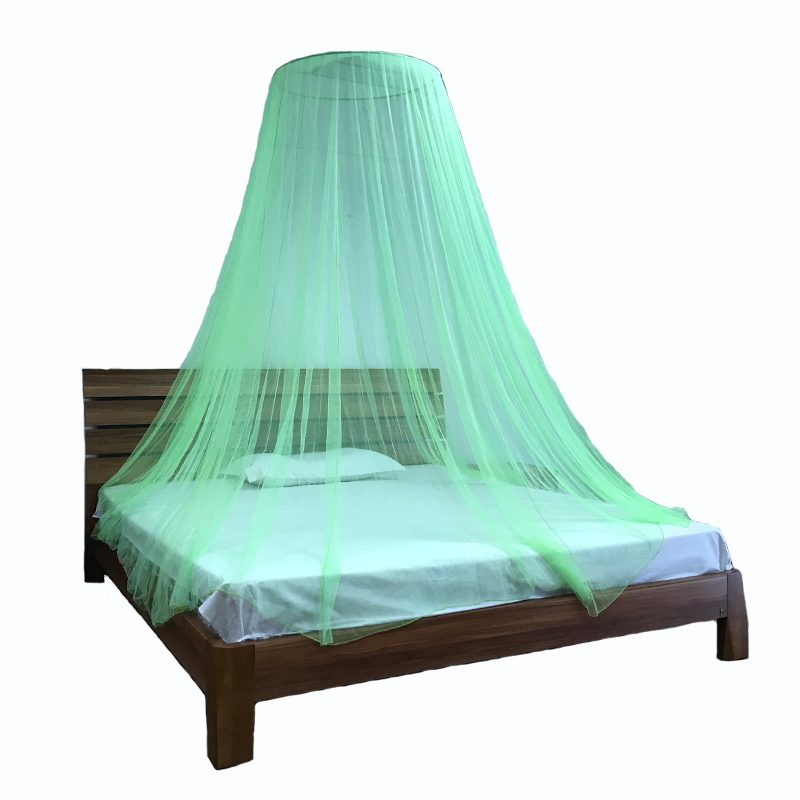
Global public health initiatives rely heavily on physical barriers to control vector-borne diseases such as malaria, dengue, and lymphatic filariasis. Among these barriers, conical or circular mosquito nets have emerged as a preferred design for specific demographic and environmental conditions. Unlike rectangular nets, which require multiple suspension points, a circular net hangs from a single overhead hook, making it highly suitable for rural dwellings and temporary shelters where structural support beams are limited.
Within the international supply chain, the demand for blue and green variants of these nets remains consistently high. This preference is driven by environmental conditions, user habits, and maintenance requirements in tropical regions. Understanding the manufacturing parameters, dye chemistry, insecticidal treatments, and shipping logistics associated with the Blue / Green circular mosquito net export market is necessary for procurement officers, non-governmental organizations, and global distributors seeking reliable supply partners like Yamei.
1. Engineering Specifications of Conical Netting
The performance of a circular mosquito net depends on its physical structural integrity. Manufacturers must balance the weight of the fabric against its tensile strength to ensure long-term durability in challenging environments. The primary raw materials utilized in this sector are polyester and high-density polyethylene (HDPE).
Polyester nets are typically constructed from multifilament yarns, which provide a soft texture and high drapability. These yarns are measured in Denier (D), representing the mass in grams per 9,000 meters of fiber. HDPE nets, conversely, utilize monofilament fibers, which offer superior physical toughness and natural resistance to tearing, though they have a stiffer texture. The physical properties of these fabrics are governed by several key parameters:
Yarn Denier: Standard specifications for polyester nets range from 75D to 100D, while some heavy-duty military or rugged humanitarian programs specify 150D. High denier values directly correlate with increased resistance to mechanical wear.
Mesh Size: The density of the knit is defined by the number of holes per square inch. A standard mesh count of 156 holes/inch² (typically a 12x13 grid pattern) is utilized. This configuration balances vector exclusion with airflow, preventing heat retention inside the sleeping area.
Bursting Strength: Measured using pneumatic test methods (such as ISO 13938-2), polyester netting must withstand a minimum pressure of 250 kPa, while HDPE netting must exceed 350 kPa to prevent tearing under tension.
Dimensional Stability: Fabrics must undergo controlled heat-setting processes during manufacturing. This ensures that thermal shrinkage during washing remains below 5%, maintaining the protective envelope of the net over its lifecycle.
2. Color Science and Pigment Stability in Regional Markets
The choice of blue and green coloration in the blue / green circular mosquito net export sector is not merely aesthetic; it is rooted in practical field application. In many rural communities, cooking is conducted indoors using biomass fuels, generating soot and airborne dust. White nets show accumulation of dirt rapidly, which prompts users to wash them more frequently than recommended. Frequent washing can prematurely degrade the active insecticidal ingredients applied to the fibers.
Blue and green pigments effectively mask soot, dust, and organic stains, extending the intervals between washes and preserving the long-term efficacy of the insecticidal treatment. The selected colorants must also comply with strict toxicity and environmental safety guidelines. The dyeing process must achieve high colorfastness ratings to prevent pigment transfer onto human skin or bedding when exposed to perspiration, friction, or humidity.
Colorfastness is assessed using standardized testing protocols, such as ISO 105-C06 (colorfastness to domestic washing) and ISO 105-E04 (colorfastness to perspiration). Manufacturers must achieve a minimum grade of 4 on the grey scale. To maintain consistent color output across high-volume export batches, computerized spectrophotometers are used to measure color coordinates within the CIELAB color space, ensuring that shade variations between manufacturing runs remain within a tight delta-E tolerance.
3. Insecticide Impregnation and Vector Control Standards
For nets classified as Long-Lasting Insecticidal Nets (LLINs), the integration of active chemical agents is a primary manufacturing phase. These nets are treated with pyrethroids, such as deltamethrin, alpha-cypermethrin, or permethrin, which are safe for human contact but highly lethal to target insect vectors. The method of chemical application depends on the polymer type:
For polyester netting, the insecticide is bound to the finished fabric using a specialized polyurethane binder system. This coating technique ensures that the chemical is released slowly over time, migrating to the surface of the fibers as it is rubbed or washed off. For polyethylene nets, the insecticide is incorporated directly into the polymer melt prior to the fiber extrusion process, allowing the active ingredient to diffuse continuously through the monofilament structure.
Compliance with international testing regimes is verified through chemical analysis and biological assays:
Active Ingredient Content: Verified using Gas Chromatography (GC) or High-Performance Liquid Chromatography (HPLC) to confirm that the pesticide concentration matches targeted specifications (e.g., 55 mg/m² for deltamethrin).
Wash Retention: Testing involves subjecting the netting to up to 20 standardized washes according to CIPAC MT 190 protocols, after which the net must still retain sufficient insecticide to cause target vector mortality.
Bioefficacy Testing: Conducted using WHO-approved cone tests where susceptible strains of Anopheles mosquitoes are exposed to the netting for three minutes. A knock-down rate of over 95% or a mortality rate of over 80% after 24 hours confirms sufficient performance.
4. Logistics, Ring Integrity, and Packing Strategies
Efficient shipping configuration is a major factor in determining the cost-effectiveness of large-scale international distribution campaigns. The circular design presents unique packaging challenges due to the suspension ring at the apex of the net. The design of this ring determines how tightly the finished product can be packed.
Two primary ring styles are utilized in the manufacturing process. Flexible tension-steel rings can be folded into a figure-eight configuration, collapsing the ring diameter from 60 cm down to approximately 20 cm. This enables high-density packaging. Rigid plastic or bamboo rings, while simpler to manufacture, cannot be folded and require flat-box packaging, which increases shipping volume. Most high-volume procurement programs specify flexible steel rings to optimize container loading capacity.
During the final packing stage, nets are compressed using heavy-duty hydraulic baling presses. Individual nets are sealed in heat-sealed polyethylene bags with descriptive insert sheets, and then packed into compressed woven polypropylene bales. A standard bale containing 50 to 100 circular nets is compressed to minimize air pockets. This packing efficiency allows a standard 40-foot High Cube (40HC) ocean container to hold up to 80,000 folded circular nets, lowering the landed freight cost per unit.
5. Managing Production and Quality Control Challenges
Large-scale manufacturing of insecticidal nets involves complex supply chain and quality control steps. Maintaining consistency across thousands of production units requires rigorous quality assurance protocols at every stage of the manufacturing process.
One common issue in warp knitting is tension variation across the loom, which can create structural weak points or irregular mesh dimensions. This is addressed through automated tension control systems that continuously monitor the feed yarn. In the dyeing and finishing stage, chemical baths must be monitored for temperature and pH levels to prevent uneven dye penetration or variations in the binding of the insecticidal chemical.
Labeling compliance is also required for smooth customs clearance and field tracking. Export shipments require clear textile labels sewn into each net, displaying the brand name Yamei, manufacturing batch numbers, fiber content, insecticide concentration, and wash instructions. This traceability allows procurement organizations to monitor inventory performance and verify authenticity throughout the distribution network.
6. Procurement Collaboration with Yamei
Yamei manages integrated production facilities designed to handle large-scale orders for international distribution. From yarn extrusion and warp knitting to chemical treatment, dyeing, and compression packaging, every step is conducted under a unified quality management system. This vertical integration allows for precise control over chemical dosing, physical dimensions, and color consistency across high-volume production schedules.
Our manufacturing capacity is optimized to align with the schedules of regional health authorities, non-governmental aid groups, and commercial distributors. By maintaining strict control over our manufacturing processes, we ensure that every shipment of circular nets complies with international safety and performance standards.
For detailed inquiries, custom sizing requirements, or to request product samples for regulatory evaluation, please submit your specifications to our B2B export division. Our engineering team is prepared to assist you in configuring product parameters to meet your local requirements and distribution timelines.
Frequently Asked Questions
Q1: What are the standard dimensions for circular mosquito nets in bulk procurement?
A1: Standard export dimensions feature a top ring diameter of 56 cm to 65 cm, a total height of 220 cm to 250 cm, and a bottom circumference of 1050 cm to 1250 cm. These dimensions ensure complete coverage of double-sized sleeping areas with sufficient excess fabric to tuck securely under the mattress.
Q2: How does the durability of polyester circular nets compare to polyethylene variants?
A2: Polyester nets (typically 75D to 100D multifilament) offer a softer texture, lighter weight, and better drape, which is highly preferred for urban and semi-urban residential use. Polyethylene nets (monofilament) feature higher tensile and bursting strength, making them more resilient against tearing in rugged, rural, or outdoor environments.
Q3: How do you prevent color fading of blue and green nets under intense sunlight?
A3: We incorporate Hindered Amine Light Stabilizers (HALS) and UV-resistant pigments during the dyeing and polymer formulation stages. This prevents photodegradation and color fading when the netting is exposed to sunlight in high-UV tropical regions.
Q4: What certifications are provided for international customs clearance?
A4: Every shipment is accompanied by a comprehensive document package, including a Certificate of Analysis (COA) detailing active ingredient concentrations, an ISO 9001 compliance certificate, SGS or Intertek inspection reports, and standard shipping documentation such as Certificates of Origin and Bill of Lading.
Q5: Can the suspension ring be customized to meet specific regional packaging requirements?
A5: Yes, we provide customizable suspension ring designs, including flexible tension-steel rings for compressed bulk packing and rigid plastic or bamboo rings for markets that require pre-expanded shapes.