
Global demand for rapid-deploy vector protection has increased significantly across both humanitarian aid sectors and commercial outdoor retail markets. Among the various self-assembling protective structures, the self-supporting pop-up mesh enclosure stands out for its practicality, ease of deployment, and reliable barrier defense. For high-volume buyers, procurement agents, and non-governmental organizations (NGOs), navigating the international supply chain for these products requires a granular understanding of textile engineering, structural component integrity, and manufacturing compliance.
Selecting a manufacturing partner for bulk orders involves evaluating more than just unit costs. Importers must examine raw material sourcing, factory production capacity, and strict quality control protocols. As an established manufacturer in the synthetic textile and vector-control sector, Yamei provides this comprehensive analysis to assist procurement teams in making informed, data-driven decisions during their next pop mosquito net tent wholesale acquisition campaign.
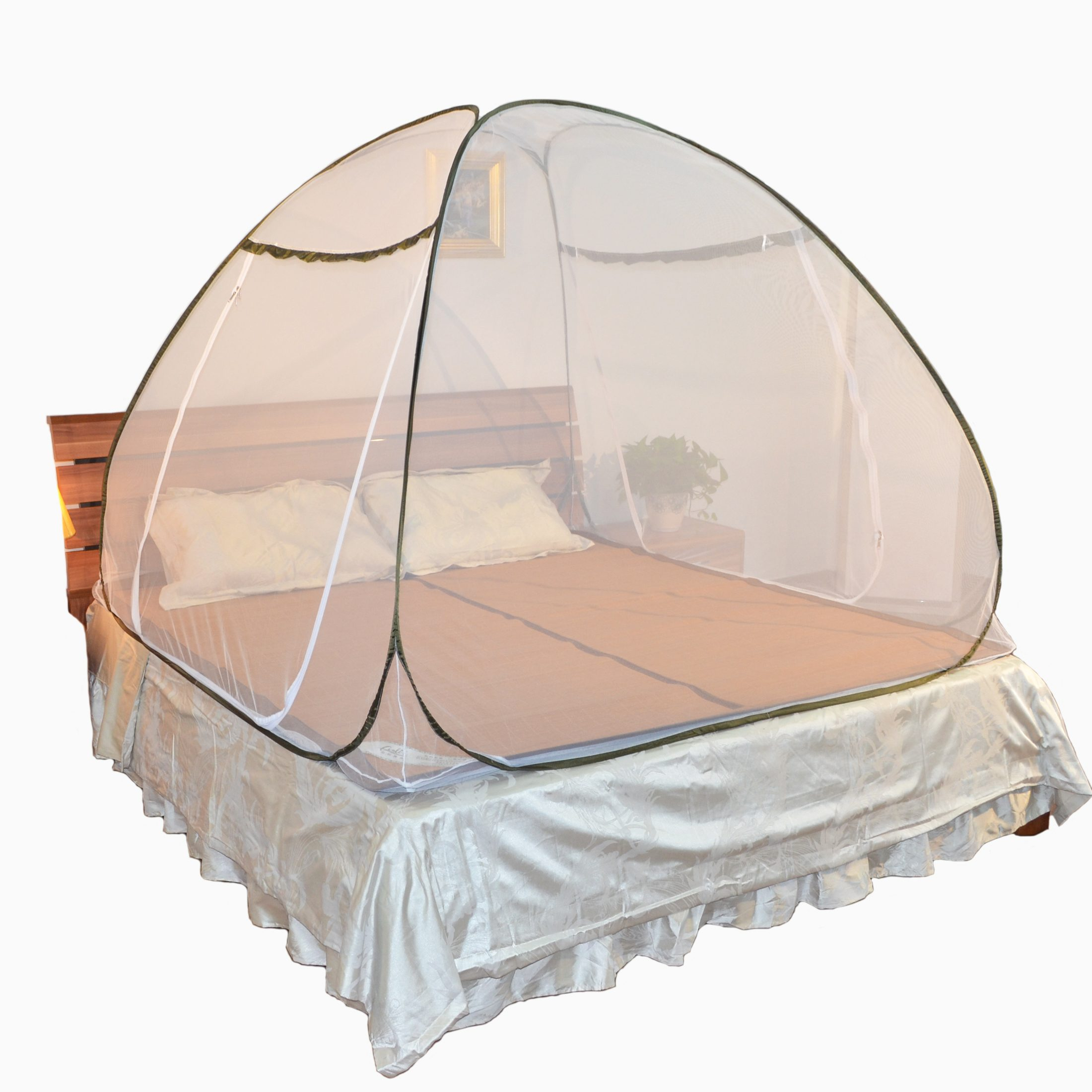
Manufacturing Specifications and Material Science of Pop-Up Nets
To ensure a product is fit for purpose—whether for recreational camping or emergency disaster relief—it is necessary to evaluate the individual components that make up the final assembly. The durability and protective efficacy of a pop-up mosquito net tent depend on the quality of its mesh fabric, framing elements, and structural seams.
Mesh Fabric Composition and Density
The mesh material serves as the primary physical barrier against disease vectors such as Anopheles mosquitoes (which transmit malaria) and Aedes mosquitoes (which transmit dengue and yellow fever). When evaluating pop mosquito net tent wholesale options, two primary synthetic polymers dominate the market:
Polyester (Polyethylene Terephthalate): Known for high tensile strength, dimensional stability, and resistance to stretching. Polyester mesh is preferred for semi-permanent installations and retail products due to its soft hand-feel and neat folding characteristics.
Polyethylene (PE): Frequently utilized in heavy-duty humanitarian applications. Polyethylene fibers are highly durable and offer strong resistance to abrasion and UV degradation, though they tend to be stiffer than polyester.
Beyond material type, mesh density is measured by the number of holes per square inch. The World Health Organization (WHO) recommends a minimum mesh density of 156 holes per square inch (25 holes/cm²) for general mosquito protection. For environments containing smaller biting insects, such as midges or sandflies, high-density mesh configurations of 225 to 400 holes per square inch are utilized. Additionally, fabric weight, indicated by Denier (D), typically ranges from 50D for lightweight travel nets to 100D or higher for rugged, long-lasting applications.
Framing Materials and Torsional Resistance
The defining feature of a pop-up tent is its self-erecting frame. This frame must withstand thousands of compression and expansion cycles without experiencing permanent deformation or structural failure. Manufacturers generally employ one of two framing materials:
High-Tensile Carbon Spring Steel Wire: This material offers excellent elasticity and shape memory. It is coated with anti-corrosion treatments (such as zinc galvanization or polymer sleeves) to prevent rusting in humid, tropical climates.
Fiberglass Rods: Used occasionally in larger cabin-style pop-up tents. Fiberglass provides reliable rigidity but can be prone to splintering if bent beyond its structural limit, making high-grade spring steel the preferred choice for compact pop-up designs.
The connection joints and sleeving that house the frame are subject to intense friction. Double-stitched, high-denier Oxford sleeves (typically 150D to 210D) are needed to prevent the steel wire from wearing through the fabric over extended use.
Key Challenges in Bulk Pop-Up Net Sourcing
B2B buyers often encounter systemic challenges during high-volume procurement. Identifying these issues early in the supplier negotiation phase helps prevent costly delays and product failures in the field.
1. Frame Deformation and Poor Elastic Memory
Substandard spring steel wire can suffer from "material fatigue." During long-term storage in compressed shipping containers, lower-quality wire may lose its elasticity, resulting in tents that fail to deploy fully or stand crookedly when opened. During the evaluation of potential pop mosquito net tent wholesale partners, inquiring about the chemical composition of the steel wire (e.g., carbon content) and the specific heat-treatment processes used is highly recommended.
2. Seam Slippage and Zipper Failures
The points of greatest physical stress on a pop-up net tent are the entry zippers and the floor-to-mesh seams. Cheaply manufactured nets often utilize single-needle stitching with low-grade polyester thread, leading to seam slippage under tension. High-quality production requires double-needle chain stitching and reinforced zipper tape anchors. Because zippers are operated frequently, specifying heavy-duty, double-sided nylon coil zippers (typically size #5 or #8) is a practical way to prevent premature product failure.
3. Volumetric Weight and Logistics Expenses
While lightweight, pop-up mosquito net tents are bulky due to their circular folded shape. Shipping unstructured, loosely packed pop-up nets leads to high volumetric weight charges, which can significantly increase landed costs. Working with a manufacturer like Yamei, who understands high-compression flat-packing techniques, helps ensure that shipping containers are loaded to maximum capacity, reducing per-unit freight costs.
Application Scenarios: From Humanitarian Relief to Retail
Understanding the final environment in which these nets will be used allows procurement managers to customize product specifications for performance and cost efficiency.
| Application Sector | Primary Requirements | Recommended Mesh Spec | Frame & Floor Requirements |
|---|---|---|---|
| Humanitarian Aid & Disaster Relief | High durability, rapid deployment, cost efficiency, insecticidal treatment compatibility. | 100D Polyester or HDPE, min. 156 holes/sq inch. | Heavy-duty galvanized steel wire, integrated waterproof PE tub floor. |
| Commercial Outdoor Retail & Camping | Aesthetic appeal, lightweight construction, premium packaging, ease of folding. | 50D - 75D Polyester, 225 holes/sq inch for fine insect protection. | Lightweight spring steel, PU-coated water-resistant polyester floor. |
| Military & Tactical Deployment | Camouflage colors, high abrasion resistance, flame retardancy, low visual signature. | Flame-retardant treated polyester, olive drab or coyote tan. | Non-reflective black spring steel, heavy-duty Oxford fabric base. |
By defining these parameters early, wholesale buyers can avoid paying for unnecessary features or, conversely, sourcing under-specified products that fail to meet field demands.
Quality Control Protocols at Yamei Production Facilities
Maintaining consistent quality across a run of tens of thousands of units requires standardized manufacturing procedures. At Yamei, we implement structured quality gatekeepers at every phase of the manufacturing cycle:
Inbound Raw Material Inspection: We perform yarn tensile testing, denier verification, and batch testing of spring steel wire ductility prior to cutting and sewing.
In-Line Assembly Checks: Dedicated quality inspectors monitor stitch-per-inch (SPI) consistency and seam-sealing integrity at designated assembly stations.
Tension and Deployment Testing: Randomly sampled units from each production batch undergo automated cycle testing, involving repeated folding and unfolding to verify frame memory and structural durability.
Post-Production Visual Audits: Finished goods are checked for loose threads, alignment errors, zipper fluidity, and cosmetic cleanliness before packaging.
By adhering to these systematic inspection steps, we reduce defect rates to well below industry averages, ensuring that bulk shipments arrive ready for immediate distribution.
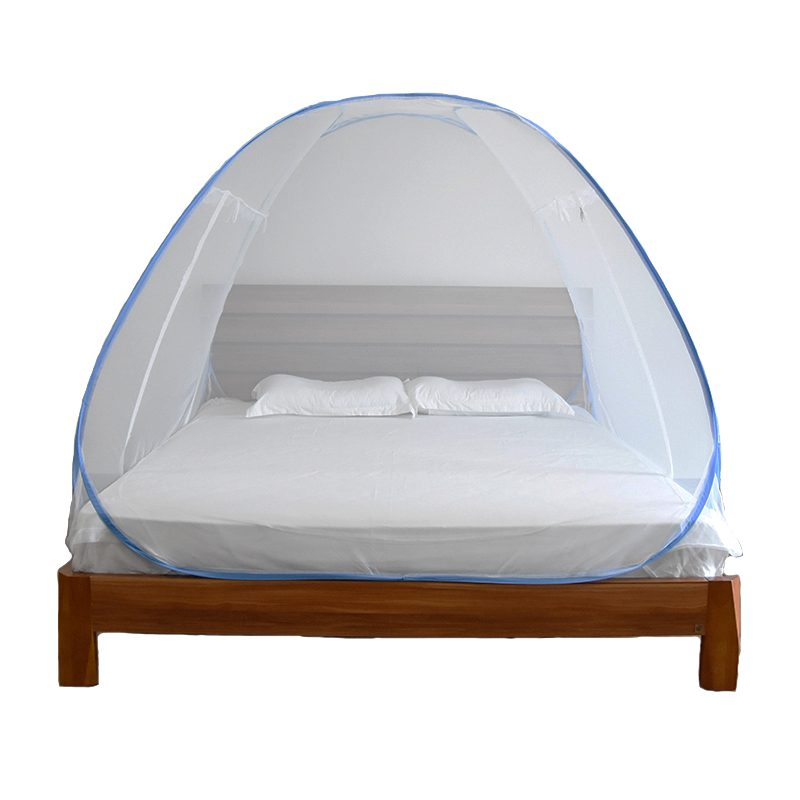
Optimizing Bulk Logistics and Packaging for Import
The financial viability of a pop mosquito net tent wholesale import program is closely tied to transport packaging design. Because these items contain flexible spring steel frames, they can be compressed flat for shipping.
Standard packaging consists of individual zippered carry bags made from lightweight polyester or non-woven fabric. For large-scale distribution, these individual bags are packed into high-density master cartons. We work closely with shipping lines to design palletization patterns that maximize container space utilization (both 40ft HQ and 20ft GP containers). This careful planning helps protect the internal spring frames from warping under excessive weight during long sea voyages, ensuring they arrive in optimal condition.
Frequently Asked Questions
Q1: What is the typical Minimum Order Quantity (MOQ) for wholesale orders at Yamei?
A1: Our standard MOQ for customized pop-up mosquito net tents generally ranges from 1,000 to 3,000 units per specification, depending on the custom color, dimensions, and mesh density requested. For standard, off-the-shelf configurations, we are sometimes able to accommodate smaller initial order sizes.
Q2: Can the mesh fabric be treated with insecticides for public health programs?
A2: Yes, we can manufacture nets using fabrics compliant with insecticide-treated net (ITN) or long-lasting insecticidal net (LLIN) specifications, depending on the regulatory requirements of your target market and the scale of the contract.
Q3: How do you prevent the spring steel frame from rusting over time?
A3: We utilize high-tensile carbon steel wire that undergoes an anti-rust coating process. Additionally, the wire is encased in a protective polymer sleeve or heavy-duty synthetic piping fabric, protecting it from moisture and sweat during handling and storage.
Q4: Do you offer custom branding and private label packaging?
A4: Yes, we provide comprehensive OEM and ODM services. We can print corporate logos, instructional diagrams, and branding elements directly on the carry bags, sewn-in warning labels, and outer cardboard packaging to align with your brand guidelines.
Q5: What is the lead time for a high-volume production run?
A5: Lead times depend on current factory capacity and order complexity. Generally, a standard order of 10,000 units takes approximately 35 to 45 days from deposit confirmation and sample approval to port delivery. We provide clear, structured timelines at the start of every project.
Initiate a Consultation for Your Wholesale Sourcing Needs
Selecting a manufacturing partner for bulk vector-control products is a long-term business decision. Yamei is committed to delivering consistent product quality, clear communication, and reliable supply chain support. Whether you are preparing a bid for a public health tender, planning a retail product line, or sourcing emergency shelter components, our engineering and sales teams are available to assist you.
Contact our B2B procurement division today to request customized material samples, receive detailed product specifications, or obtain a comprehensive wholesale quotation tailored to your logistics requirements.