
Global health programs, commercial retail sectors, and emergency relief operations rely heavily on durable vector control tools. Among these, portable and space-saving insect barriers have gained substantial traction. Importers and distributors require high-volume manufacturing partners capable of meeting stringent quality controls while keeping shipping costs manageable. Partnering with an experienced folding mosquito nets OEM factory is a strategic step toward securing reliable product lines that meet localized regulatory requirements and consumer expectations.
Unlike traditional, fixed-canopy netting, collapsible designs present unique engineering challenges. These products require flexible yet resilient frames, high-tensile mesh fabric, and precise folding mechanisms that do not wear out over repeated use. This analysis explores the material science, manufacturing methodologies, and logistical solutions provided by contract manufacturers in this industry.
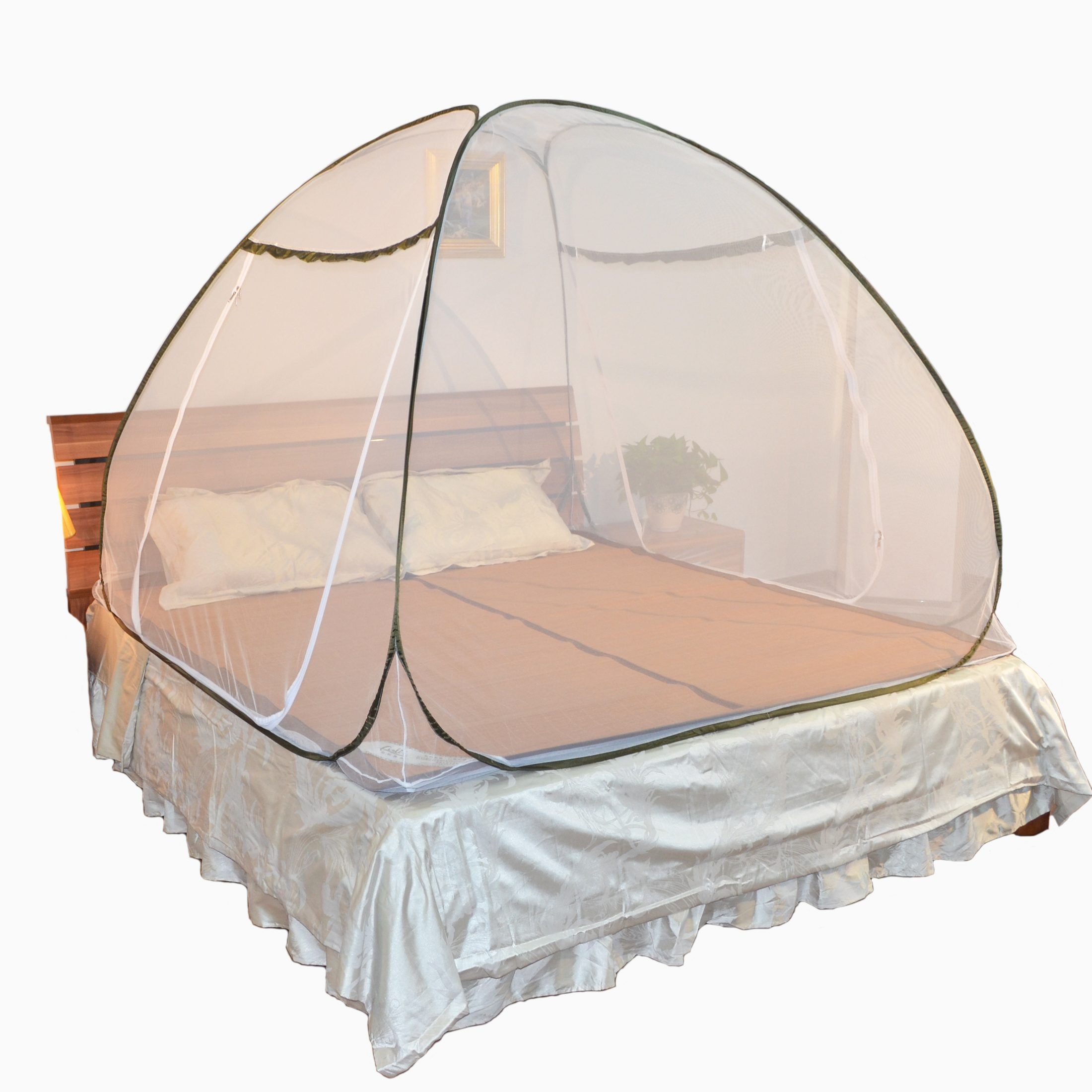
Material Engineering in Collapsible Insect Barriers
The performance of a self-supporting, collapsible insect net depends directly on the quality of its structural and textile components. A professional folding mosquito nets OEM factory must balance weight, elasticity, durability, and cost when sourcing raw materials.
Mesh Selection: Denier, Material, and Hole Density
The mesh fabric forms the primary defense against mosquitoes and other disease-carrying insects. Factories typically work with two primary synthetic polymers:
Polyester (PES): Favored for retail and commercial markets due to its soft hand-feel, excellent draping characteristics, and natural resistance to stretching. It is commonly manufactured in 40D, 50D, or 75D (denier) weights, balancing lightweight handling with structural integrity.
Polyethylene (PE): Frequently chosen for humanitarian and agricultural sectors. Polyethylene nets are highly durable, possessing superior resistance to abrasion and UV degradation, making them suitable for long-term use in rugged environments.
Hole density is measured in holes per square inch (HPSI). Standard specifications dictate a minimum of 156 HPSI for malaria prevention, though custom configurations for smaller vectors (such as sandflies) may require 225 HPSI or higher. The knitting process must utilize a warp-knitting pattern (such as raschel knit) to ensure that if a small tear occurs, the run does not spread across the entire panel.
Frame Engineering: Tension and Flexibility
The frame of a folding net must withstand hundreds of compression cycles without bending permanently out of shape or snapping. Manufacturers generally utilize two frame options:
High-Tensile Spring Steel Wire: Coated with anti-rust polymers, spring steel provides the strongest tension, ensuring the net snaps open immediately and maintains its shape even under light external pressure.
Fiberglass Rods: Highly lightweight and naturally corrosion-resistant, fiberglass is ideal for humid, tropical climates. The thickness of the rods is carefully calculated to balance flexibility with sufficient structural support.
Overcoming Key Supply Chain and Logistical Pain Points
For B2B buyers importing goods across continents, shipping and logistics constitute a significant portion of the landed cost. Working with a dedicated folding mosquito nets OEM factory ensures that packaging configurations are developed to maximize container utilization.
Maximizing Container Loading Efficiency
Traditional dome or bell-shaped nets are bulky and contain significant empty space, leading to high shipping costs. Collapsible insect barriers solve this structural challenge. By folding completely flat, these units allow for dense packing configurations. A factory specializing in OEM production can design customized master cartons that match the exact internal dimensions of a standard 20-foot or 40-foot High Cube container, reducing dead space to near zero.
Chemical Treatment and Regulatory Compliance
For public health organizations, nets must often be treated with insecticides (such as alpha-cypermethrin or permethrin) to qualify as Long-Lasting Insecticidal Nets (LLIN). This process requires precise chemical binder application to ensure the active ingredients remain effective for at least 20 standard washes. A compliant folding mosquito nets OEM factory, such as Yamei, implements strict quality checks to verify active ingredient retention and uniform chemical distribution across every batch of yarn before weaving.
Customization and OEM Workflow for Global Importers
A reliable OEM partner does not merely replicate standard models; they provide comprehensive design-for-manufacture (DFM) support to tailor the product to specific market needs.
As a premier folding mosquito nets OEM factory, Yamei maintains standardized production workflows to translate client specifications into high-volume outputs:
1. Specification and Prototyping Phase
Clients outline the intended application scenario—whether for military deployment, humanitarian relief, outdoor camping, or domestic use. During this phase, CAD models are created to determine the dimensions, door access styles (single zipper, double zipper, overlapping flaps), and frame configuration. Prototype samples are then produced to verify the tension of the frame and the overall weight of the assembly.
2. Tooling and Fabric Preparation
Once the prototype is approved, warp-knitting machines are configured for the chosen mesh density. If the product requires custom-dyed fabrics, the yarns undergo eco-friendly dyeing processes that meet international safety certifications, such as OEKO-TEX Standard 100, ensuring the final product is free from harmful chemical residues.
3. Assembly and Reinforced Stitching
The points where the flexible frame connects to the mesh are subject to high physical stress. Specialized factories use reinforced double-needle stitching and durable Oxford polyester sleeves to house the frame. This prevents the metal or fiberglass rods from wearing through the fabric over extended periods of assembly and disassembly.
Quality Control Measures and Performance Testing
To ensure high performance in the field, structured testing protocols must be implemented at every stage of the manufacturing process. At Yamei, the manufacturing workflow integrates several key inspection steps to verify mechanical and chemical properties.
Structural and Mechanical Tests
Repetitive Folding Cycles: Samples are subjected to automated folding machines that compress and release the frame up to 1,000 times to monitor for structural fatigue or permanent deformation.
Bursting Strength Analysis: The mesh fabric is tested using pneumatic burst testers to measure its resistance to localized physical pressure, ensuring it can withstand rough handling in real-world environments.
Zipper Durability Tests: If the design includes zippered entryways, the zippers are tested for smooth operation and slide resistance under lateral tension.
Chemical Safety Inspections
For treated nets, gas chromatography is used to monitor the precise concentration of insecticide applied to the fibers. This ensures compliance with international guidelines, preventing skin irritation for the end-users while maintaining high efficacy against target insect populations.
Strategic Procurement: Evaluating Your Manufacturing Partner
When selecting a folding mosquito nets OEM factory for high-volume orders, buyers should look beyond unit cost to evaluate long-term supply chain reliability. A true manufacturing partner should offer transparent material sourcing, documented quality management systems (such as ISO 9001), and ethical labor practices.
By establishing a direct relationship with the manufacturer, B2B buyers can bypass intermediaries, customize packaging to minimize duty and tariff impacts, and secure prioritized production scheduling during peak malaria transmission seasons.
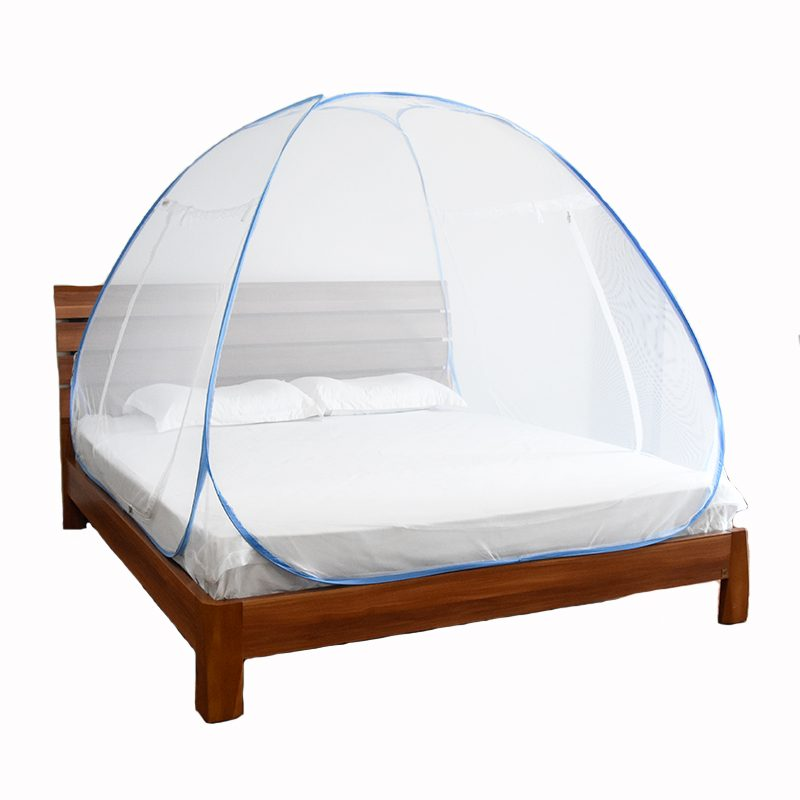
Collaborate with an Industry Expert for Your Next Project
Securing durable, lightweight, and legally compliant insect protection barriers requires deep technical alignment between your procurement team and the production floor. Whether you are supplying government contracts, aid organizations, or retail consumer markets, having a manufacturing partner that understands polymer science, structural tension, and dense shipping packaging is indispensable.
Yamei offers comprehensive manufacturing capabilities, from extrusion and warp knitting to final stitching and customized packaging. Our team works closely with global distributors to develop customized collapsible net designs that meet exact performance specifications. To discuss your volume requirements, material specifications, or to request a sample batch for testing, please contact our team for a detailed inquiry.
Frequently Asked Questions
Q1: What materials are typically used for the support frames of folding mosquito nets?
A1: Folding mosquito nets generally utilize either high-tensile spring steel wire or flexible fiberglass rods. Spring steel wire is coated with anti-rust polymers and provides rapid self-opening tension, while fiberglass is highly lightweight and corrosion-resistant, making it ideal for tropical environments with high humidity.
Q2: Can the mesh fabric be treated with long-lasting insecticides (LLIN)?
A2: Yes. Fabrics can be impregnated with safe insecticides like alpha-cypermethrin or permethrin during the manufacturing process. A qualified factory uses advanced chemical binders to ensure the insecticide remains effective on the mesh even after 20 or more standard washes, meeting international public health guidelines.
Q3: How does the folding design impact shipping costs compared to traditional nets?
A3: Because folding nets compress entirely flat, they drastically reduce the overall volume of the packaging. This allows for a significantly higher number of units to be loaded into a single shipping container, lowering the per-unit ocean freight cost and maximizing warehouse storage efficiency.
Q4: What is the typical minimum order quantity (MOQ) for custom OEM orders?
A4: Minimum order quantities generally vary depending on custom color requirements and specialized mesh densities. For standard fabric configurations, the typical MOQ starts at 1,000 units, which allows the factory to run the automated warp-knitting and cutting equipment efficiently.
Q5: What quality standards do factories use to ensure the nets are safe and durable?
A5: Reputable manufacturers adhere to ISO 9001 quality management systems and test their products using standard textile evaluation methods. These include pneumatic bursting strength tests for the mesh, automated cyclic fatigue tests for the folding frame, and chemical compliance verifications such as OEKO-TEX certification to ensure no toxic chemical residues remain on the fabrics.