
Vector-borne diseases continue to pose significant public health challenges globally. Among the diverse interventions available, insecticidal and non-insecticidal mosquito nets remain the primary line of defense. In regions undergoing rapid urbanization or facing humanitarian crises, pop-up or frame-supported protective nets—often referred to as POP mosquito nets—have gained substantial traction. These self-erecting structures provide immediate protection without requiring overhead suspension points. For procurement officers, non-governmental organizations (NGOs), and commercial distributors, partnering with an experienced POP mosquito net bulk supplier becomes a fundamental requirement to ensure quality, cost-efficiency, and timely delivery.
High-quality POP mosquito nets, such as those manufactured by Yamei, are engineered to withstand rigorous daily use in varied environmental conditions. Unlike standard hanging nets, these units incorporate internal structural elements that must retain elasticity and shape memory over extended periods. Consequently, bulk procurement requires a thorough understanding of polymer chemistry, structural engineering, and manufacturing compliance to avoid common failure modes in the field.
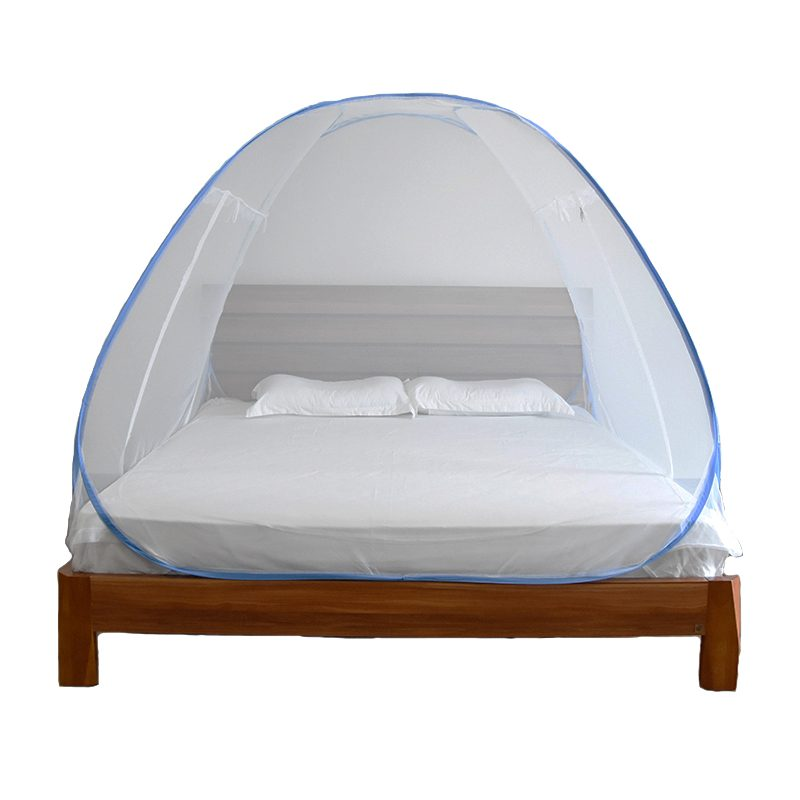
Understanding POP Mosquito Net Architecture: Material and Structural Parameters
The performance of a self-erecting mosquito net is determined by the synergy between its textile mesh and its structural frame. Buyers must evaluate these components based on measurable specification standards rather than subjective visual assessments.
Yarn Composition and Mesh Geometry
The foundation of any high-quality net is the synthetic polymer used in its construction. Monofilament polyethylene and multifilament polyester are the two primary choices:
Multifilament Polyester: Known for its softness, flexibility, and high tensile strength. It is typically measured in denier (D), which represents the mass in grams per 9,000 meters of yarn. For standard residential and humanitarian use, a denier rating of 75D to 100D provides an optimal balance between weight and tearing resistance.
Mesh Count: The World Health Organization (WHO) recommends a minimum mesh density of 156 holes per square inch (25 holes/cm²) for standard malaria prevention. This spacing is small enough to exclude Anopheles mosquitoes while maintaining sufficient airflow to keep the interior comfortable in tropical climates.
Dimensional Stability: Warp-knitting technology ensures that if a single thread breaks, the mesh does not unravel. The fabric must undergo heat-setting processes to lock the loop structure, preventing the holes from distorting during washing or mechanical stress.
Frame Engineering and Tension Balance
The defining feature of a POP net is its self-supporting frame. This component is subject to continuous tension and frequent folding cycles:
Spring Steel Wire: The frame typically utilizes high-carbon spring steel wire. This material must undergo specialized heat treatment to ensure it can be twisted and folded repeatedly without acquiring permanent deformation or snapping.
Rust-Preventative Coatings: Because these nets are frequently deployed in humid, tropical environments, the steel wire must be encapsulated in a continuous polymer sleeve or treated with zinc electroplating to prevent oxidation. Rust can degrade the steel and stain the surrounding white mesh, compromising the structural integrity of the entire unit.
Sleeve Reinforcement: The fabric tunnel housing the steel wire experiences the highest level of friction. Double-needle lockstitching and heavy-duty polyester Oxford fabric are required for this sleeve to prevent the metal frame from wearing through the textile border.
Key Industry Pain Points in Bulk Procurement
B2B buyers frequently encounter systemic challenges when sourcing vector control products at scale. Addressing these issues early in the supplier evaluation process prevents costly delays and project failures.
Frame Failure and Structural Sagging
A common defect in low-grade self-erecting nets is the loss of frame tension. When inferior steel is used, the net may sag after several weeks of deployment, reducing the internal volume and causing the mesh to drape over the user. This physical contact allows mosquitoes to bite through the netting. Selecting a reputable POP mosquito net bulk supplier that utilizes fatigue-tested spring steel is necessary to mitigate this risk.
Inconsistent Chemical Sourcing and Wash Resistance
For Long-Lasting Insecticidal Nets (LLINs), the uniform distribution of the active ingredient (typically synthetic pyrethroids like deltamethrin or alpha-cypermethrin) is vital. Inadequate formulation or poor polymer integration leads to rapid wash-off, rendering the chemical barrier ineffective after only a few washes. Procurement agents must request chemical analysis reports detailing the insecticide content per square meter and the wash-resistance index.
Logistical Cubage and Shipping Volumetrics
POP mosquito nets, by virtue of their spring-steel frames, are packaged in circular, flat configurations. While flat, their surface area can lead to high volumetric weight during shipping. If a manufacturer does not utilize high-compression packaging machinery, shipping costs can quickly surpass the factory gate price. Efficient palletization and vacuum compression are key operational capabilities to look for in a logistics partner.
Standard Compliance and Quality Assurance Protocols
To ensure field efficacy and regulatory approval, bulk consignments must conform to strict international testing standards. Buyers should request comprehensive documentation verifying compliance with these protocols.
| Test Category | Standard Protocol | Acceptable Threshold | Operational Significance |
|---|---|---|---|
| Bursting Strength | ISO 13938-1 (Pneumatic Method) | > 250 kPa for 75D polyester; > 350 kPa for 100D | Ensures the net resists tearing from physical impacts, fingernails, or cot edges. |
| Flammability | 16 CFR Part 1610 or EN 71-2 | Class 1 (Normal Flammability) | Crucial for safety in dense camp environments where open flames or candles are used. |
| Insecticidal Efficacy | WHO Cone Bioassay Test | > 80% mortality after 20 standard washes | Verifies the long-term chemical protection of the LLIN treatment. |
| Frame Fatigue | Internal Cyclic Compression Test | No deformation after 500 fold-unfold cycles | Guarantees the long-term durability of the self-erecting mechanism. |
Strategic Advantages of Partnering with a Dedicated POP Mosquito Net Bulk Supplier
When evaluating a potential POP mosquito net bulk supplier, one must examine their production capacity, sourcing integrity, and engineering adaptability. A specialized manufacturer provides distinct advantages over general trading companies.
Large-scale producers like Yamei utilize advanced warp-knitting machinery and automated cutting tables to maintain tight tolerances across large production runs. This industrial-scale automation minimizes human error in the sewing phase, which is where structural weaknesses typically originate. Furthermore, an established manufacturer maintains direct relationships with polymer chemical providers, ensuring trace-ability from raw resin to finished insecticide-treated net.
In addition, specialized suppliers offer customization of key components:
Sizing Adjustments: Modifying dimensions to fit specific military cots, emergency relief stretchers, or localized bedding standards.
Color Customization: Producing nets in custom colors (such as olive drab for defense applications or dark blue for specific cultural preferences) without compromising the integrity of the polymer dye.
Integrated Ground Sheets: Adding water-resistant, heavy-duty polyethylene floor panels to protect users sleeping directly on the ground in emergency shelters.
Manufacturing Workflow and Supply Chain Transparency
A transparent manufacturing process is a hallmark of a reliable supply partner. Knowing how raw materials are transformed into finished goods helps procurement teams assess risk and schedule projects accurately.
As an established POP mosquito net bulk supplier, managing the manufacturing workflow requires precise coordination across several distinct production phases:
Yarn Extrusion and Warp Knitting
The process begins with high-purity polyester or polyethylene chips. These chips are extruded into fine filaments, twisted into yarn, and loaded onto beams for warp knitting. This stage dictates the initial strength and density of the mesh. Any variations in yarn quality at this point will manifest as structural defects in the final product.
Chemical Impregnation or Polymer Binding
For insecticidal nets, the active ingredients are either incorporated directly into the polymer melt prior to extrusion (for polyethylene nets) or applied via a specialized binding agent in a finishing bath (for polyester nets). The fabric is then passed through high-temperature curing ovens to cross-link the polymer binders, ensuring the insecticide remains active even after multiple washing cycles.
Cutting, Sewing, and Frame Integration
Automated laser cutting systems slice the cured fabric sheets into precise panels. Laser cutting melts the edges of the polyester, preventing fraying during the sewing process. Skilled operators then assemble the panels using heavy-duty industrial sewing machines. In this phase, the spring steel wire frame is carefully inserted into the reinforced border sleeves and joined using secure steel crimping sleeves to form a continuous, stable loop.
Sustainable and Ethical Sourcing in Vector Control
Modern procurement initiatives place high value on environmental responsibility and ethical labor practices. Vector control programs should not inadvertently harm local ecosystems or exploit labor forces during manufacturing.
Choosing a POP mosquito net bulk supplier that prioritizes green chemistry is highly beneficial. Reputable companies like Yamei implement strict wastewater treatment protocols to prevent any chemical runoff from the insecticide dipping process from entering municipal water systems. Additionally, sourcing raw polymers that are free from harmful volatile organic compounds (VOCs) ensures that the end-users—often vulnerable populations, including infants and pregnant women—are not exposed to respiratory hazards.
Ethical supply chains also require compliance with international labor standards, such as BSCI or SMETA audits. These certifications verify that factory workers operate in safe environments, receive fair compensation, and work reasonable hours. Buyers can present these audit reports to their stakeholders as proof of corporate social responsibility.
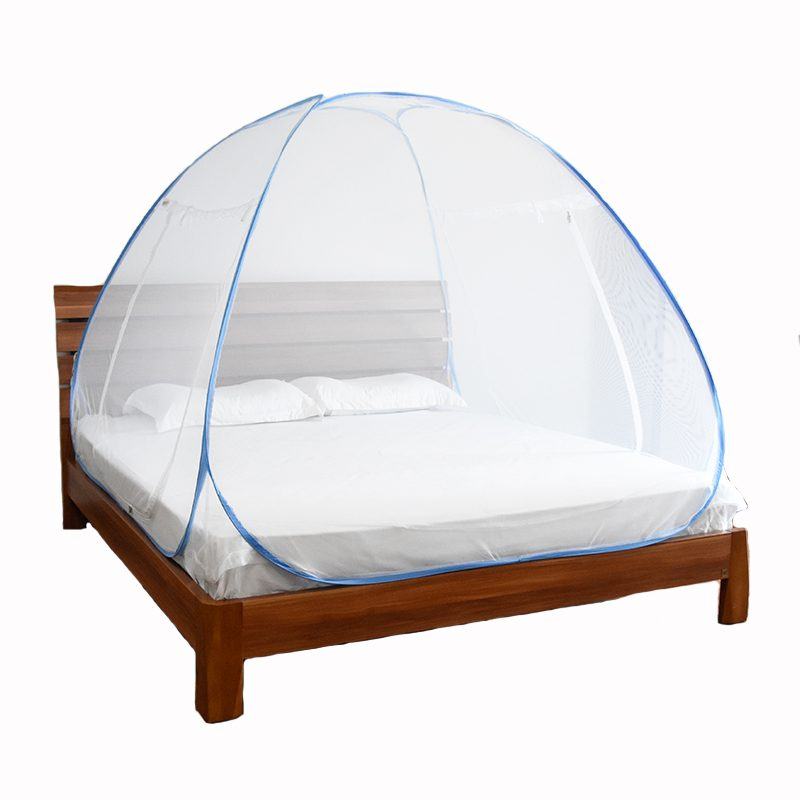
Establishing a Secure Procurement Channel
Navigating international trade barriers, custom clearance procedures, and shipping deadlines requires close coordination between the buyer and the manufacturing partner. Submitting your detailed specifications to a verified POP mosquito net bulk supplier can streamline your entire supply chain, ensuring that your field workers and distribution networks receive compliant, durable protective equipment on schedule.
To initiate a formal procurement evaluation, buyers should prepare a clear statement of requirements, including desired denier, mesh density, dimensional tolerances, and delivery timelines. This enables the engineering team to provide precise material estimates and reliable lead-time commitments.
Frequently Asked Questions
Q1: What is the typical field lifespan of a bulk-supplied POP mosquito net?
A1: Under standard indoor conditions, a high-quality POP net constructed from 100D polyester and fitted with fatigue-tested spring steel has an operational lifespan of 3 to 5 years. In demanding outdoor or humanitarian camp environments, the lifespan typically ranges from 1 to 2 years due to increased UV exposure and mechanical handling.
Q2: How do you prevent the spring steel frame from piercing the fabric during transit?
A2: The steel frame is housed inside a reinforced sleeve constructed from heavy-duty Oxford polyester fabric (typically 150D to 210D). The ends of the steel wire are joined using a mechanical press-fit collar with smoothed edges, preventing sharp points from puncturing the sleeve during compression and folding cycles.
Q3: Are the chemical insecticides used on these nets safe for infants and toddlers?
A3: Yes. The pyrethroid insecticides utilized (such as deltamethrin) are formulated and applied in concentrations that comply with WHO safety guidelines. These dosages are highly toxic to insects but pose negligible risk to mammals, making them safe for use by pregnant women and infants.
Q4: What are the packaging specifications to optimize container loading for bulk orders?
A4: POP mosquito nets are folded flat into circular discs and packed into individual carrying pouches. These pouches are then packed into heavy-duty export cartons. To maximize container space, we offer vacuum-packing options that compress the fabric components, reducing the overall carton volume by up to 30% and maximizing ocean freight efficiency.
Q5: Can we request pre-shipment inspections by independent third parties?
A5: Absolutely. We welcome independent inspection agencies, such as SGS, Bureau Veritas, or Intertek, to conduct random sampling and testing at our facility prior to container loading. This ensures all physical, chemical, and dimensional specifications match the contract requirements.
For custom manufacturing inquiries, detailed spec sheets, or to request product samples for field testing, please contact our commercial sales office with your specific project requirements.