Global vector control strategies rely heavily on Long-Lasting Insecticidal Nets (LLINs) to mitigate the transmission of vector-borne pathogens, specifically Anopheles mosquitoes responsible for malaria. For public health authorities, non-governmental organizations, and institutional procurement officers, sourcing vector control textiles requires strict adherence to international standards. Securing product directly from a mosquito net approved by WHO manufacturer guarantees that the delivered bed nets fulfill strict requirements regarding chemical efficacy, structural durability, and human safety protocols.
The manufacturing architecture behind LLINs involves complex polymer chemistry, high-precision textile engineering, and controlled insecticide release mechanisms. Evaluating suppliers based on these criteria ensures that large-scale distributions meet field longevity requirements, maintaining therapeutic insecticide levels after multiple standard wash cycles. This analysis breaks down the chemical, physical, and regulatory parameters necessary when contracting a qualified production partner for institutional vector control programs.
Understanding WHO Prequalification and Vector Control Standards
The evaluation framework for vector control products transitioned from the former World Health Organization Pesticide Evaluation Scheme (WHOPES) to the formal WHO Prequalification (PQ) Vector Control Team review process. This transition elevated data integrity protocols, requiring long-term epidemiological evidence, multi-site bio-assay validations, and rigorous factory audit schedules.
The Regulatory Transition to Prequalification (PQ)
Under current prequalification protocols, vector control products undergo rigorous, multi-stage testing schedules that assess both physical integrity and continuous chemical performance. Manufacturers must submit detailed master files documenting raw material sourcing, chemical composition, active ingredient (AI) purities, and detailed operational guidelines for manufacturing processes. Factory audits confirm that facilities observe strict quality management systems equivalent to ISO 9001 and ISO 14001 standards, ensuring batch-to-batch consistency across high-volume contract orders.
Chemical Formulation and Polymer Matrix Integration
Long-Lasting Insecticidal Nets maintain active biological control through two distinct processing technologies: masterbatch incorporation into polymer melts prior to extrusion, or surface coating with binder matrices post-knitting. High-Density Polyethylene (HDPE) filaments typically utilize chemical incorporation, where synthetic pyrethroids—such as alpha-cypermethrin or deltamethrin—are mixed directly into the molten polymer. This method creates an internal reservoir of active ingredient that migrates to the filament surface as surface chemicals wash off or degrade due to environmental exposure.
Polyester (PET) filaments rely primarily on specialized dipping or coating formulations where active ingredients are locked into a polyurethane or acrylic binder network applied over the knitted fabric. Selecting a qualified mosquito net approved by WHO manufacturer ensures that chemical binding technology balances active migration rates with wash fastness, preventing premature exhaustion of pyrethroid compounds during regular laundering.
Specifications Demanded by Institutional Buyers
Institutional procurement standards demand precise specification compliance across structural, physical, and chemical parameters. Field performance in tropical conditions relies heavily on balancing mechanical strength against airflow requirements, ensuring high user compliance while providing a reliable physical and chemical barrier.
Fabric Structural Integrity and Physical Metrics
The physical resistance of a bed net to tearing, snagging, and structural decay directly influences its functional lifespan in high-transmission zones. Key parameters include:
Denier Rating: Measures yarn linear mass density (grams per 9,000 meters). Common specification profiles range between 75D and 150D. Higher denier ratings offer superior tensile strength and burst resistance, which is suitable for complex rural environments.
Bursting Strength: Quantified in kilopascals (kPa) through pneumatic or hydraulic testing methods under standard ISO 13938 protocols. Minimum requirements typically range from 250 kPa for lower denier fabrics up to 400+ kPa for heavy-duty 150D HDPE variants.
Mesh Count: Measured in holes per square inch or holes per square centimeter. Standard vector control guidelines specify 156 mesh (14x11 holes per square inch), which prevents vector entry while permitting sufficient airflow to preserve comfortable microclimates inside the net.
GSM (Grams per Square Meter): Refers to total fabric weight after chemical treatment, varying according to polymer choice, yarn denier, and knit density.
Active Ingredient Retention and Controlled Release Mechanisms
Insecticide efficacy relies on maintaining active compound concentration on the exterior surface of the filament. When vector mosquitoes make contact with the net surface, the active pyrethroid penetrates the insect's cuticle, inducing rapid knock-down and subsequent mortality. Standard protocols mandate that LLINs retain biological activity through a minimum of 20 standardized washes as tested under laboratory bio-assay guidelines (such as WHO cone tests and tunnel tests).
In regions facing documented pyrethroid resistance, advanced dual-action formulations are required. These next-generation bed nets incorporate a secondary active agent, such as Piperonyl Butoxide (PBO), which acts as a synergist to inhibit mosquito metabolic resistance enzymes. Alternatively, non-pyrethroid active agents like chlorfenapyr or pyriproxyfen are integrated into the polymer architecture to control resistant populations effectively.
Operational Challenges in Mass Distribution Tenders
Executing institutional contracts for million-unit distributions introduces complex logistical and operational challenges. Procurement officers must analyze supplier capabilities beyond initial samples, assessing factory capacity, quality assurance pipelines, and custom packaging systems.
Supply Chain Compliance and Batch Testing Rigor
A dependable mosquito net approved by WHO manufacturer utilizes complete raw material traceability systems. Every batch of extruded monofilament or knitted mesh must be indexed against active ingredient concentrations using High-Performance Liquid Chromatography (HPLC) or Gas Chromatography (GC) analysis. Independent third-party inspection agencies conduct pre-shipment sampling at the production facility, validating that random lot samples meet established chemical dosage tolerances before container loading.
Discrepancies in active chemical distribution across a single net can lead to localized vector survival. Homogeneous distribution across top panels, side walls, and reinforced lower skirts must be maintained consistently across high-volume production runs.
Customization for Regional Insecticide Resistance Profiles
Malaria vectors adapt rapidly to uniform selection pressures. Consequently, public health procurement strategy increasingly shifts toward localized net customization. Designing tailored net interventions requires balancing specific chemical profiles with customized mechanical enhancements, such as reinforced bottom borders (skirting) that protect against mechanical wear from bedding frames and floor mats.
Suppliers must remain flexible, offering customized dimensional sizing, specialized colorways to improve long-term user acceptance, and tailored chemical dosages suited for targeted geographic deployability.
Manufacturing Capabilities of a Certified Mosquito Net Approved by WHO Manufacturer
High-volume manufacturing of public health textiles requires advanced equipment installations, precise environmental monitoring, and fully integrated production workflows from raw resin handling down to final packaging.
Extrusion, Knitting, and Impregnation Parameters
Production begins with high-purity virgin polymer resins (polyethylene or polyester). At Yamei, extrusion processes rely on precise temperature profiling to prevent thermal degradation of temperature-sensitive pyrethroids incorporated into masterbatches. Melt pumps ensure uniform monofilament diameters, directly controlling final yarn denier and tensile strength consistency.
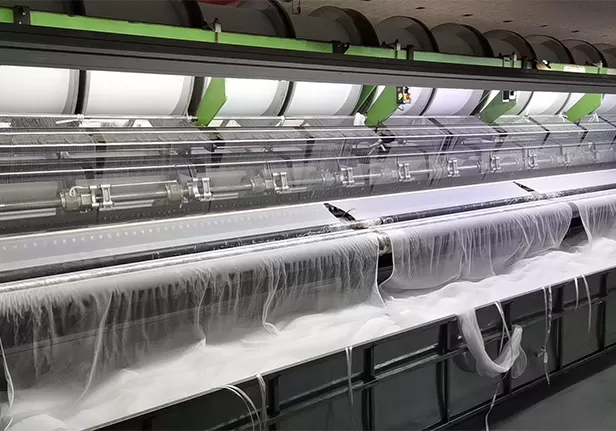
High-speed warp knitting machines produce stable, run-proof mesh structures that retain their hole geometry even when snagged. Following knitting, polyester options move into controlled dipping baths where resin binders and micro-encapsulated insecticides are applied under constant tension and controlled curing temperatures.
Quality Assurance Protocols and Lab Certifications
Internal testing laboratories form the foundation of quality assurance. Facilities maintained by Yamei perform continuous in-line monitoring of key structural and chemical parameters:
Continuous monitoring of dimensional stability and fabric density.
Mechanical tensile strength and bursting pressure testing using calibrated digital equipment.
HPLC quantification of active ingredient retention pre- and post-accelerated wash procedures.
UV resistance verification via controlled chamber exposure to prevent chemical breakdown during transit and storage.

Sourcing Considerations for B2B Importers and NGO Program Managers
Evaluating factory quotes requires looking beyond base unit pricing. Strategic sourcing decisions should consider full total-cost-of-ownership models that include shipping cubic volume optimization, packaging integrity, and multi-year field survival metrics.
Polyethylene nets feature higher inherent mechanical resistance, often reducing early replacement cycles in rugged operational settings. Conversely, polyester nets offer softer hand-feel, lower package volume due to compressible yarn structures, and reduced freight costs per individual unit. Evaluating these trade-offs against local distribution logistics ensures optimal allocation of public health budgets.
Packaging design directly impacts distribution efficiency. Standard institutional specifications mandate compressed bale packaging, binding 50 to 100 individually sealed nets into water-resistant outer covers. Individual bags must include clear graphic instructions in local languages to support correct installation, hanging methods, and care guidelines among end users.
Frequently Asked Questions
Q1: What distinguishes a standard commercial mosquito net from a
long-lasting insecticidal net (LLIN)?
A1: Commercial bed nets offer
basic mechanical protection and may lose temporary surface treatments after one
or two washes. LLINs integrate insecticides directly into the synthetic fibers
or utilize specialized binder matrices, allowing them to retain biological
efficacy through at least 20 standard washes and up to three years of continuous
field use.
Q2: How is active ingredient concentration verified during bulk
production?
A2: Analytical testing laboratories employ
High-Performance Liquid Chromatography (HPLC) or Gas Chromatography (GC) to
extract and quantify chemical content. Testing occurs during initial extrusion,
post-finishing, and as part of pre-shipment sampling conducted by independent
inspection agencies.
Q3: Why is yarn denier significant when specifying bed nets for
institutional tenders?
A3: Denier measures yarn weight and
thickness. A higher denier rating (e.g., 150D vs. 75D) indicates thicker yarn,
resulting in elevated bursting strength and tear resistance. This higher
durability extends the practical lifespan of bed nets deployed in demanding
rural or humanitarian emergency contexts.
Q4: What role does PBO play in modern vector control
textiles?
A4: Piperonyl Butoxide (PBO) is a synergistic chemical
compound that neutralizes defense enzymes inside pyrethroid-resistant mosquito
populations. When combined with synthetic pyrethroids, PBO restores chemical
knock-down efficacy in areas facing severe resistance challenges.
Q5: How does factory certification impact international shipping and
delivery timelines?
A5: Working with an accredited mosquito net
approved by WHO manufacturer guarantees that production complies with
standardized QA/QC workflows, reducing potential customs clearance delays,
avoiding lot rejections by third-party inspectors, and ensuring smooth project
execution for global tenders.
Initiate Your Vector Control Procurement Project
Procuring reliable vector control solutions requires a reliable manufacturing partner capable of meeting complex institutional guidelines. As a specialized mosquito net approved by WHO manufacturer, Yamei provides end-to-end production capabilities, precise chemical formulations, and customized packaging options tailored for global tender requirements.
Contact our technical sales team today to request detailed product specification sheets, laboratory analysis reports, or custom quotations for upcoming institutional tenders and bulk distribution orders.