
Global disease prevention initiatives against vector-borne illnesses depend on long-lasting insecticidal nets produced under standardized international criteria. Government health departments, humanitarian relief agencies, and institutional purchasing organizations implement rigorous evaluation frameworks to verify that vector control products meet global public health parameters. Selecting a reliable WHOPES approved mosquito nets supplier forms the bedrock of effective malaria prevention programs across endemic regions. Yamei operates as a specialized manufacturer, focusing on high-capacity production, precise polymer engineering, and compliant active ingredient application to meet institutional demands worldwide.
Public health supply chains require absolute consistency across millions of units. Structural integrity, controlled chemical release, and mechanical durability determine whether protective netting remains effective throughout multi-year deployment cycles. Understanding the engineering variables behind vector control textiles enables procurement officers to optimize tender requirements and verify supplier capabilities prior to contract execution.
Active Ingredient Chemistries and Application Modalities
The efficacy of long-lasting insecticidal nets relies on combining high-tenacity synthetic polymers with targeted insecticides. Manufacturing methodologies fall into two primary operational processes: active ingredient coating and chemical incorporation.
In the coating process, formulated pyrethroids—such as deltamethrin or alphacypermethrin—are bound to the outer surfaces of warp-knitted polyester fibers using polymer binders. This formulation allows controlled release of the chemical agent while maintaining fabric flexibility and structural softness. Coated fabrics release active molecules upon contact, delivering predictable lethal doses to target vectors.
In the incorporation method, active chemical agents are integrated directly into high-density polyethylene resin pellets prior to filament extrusion. As insecticide molecules on the fiber surface deplete over time due to handling or laundering, internal molecules migrate to the surface through natural micro-diffusion. This self-regenerating mechanism helps maintain chemical availability across extended field usages.
Deltamethrin: A fast-acting synthetic pyrethroid characterized by high knockdown rates and strong excito-repellent effects.
Alphacypermethrin: A highly stable pyrethroid variant that exhibits excellent wash retention and broad-spectrum vector control.
Permethrin: Frequently deployed in higher concentrations for specific target populations requiring reliable knock-down action.
Structural Specifications and Physical Durability Parameters
When evaluating a potential WHOPES approved mosquito nets supplier, procurement officers must examine physical performance parameters that govern product longevity under demanding environmental conditions.
Yarn Linear Density (Denier)
Denier defines the structural mass density of individual filament yarns, measured as weight in grams per 9,000 meters of filament. Institutional procurement frameworks standardly request 75 Denier (75D) or 100 Denier (100D) polyester netting, or 100D to 150D polyethylene structures. Higher denier specifications increase tear resistance, tensile strength, and puncture resistance in rural housing environments.
Mesh Density and Air Circulation
Mesh count is quantified as holes per square inch (typically 156 holes/inch² or approximately 25 holes/cm²). This specific geometric aperture size balances two competing priorities: preventing vector penetration while permitting adequate airflow to sustain sleeping comfort in tropical climates. Deviations in hole density compromise either protective coverage or thermal regulation.
Bursting Strength Measurements
Standardized testing via ISO 13938-1 measures the pneumatic or hydraulic pressure required to rupture woven or knitted netting. High-grade 75D polyester nets typically withstand bursting pressures exceeding 250 kPa, whereas 100D polyester and heavy polyethylene constructions achieve ratings above 400 kPa. Meeting these metrics prevents tearing during routine daily handling, washing, and hanging setup.
Biological Efficacy and Wash Resistance Protocols
The primary metric distinguishing standardized vector control products from conventional bed nets is sustained bio-efficacy following repeated washing cycles. Sourcing managers working with a WHOPES approved mosquito nets supplier look for verifiable compliance with international wash retention testing protocols.
Standard guidelines require netting to maintain biological activity after 20 standardized laboratory washing procedures. Bio-efficacy testing evaluates insecticidal performance using distinct biological assay models:
Cone Bioassays: Susceptible Anopheles mosquitoes are exposed to net samples for 3 minutes under controlled temperature and humidity. Inspectors track 60-minute knockdown rates and 24-hour mortality percentages. Compliant material maintains ≥95% knockdown or ≥80% mortality across test samples.
Tunnel Tests: Deployed when cone bioassay results show borderline efficiency, tunnel tests evaluate blood-feeding inhibition and vector mortality under simulated host-seeking conditions in semi-field chambers.
Yamei integrates high-performance liquid chromatography analysis within its internal quality assurance protocols to verify active ingredient concentrations across every batch. Chemical stability checks ensure that active compounds remain uniformly distributed across all warp-knitted sections.
Resistance Mitigation: Dual-Active Formulations and Synergists
Growing insecticide resistance among wild mosquito vectors requires advanced chemical strategies. Standard single-pyrethroid net formulations are increasingly supplemented by dual-active formulations or synergist-treated materials.
Piperonyl Butoxide (PBO) serves as a potent chemical synergist rather than an insecticide. When combined with pyrethroids, PBO neutralizes the metabolic enzymes that resistant vector species use to detoxify chemicals. Restoring vector susceptibility to pyrethroids improves control efficacy in high-resistance zones.
Dual-active formulations introduce secondary active agents with distinct modes of action—such as pyrrole compounds (chlorfenapyr) that disrupt cellular energy production, or insect growth regulators (pyriproxyfen) that inhibit vector reproduction. A capable WHOPES approved mosquito nets supplier maintains the operational versatility needed to formulate, test, and extrude these multi-component netting structures in accordance with specific regional epidemic requirements.
Manufacturing Engineering and Supply Chain Execution
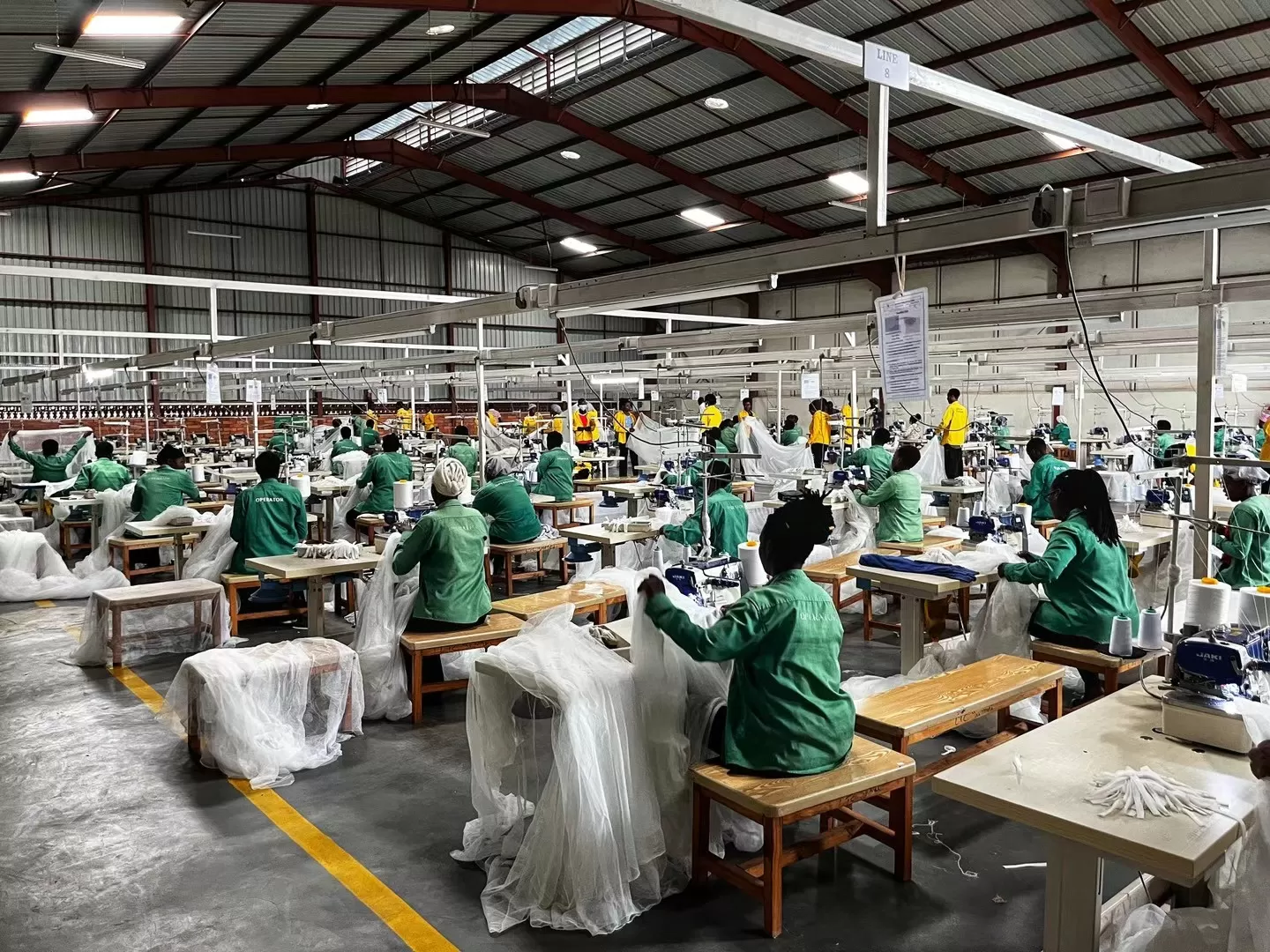
Executing large-scale public health orders demands high-capacity manufacturing logistics, scalable raw material sourcing, and strict batch traceability. Manufacturing facilities must operate high-speed warp knitting machines, automated cutting equipment, and dedicated sewing lines to preserve product uniformity across mass orders.
Yamei manages integrated production workflows spanning raw polymer resin compounding, multi-filament extrusion, warp knitting, chemical application, and precise automated converting. Owning the end-to-end manufacturing flow prevents supply chain disruptions and ensures uniform chemical dosing across large production volumes.
Packaging parameters play a major role in maritime freight efficiency and field distribution logistics:
Individual Unit Packaging: Nets are individually wrapped in sealed polyethylene bags to preserve chemical stability, protect against moisture exposure, and include program-specific graphics or usage instructions.
Bale Compression: Individual units are packed into high-density compressed bales containing 50 to 100 units. Heavy-duty outer polypropylene wrapping minimizes total shipment volume, maximizing container loading capacity and reducing ocean transport expenditure per unit.
Regulatory Compliance, Verification, and Quality Assurance
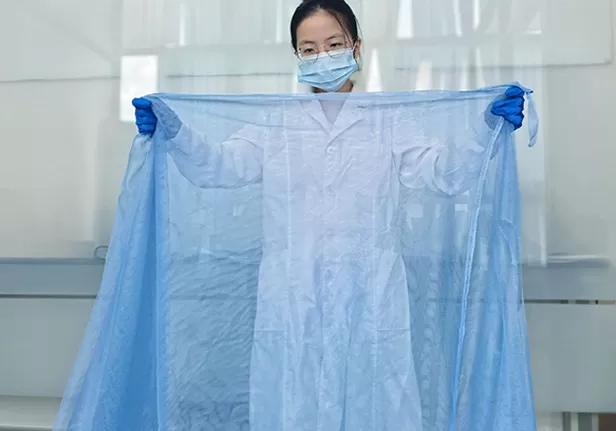
Institutional buying groups enforce strict pre-shipment inspection protocols to verify product quality prior to port dispatch. Sourcing from an established WHOPES approved mosquito nets supplier simplifies compliance verification across several structural metrics:
Third-Party Laboratory Audits: Independent inspection agencies (such as SGS, Intertek, or Bureau Veritas) sample finished production lots to evaluate active ingredient content, bursting strength, and dimensions.
Quality Management Certifications: Manufacturing sites operate under ISO 9001 (Quality Management) and ISO 14001 (Environmental Management) frameworks, ensuring batch-to-batch consistency and traceable documentation.
Serial Identification and Traceability: Package markings on outer bales and inner wrappers enable complete tracking from village distribution sites back to production shifts, resin batches, and chemical formulation lots.
Frequently Asked Questions
Q1: What structural parameters define a long-lasting insecticidal
net?
A1: A long-lasting insecticidal net is engineered to retain
insecticidal activity through at least 20 standard washes under laboratory
conditions and sustain physical protection over 3 years of continuous field
exposure, avoiding the need for repeated chemical retreatment.
Q2: How does denier choice impact performance in vector control
programs?
A2: Denier measures yarn weight and thickness. A 75D net
provides lightweight protection suitable for well-maintained indoor
environments, while 100D polyester or 100D–150D polyethylene nets offer higher
bursting strength and tear resistance for demanding rural or emergency relief
settings.
Q3: Why is wash resistance testing significant for WHOPES approved
mosquito nets supplier evaluations?
A3: Wash resistance testing
verifies that the active ingredient remains embedded within or bound to the yarn
matrix through laundering, ensuring the net provides continuous chemical
lethality against disease vectors over its operational lifespan.
Q4: Can LLIN dimensions and geometric shapes be customized for
regional procurement orders?
A4: Yes, manufacturing processes
support both rectangular configurations (ideal for standard institutional cots
and multi-person beds) and conical configurations (designed for single-point
ceiling suspension), with customized length, width, and height
specifications.
Q5: What chemical agents are standardly utilized in WHO-compliant
insecticidal nets?
A5: Synthetic pyrethroids—primarily deltamethrin,
alphacypermethrin, and permethrin—are widely deployed due to their high efficacy
against mosquitoes and low mammalian toxicity. Synergists like Piperonyl
Butoxide (PBO) or secondary actives are added to manage resistant vector
strains.
Initiate Sourcing and Custom Production Inquiries
Public health agencies, non-governmental organizations, and commercial distributors requiring certified long-lasting insecticidal nets can access detailed product specifications, independent laboratory test reports, and customized volume pricing. Working directly with an established WHOPES approved mosquito nets supplier ensures that production runs align with exact program parameters and tender specifications. Yamei offers full support for custom sizing, specialized chemical formulations, and containerized logistics planning. Contact our commercial engineering team to request technical dossiers, sample fabric swatches, or comprehensive tender quotations for upcoming procurement cycles.