
Sourcing insect protection products at volume demands more than comparing quotations. A folding mosquito nets manufacturer sits at the intersection of textile engineering, metal fabrication, and export logistics, and the gaps between suppliers show up months later in return rates, retail chargebacks, and damaged brand reputation. Importers, retail chains, hospitality groups, and aid organizations all need a partner who can hold tolerances across tens of thousands of units while adapting to regional preferences in size, color, and packaging.
This guide examines the technical and commercial dimensions that separate capable manufacturers from assemblers, with the goal of helping procurement teams build a reliable, repeatable supply line.
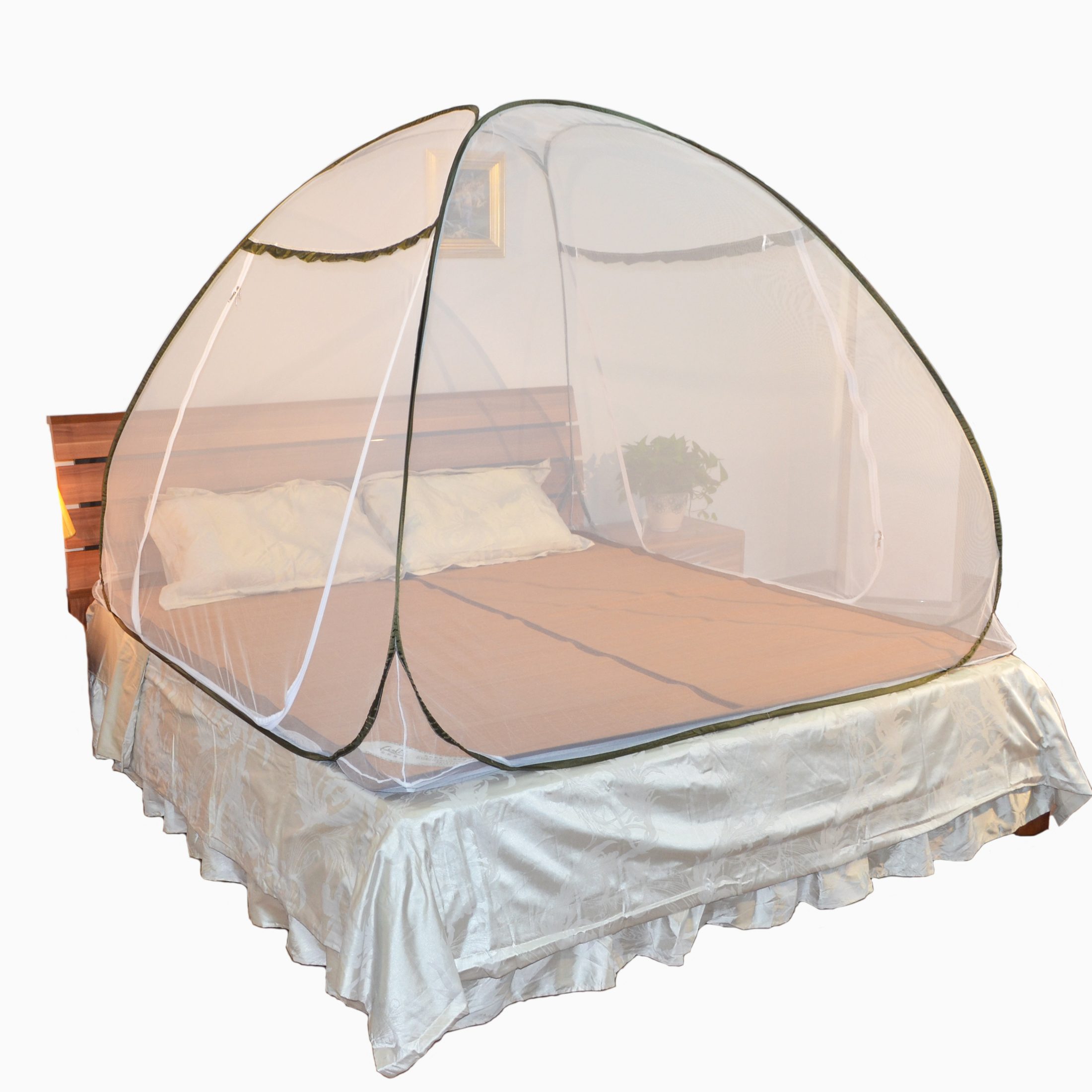
What Defines a Capable Folding Mosquito Nets Manufacturer
Capacity is often measured in monthly container volume, yet the more meaningful indicator is process control. A supplier producing two hundred thousand units per month with unstable joint tolerances will generate more after-sales cost than a smaller factory running disciplined inspection at every stage. Buyers should evaluate a folding mosquito nets manufacturer against four foundational criteria:
Vertical integration of frame drawing, mesh knitting or sourcing, and final assembly
Documented inspection protocols with traceable batch records
In-house tooling capability for custom joint and connector designs
Export documentation experience covering major destination markets
Vertical integration matters because frame steel quality and mesh tension interact directly. When one supplier controls both, tension calibration becomes a manufacturing parameter rather than a negotiation between vendors.
Core Technical Specifications That Drive Product Performance
Frame Geometry and Joint Engineering
Folding mechanisms rely on hinge points that must survive repeated open-close cycles without developing play. Common frame materials include galvanized steel wire, powder-coated spring steel, and aluminum alloy tubing. Wire diameter typically ranges from 1.8 mm to 3.2 mm depending on span width. For double-bed configurations exceeding 1.8 meters, engineers usually increase wire gauge or introduce a center support rib to prevent sagging under fabric weight.
Joint design separates premium from commodity product. Riveted joints offer lower cost but limited cycle life. Injection-molded nylon connectors with stainless steel pins extend cycle counts considerably and reduce pinch points that damage mesh during folding.
Mesh Count, Yarn Denier, and Airflow Balance
Mesh specification determines both insect exclusion and ventilation. Standard configurations include:
156 mesh (16 holes per inch) — general purpose, strong airflow, suitable for larger insects
196 mesh — balanced performance for temperate climates
256 mesh and above — high-density protection for regions with fine sand flies or midges
Yarn denier influences tensile strength and drape. Polyester multifilament yarn in the 50D to 100D range provides a practical balance between durability and softness. Monofilament alternatives resist abrasion differently and suit markets where mesh rigidity is preferred.
Fabric Treatment and Longevity
Untreated polyester degrades under prolonged UV exposure. Long-life insecticide treatment, applied through dip coating or polymer incorporation, extends service life and adds functional value that supports higher retail positioning. Buyers targeting public health programs frequently require WHO-prequalified treatment chemistry and corresponding test documentation.
Manufacturing Workflow: From Yarn to Finished Carton
Production begins with mesh knitting or warp-knitting, followed by heat setting to stabilize dimensions. Frame wire is drawn, straightened, cut to length, and formed on CNC bending machines. Powder coating follows, with curing temperatures monitored to prevent coating brittleness at fold points.
Assembly lines then combine frame, mesh, and edge binding. Stitching density along the perimeter affects tear resistance significantly; a common failure mode in low-cost products is mesh pull-out at corner stress points. Reinforced corner patches and double-stitched seams address this directly.
Final stages include functional cycling tests, visual inspection under standardized lighting, folding, and polybag or color-box packing. Carton compression strength should be verified against stacking height requirements for ocean freight.
Customization Capabilities for OEM and ODM Programs
Private label programs require flexibility across multiple dimensions. A capable partner supports:
Custom dimensions for single, double, queen, and king bed platforms
Color matching to Pantone references for frame coating and mesh dyeing
Logo printing on carry bags, instruction inserts, and retail cartons
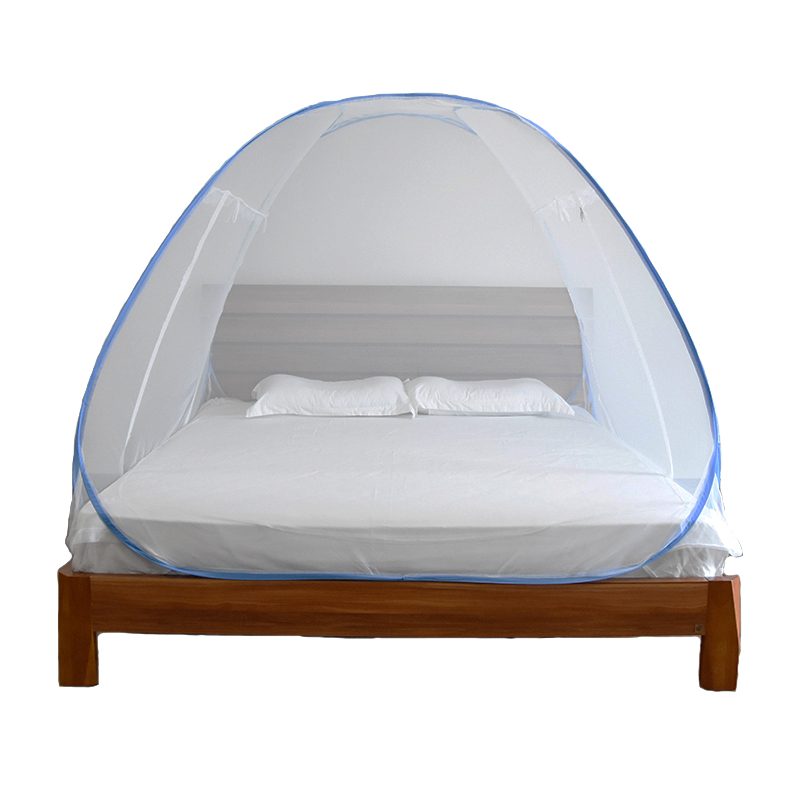
Structural variations including pop-up, self-standing, and suspended canopy formats
Accessory bundling such as mounting hooks, repair patches, and storage sleeves
Tooling investment for custom connectors typically amortizes quickly at volumes above twenty thousand units. For smaller trial orders, existing mold libraries often cover the majority of requested configurations, reducing development time and upfront cost.
Applications Across Commercial and Residential Markets
Demand patterns vary by channel. Retail buyers prioritize packaging appeal and size assortment. Hospitality procurement focuses on installation speed, laundering durability, and uniform appearance across hundreds of rooms. Humanitarian and NGO buyers emphasize treatment compliance, repairability, and flat-pack efficiency for air freight.
Each channel imposes different acceptance criteria, and a folding mosquito nets manufacturer with multi-market experience can adjust specifications without redesigning the core platform. This adaptability shortens qualification cycles for buyers entering new regions.
Quality Control Protocols and Compliance Requirements
Inspection should span incoming materials, in-process checks, and pre-shipment verification. Practical benchmarks include:
AQL sampling at 2.5 for major defects and 4.0 for minor defects
Cycle testing of at least 500 open-close repetitions per batch sample
Mesh tensile testing and dimensional verification against approved spec sheets
Color fastness testing for dyed mesh and coated frames
Destination market compliance frequently involves REACH, California Proposition 65, and specific textile labeling rules. Suppliers experienced in these frameworks prepare documentation in advance, which reduces customs delays.
Common Pain Points Buyers Face and How to Resolve Them
Recurring issues in this category tend to follow predictable patterns. Understanding them allows buyers to write tighter specifications before orders are placed.
Frame deformation after shipping — traced to insufficient carton strength or inadequate internal separation. Specify compression ratings and divider design.
Mesh tearing at corners — resolved through reinforced patches and higher stitch density at stress zones.
Inconsistent dimensions between batches — addressed with fixed jig tooling and mandatory first-article approval.
Delayed lead times during peak season — mitigated by forecasting commitments and reserved production slots.
YAHE LN approaches these challenges by locking specifications into a controlled document set at order confirmation, then auditing each production run against that baseline. Buyers receive inspection reports before shipment release, which keeps surprises contained at the factory rather than at the destination port.
Supply Chain Reliability and Lead Time Management
Lead time stability depends on raw material planning as much as factory capacity. Steel wire and polyester yarn prices fluctuate, and suppliers who purchase on spot markets transmit that volatility into delivery schedules. Manufacturers with annual material contracts and buffer inventory maintain more predictable output.
Typical production timelines for established programs run twenty-five to thirty-five days after sample approval, with ocean transit adding a further period depending on destination. Peak season from February through May compresses available capacity, so purchase orders placed earlier in the calendar year generally secure better scheduling.
Frequently Asked Questions
What materials are most commonly used in folding mosquito nets?
Polyester multifilament mesh paired with powder-coated steel wire forms the standard configuration. Aluminum frames and high-density polyethylene mesh appear in lighter or specialty variants.
Can folding mosquito nets be customized with private label branding?
Yes. Logo printing on cartons, carry bags, and instruction sheets is routine, and custom frame colors and mesh shades can be matched to brand standards.
What is the typical minimum order quantity?
Minimums vary by configuration. Standard sizes using existing molds often start at one thousand units per color, while fully custom tooling programs generally require higher volumes to justify development cost.
How are folding mosquito nets packaged for export?
Products are folded into polybags or printed color boxes, then packed into double-wall corrugated cartons with dividers. Carton specifications are matched to container stacking height and handling conditions.
Which certifications should buyers request from a supplier?
Relevant documentation includes ISO 9001 quality system certification, REACH compliance statements, textile labeling conformity, and test reports for any insecticide treatment applied to the mesh.
How long does sampling and production take?
Sample development usually requires seven to fifteen days. Bulk production follows within twenty-five to thirty-five days of sample approval, depending on order size and season.
Can orders be mixed across multiple sizes in one shipment?
Mixed container loading is standard practice for retail programs. Assortment ratios are confirmed at order stage and reflected in carton marking and packing lists.
Procurement teams evaluating suppliers for upcoming programs can submit their specifications, target volumes, and destination markets to YAHE LN for a technical review and detailed quotation. Sharing mesh count requirements, frame material preferences, and packaging expectations at the inquiry stage allows engineering feedback to be returned alongside pricing, which shortens the path from initial contact to confirmed sample.