Consumer expectations for outdoor gear have shifted dramatically over the past five years. Campers, bushcrafters, and overland travelers no longer accept standard, untreated mesh that only acts as a physical barrier. They demand active protection against vector-borne illnesses such as West Nile virus, Lyme disease, and malaria.
This shift has brought Long-Lasting Insecticidal Nets (LLIN) out of purely humanitarian operations and straight into the commercial outdoor market. For procurement managers and gear brands, sourcing high-performance netting requires careful technical evaluation. You need a supply chain partner capable of handling intricate custom specifications while meeting strict chemical safety and textile durability standards.
Finding a factory that balances technical textile production with global public health compliance is a major challenge. This guide outlines the essential benchmarks for vetting an outdoor mosquito net wholesale partner, highlighting why experienced manufacturers like YAHE LN lead this specialized industry.
1. The Shift to Treated Outdoor Netting
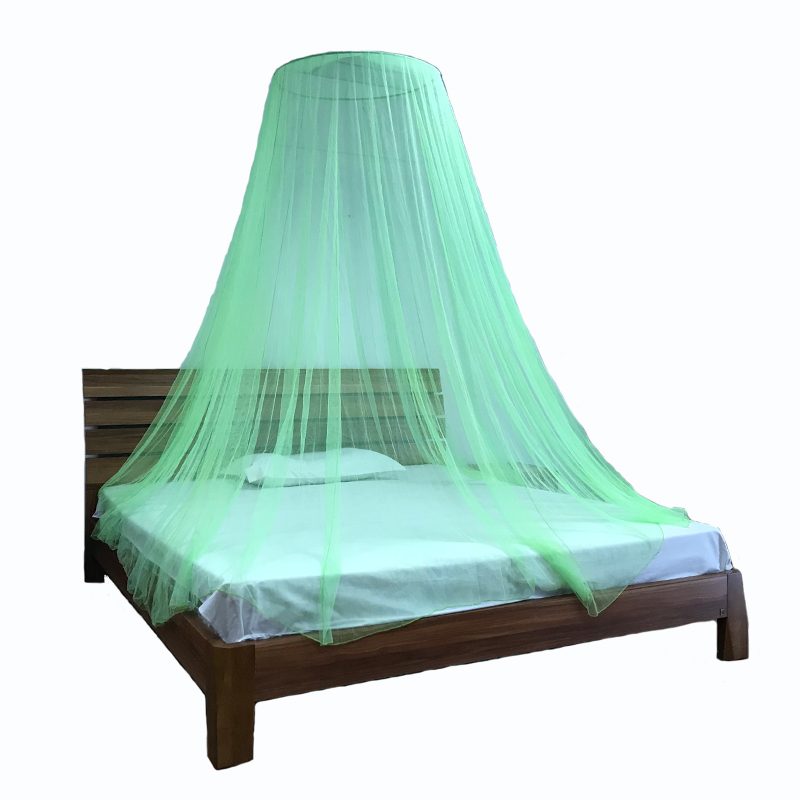
Traditional camping mesh keeps bugs out until a tear appears, or until insects land on the fabric and bite through it where it touches the user's skin. Commercial LLIN products solve this vulnerability. By binding insecticides directly into the fabric matrix, these nets knock down and repel pests on contact.
For brands targeting the glamping, tactical, and adventure travel markets, treated nets offer an undeniable value proposition. However, manufacturing these products requires far more oversight than producing typical polyester camping accessories.
Buyers must balance vector-control efficacy, human safety thresholds, weight considerations, and severe weather resistance. Choosing the wrong supplier risks non-compliance with regional chemical regulations, product recalls, or poor field performance that destroys brand trust.
2. International Compliance and WHO Prequalification
When procuring bulk outdoor mosquito nets, chemical compliance is non-negotiable. Insecticidal bed nets are regulated as public health products and pesticides in most jurisdictions, including the EPA in the United States and the BPR in the European Union.
The gold standard for vetting any insecticidal net producer is World Health Organization Prequalification (WHO PQ). A WHO PQ listing is not a simple paperwork audit. It requires multi-year evaluations covering chemical stability, wash retention, and safety for human skin contact.
WHO PQ Validation: Suppliers holding active prequalification status demonstrate that their treatment chemistry remains uniform across millions of production meters. YAHE LN secured its WHO PQ certification in 2015, validating its technical processes on the global stage.
Humanitarian Pedigree: Factories that consistently supply organizations such as UNICEF and UNHCR operate under zero-defect quality control systems. These operational safeguards protect private-label buyers from batch-to-batch inconsistencies.
Independent Laboratory Data: Never rely solely on an in-house certificate of analysis. Request third-party validation from accredited facilities such as the French TEC laboratory or GLP-compliant testing centers to verify active ingredient retention and knock-down rates.
Partnering with a WHO PQ certified mosquito net manufacturer protects your business against import delays, customs seizures, and safety liabilities.
3. Insecticidal Longevity and Polymer Engineering
A common pitfall in outdoor mosquito net wholesale purchasing is confusing simple "dipped" nets with genuine long-lasting insecticidal technology. Dipped nets rely on surface-level coatings that wash out after three to five rinses, leaving behind toxic runoff and an ineffective product.
Commercial-grade custom LLIN manufacturing utilizes masterbatch incorporation or advanced resin-binding technologies:
High-Density Polyethylene (HDPE) Incorporation: The active ingredient (typically Permethrin or Alphacypermethrin) is compounded directly into the virgin resin before extrusion. The chemical slowly migrates to the surface over years of use, resisting harsh sunlight and rain.
Polyester (PET) Resin Binding: Filaments are coated with a specialized polymer wash-resistant binder that locks the pyrethroid onto the fibers, ensuring gradual release without powdery surface residue.
Outdoor gear must withstand aggressive use. Campers pitch shelters in high-UV environments, pack them damp, and wash them after muddy expeditions.
Advanced facilities utilize dedicated chemical formulation labs. YAHE LN operates a 200-square-meter standardized formulation facility backed by proprietary patents. This infrastructure ensures their netting withstands more than 21 standard WHO wash cycles while maintaining active insecticidal efficacy for 3 to 5 years in real-world outdoor conditions.
4. Vertical Integration and Scale
In the wholesale outdoor sector, delivery delays during peak pre-season inventory runs can ruin an entire fiscal year. Sourcing through trading intermediaries or fragmented cut-and-sew workshops introduces critical supply chain risks.
A true primary manufacturer controls the entire production chain under one roof:
Yarn Extrusion and Drawing: Precise control over polymer purity, tensile strength, and denier consistency.
Warp Knitting: Automated tricot knitting machines producing flawless mesh structures with no dropped stitches.
Heat Setting and Stentering: Dimensional stabilization to guarantee the net will not shrink, warp, or sag in the field.
Active Treatment/Dipping: Strict control of chemical migration, surface concentration, and drying parameters.
Fabrication and Industrial Sewing: High-speed sewing lines for hems, zips, webbing loops, and shock-cord channels.
Scale directly impacts cost and delivery stability. Spread over 66,700 square meters with an investment surpassing 100 million RMB, YAHE LN produces up to 100,000 finished nets and 500,000 square meters of technical netting daily. This massive capacity gives outdoor brands the flexibility to scale rapidly during seasonal surges without missing retail delivery windows.
5. OEM and ODM Customization for Technical Outdoor Applications
Bulk outdoor mosquito nets are not "one size fits all." A mosquito net engineered for a humanitarian crisis does not have the same form factor as an ultralight backpacking shelter or a commercial glamping dome. Your wholesale partner must offer extensive OEM/ODM engineering capabilities.
Form Factors and Applications
Hammock Systems: 360-degree cocoon nets featuring asymmetrical tie-outs, ridge-line organizers, and dual-side SBS zippers.
Backpacking Inner Tents: Bathtub floors paired with ultra-fine bug mesh designed to clip into trekking-pole shelters.
Pop-up Canopy Enclosures: Modular walls with heavy-duty hook-and-loop fasteners for commercial gazebos and tailgate awnings.
Wearable Protection: Lightweight insect-repellent head nets, bug jackets, and gaiter systems tailored for hunters, anglers, and field teams.
Material Specifications and Safety
You must balance strength against weight. Standard commercial netting uses 75D or 100D polyester, delivering exceptional burst strength for rugged use. Ultralight gear requires 40D or even 20D micro-mesh that packs down to pocket size.
Mesh density is another critical metric. While standard WHO guidelines recommend 156 holes per square inch to prevent mosquito passage while maintaining airflow, northern outdoor markets require "no-see-um" mesh featuring 300 to 600 holes per square inch to stop midges and blackflies.
Verify that your manufacturer meets flame retardancy standards such as CPAI-84 or NFPA 701, particularly for shelters placed near campfires. Safe, eco-friendly chemical profiles are essential. YAHE LN has specialized in environmentally responsible, skin-safe repellent chemistry since 2003, ensuring compliance with global consumer product safety regulations.
Checklist for Evaluating an Outdoor Mosquito Net Supplier
Use this technical checklist during supplier audits and RFQ evaluations:
Verified Certifications: Does the factory hold ISO 9001, ISO 14001, ISO 45001, and an active WHO PQ listing?
Traceable Lab Reports: Can they provide recent GLP or TEC test reports detailing active ingredient content (g/kg) and wash retention curves?
Vertical Infrastructure: Does the supplier pull their own yarn and knit the base mesh, or do they purchase greige fabric from third parties?
Chemical Registration Support: Does the team have regulatory personnel who understand EPA, REACH, and biocide import laws in your target country?
Prototyping Speed: Can the engineering department deliver rapid custom-cut prototypes, fit-testing samples, and specialized packaging within two weeks?
Frequently Asked Questions (FAQ)
Q1: What is the difference between standard mesh and custom LLIN
manufacturing for outdoor applications?
A1: Standard mesh provides
only physical separation, meaning insects can still land on the fabric, search
for gaps, or bite users directly through tightly stretched areas. Custom LLIN
manufacturing incorporates high-grade insecticides into the fiber or binds them
with wash-durable polymers. This knocks down, repels, or kills insects on
contact, offering an active protective perimeter even if the netting is
punctured or rests against the skin.
Q2: Why should an outdoor brand source from a WHO PQ certified
mosquito net manufacturer?
A2: WHO PQ status guarantees that the
factory meets strict international standards for chemical consistency, human
safety, and manufacturing quality. It serves as independent verification that
the netting releases controlled, non-toxic insecticide levels safe for direct
skin contact while maintaining effective pest control across dozens of
washes.
Q3: How many washes can an outdoor LLIN withstand before losing its
repellent properties?
A3: True factory-engineered LLINs maintain
insecticidal efficacy through at least 20 to 21 standardized wash cycles,
matching WHO guidelines. In field conditions, this translates to three to five
years of typical outdoor recreational use, even when exposed to outdoor
elements, sweat, and light rain.
Q4: Can mesh size and denier be customized for ultralight camping
gear?
A4: Yes. An experienced OEM camping mosquito net wholesale
factory can adjust yarn denier from heavy-duty 100D for family tents down to 40D
or 50D for ultralight setups. Mesh density can also be tuned from standard 156
holes/inch² up to ultra-fine 400+ holes/inch² micro-mesh designed specifically
to block biting midges and sandflies.
Q5: What are the minimum order quantities (MOQ) when ordering
custom-designed insecticidal nets?
A5: MOQs depend on whether the
base mesh requires custom coloration, specialized chemical formulation, or
standard running production. Fully integrated plants usually require 1,000 to
3,000 units for completely custom shelter cuts, whereas custom packaging on
standard running fabric formulations can often be negotiated at lower
thresholds.
Secure Your Outdoor Supply Chain
Wholesale procurement of technical insect protection requires an uncompromising approach to quality control. A failure in chemical stability or seam construction will undermine your brand's reputation in the outdoor equipment market.
By prioritizing WHO PQ-certified facilities, vertically integrated manufacturing chains, and verified slow-release technology, your brand can deliver dependable bug-free performance to consumers worldwide. YAHE LN brings over twenty years of pioneering chemical expertise, massive daily production capacity, and strict international compliance to your product development pipeline.
Upgrade your outdoor shelter and protective gear offerings with proven vector-control solutions. Contact the technical sales team at YAHE LN today to request material swatches, review independent GLP lab reports, or receive a fast OEM quotation for your upcoming outdoor product run.
Get in touch: Send your technical specifications and volume requirements directly to our supply team at sales@yaheln.com to get started.