
Large-scale vector control campaigns and commercial distribution networks demand robust manufacturing standards. When sourcing protective bedding solutions for public health initiatives, disaster relief, or wholesale distribution, the selection of a manufacturing partner determines the efficacy of the entire deployment. Double-sized bedding structures require specific attention to material strength, seam durability, and dimension consistency to ensure complete protection for multiple occupants sleeping under a single canopy.
Selecting a qualified double bed mosquito net bulk supplier involves a deep assessment of raw material quality, chemical treatments, and logistical capabilities. Enterprises must look beyond basic unit costs to examine the physical properties of the fibers, the stability of the active insecticidal ingredients, and the manufacturer's capacity to handle high-volume demands. Yamei provides high-performance barrier solutions designed to meet rigorous international standards for durability and biological efficacy.
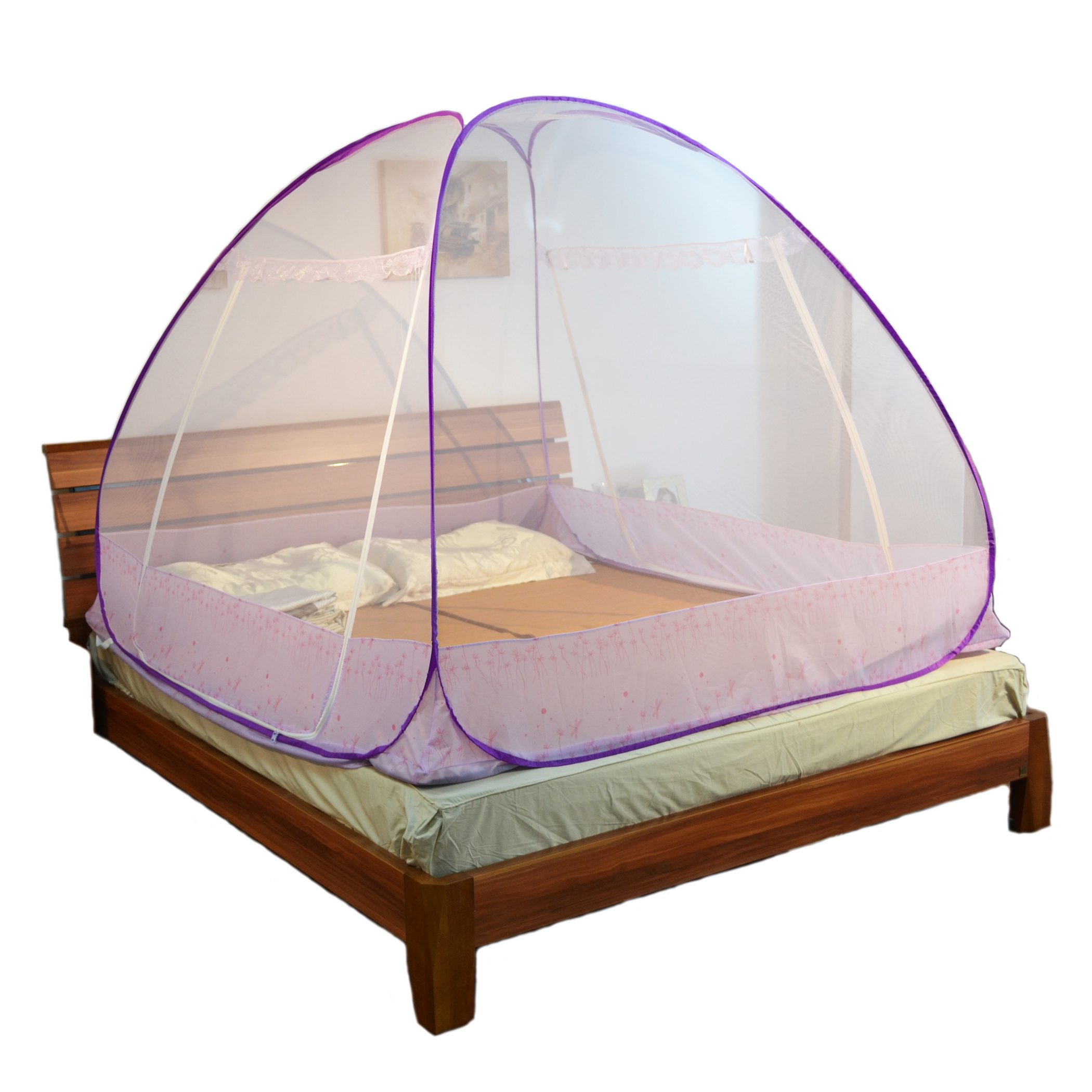
Sourcing From a Qualified Double Bed Mosquito Net Bulk Supplier
The structural integrity of a large-format mosquito net depends on the base polymer and knitting structure. Unlike single-size nets, double bed variations experience higher physical tension during daily setup and tucking routines. Consequently, a reputable double bed mosquito net bulk supplier must offer a diverse range of fabric weights and fiber compositions to match specific deployment environments.
Polyester and polyethylene represent the primary polymers used in professional manufacturing. Polyester nets, typically constructed with a warp-knitted tricot structure, offer a softer texture and superior drape characteristics, making them highly desirable for commercial retail and hospitality markets. Polyethylene nets, extruded as monofilament fibers, provide exceptional physical toughness and are preferred for demanding field operations and humanitarian aid efforts in rugged terrains.
To evaluate the structural durability of these materials, procurement officers must examine several key physical metrics:
Denier Rating: Denier measures the mass in grams per 9,000 meters of yarn. For commercial distributions, a 75-denier (75D) polyester fabric offers a lightweight yet effective barrier. For public health distributions where longevity is a priority, 100D or 150D options are specified to withstand continuous friction and washing.
Mesh Count: The standard density of 156 holes per square inch (typically a 12x13 pattern) provides an optimal balance between airflow and insect exclusion. This configuration prevents the entry of Anopheles mosquitoes while maintaining a comfortable microclimate inside the sleeping enclosure.
Bursting Strength: Measured in kilopascals (kPa) using hydraulic test methods, the fabric must withstand internal and external pressure. Standard polyester nets should achieve a minimum bursting strength of 250 kPa, whereas heavy-duty polyethylene variants often exceed 350 kPa.
Chemical Impregnation and Residual Efficacy
For humanitarian projects and disease prevention campaigns, physical barriers alone are often insufficient. Long-lasting insecticidal nets (LLINs) rely on controlled-release polymer technology to maintain insecticidal activity over several years. A reliable double bed mosquito net bulk supplier must demonstrate mastery in chemical formulation and binding processes to ensure the safety of users and the long-term mortality of target vectors.
Pyrethroids, such as deltamethrin, alphacypermethrin, and permethrin, remain the primary active ingredients due to their high efficacy against mosquitoes and low toxicity to mammals. The manufacturing process involves either incorporating the insecticide directly into the molten polymer before fiber extrusion or coating the finished fabric with a wash-resistant binder system. Incorporated polyethylene nets gradually migrate the active ingredient to the surface over time, ensuring that the net remains lethal to insects even after repeated wash cycles.
The evaluation of treated nets requires strict adherence to international bioassay standards, including the World Health Organization (WHO) cone tests. These tests measure the knock-down rate within 60 minutes and total vector mortality after 24 hours of exposure. A high-quality LLIN must maintain its biological efficacy for a minimum of 20 standardized washes under laboratory conditions, ensuring continuous protection throughout its intended lifespan of three to five years.
Logistical Parameters in High-Volume Sourcing
The logistical footprint of a bulk order directly impacts the total cost of ownership. Large-format nets designed for double beds occupy significant volume, which can lead to high shipping and storage fees if the packaging is not properly managed. Working with an experienced double bed mosquito net bulk supplier helps mitigate these distribution challenges through advanced compression packaging methodologies.
To maximize cargo space, manufacturers utilize high-pressure hydraulic baling systems. This process reduces the volume of the finished goods, allowing a standard 40-foot High Cube (40' HQ) container to hold up to 80,000 compressed polyester nets, depending on the specific dimensions and denier. These compressed bales are wrapped in heavy-duty woven polypropylene sheets and secured with steel straps to prevent moisture ingress and mechanical damage during maritime transit.
Clear identification and batch traceability are also vital for large distributions. Each bale must carry durable labels indicating the batch number, manufacturing date, fiber type, chemical concentration, and dimensions. This level of traceability allows field coordinators to monitor the distribution of specific production lots and simplifies quality assurance audits at regional reception warehouses.
Production Capabilities of Yamei
Operating as an integrated manufacturer, Yamei maintains comprehensive control over the entire production chain, from initial polymer extrusion to the final stitching and packaging. This vertical integration eliminates intermediate supply chain risks and guarantees a consistent level of quality across large production batches. Our facility uses modern high-speed warping and knitting machines capable of producing thousands of meters of uniform mesh daily.
Our quality management system monitors key parameters at every stage of production:
Yarn Quality Inspection: Continuous testing of tensile strength and denier consistency before the knitting process begins.
Mesh Dimensional Audits: Regular laser-guided measurements of hole sizes to prevent gaps or deviations in the protective barrier.
Chemical Concentration Verification: Routine laboratory sampling of treated fabrics using gas chromatography to confirm the precise loading of active ingredients.
Seam and Border Reinforcement: Structural stitching of double-hemmed borders and corner loops to distribute tension evenly during installation.
By controlling these processing variables, we provide our global partners with reliable protective barriers that meet stringent public health procurement standards. Our manufacturing lines can be quickly configured to produce customized dimensions, border fabrics, and suspension designs to meet the specific requirements of different regions.
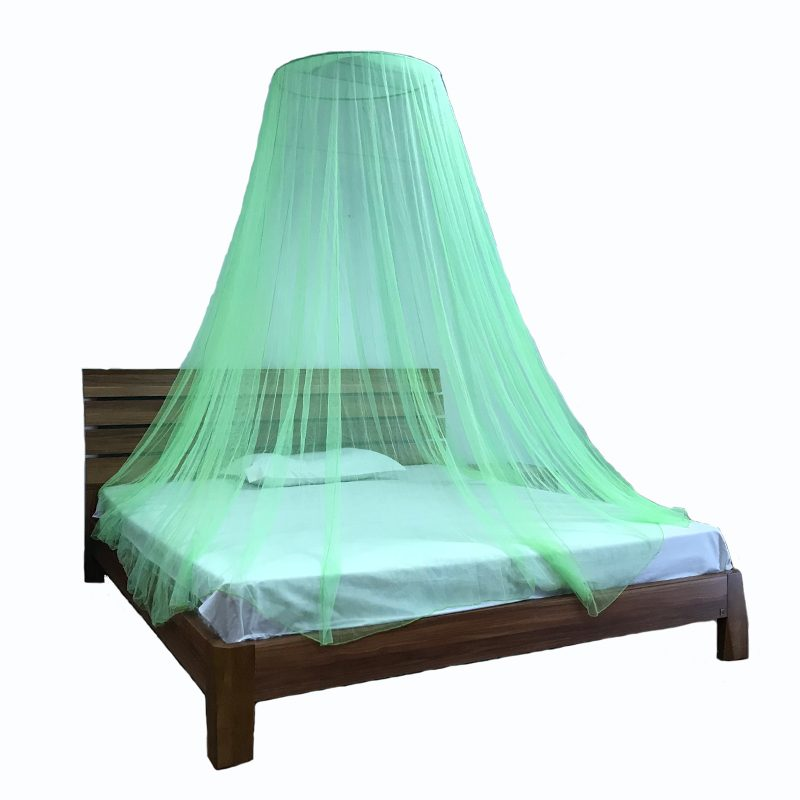
Initiation of Wholesale Procurement
Successful large-scale deployment of insect-barrier systems requires detailed alignment on product specifications and delivery schedules. Public health organizations, non-governmental agencies, and commercial distributors are invited to contact our application engineering team to discuss material selections, regulatory compliance certificates, and production lead times. Providing early projections regarding container volumes, target delivery regions, and chemical treatment requirements allows us to optimize our production scheduling and secure the necessary raw materials at stable pricing.
To request detailed product datasheets, physical material samples, or a comprehensive commercial quotation for bulk orders, please submit a formal inquiry detailing your project specifications. Our logistics specialists will work closely with your procurement department to coordinate compliant shipping documentation, customs clearance parameters, and optimized container packing layouts.
Frequently Asked Questions
Q1: What is the typical lead time for a bulk container order of
double bed mosquito nets?
A1: Lead times depend on the exact
material specifications and current factory capacity. Typically, a standard
40-foot container containing 60,000 to 80,000 polyester double bed nets requires
30 to 45 days for manufacturing, chemical treating, quality testing, and
packing. This timeline may vary during periods of high demand from seasonal
public health procurement campaigns.
Q2: How does Yamei ensure the uniform distribution of insecticide
across the fabric?
A2: We utilize computerized industrial padding
and immersion machinery that controls chemical bath concentration, pressure roll
settings, and drying temperatures. For incorporated nets, the active ingredient
is mixed directly into the masterbatch polymer before extrusion. Continuous
inline monitoring and laboratory batch testing ensure the chemical concentration
remains consistent across all areas of the fabric.
Q3: Can the dimensions of the double bed nets be customized for
specific regional bed sizes?
A3: Yes, we accommodate regional
variations in standard bedding dimensions. Standard rectangular double bed nets
are commonly produced in sizes like 190 x 180 x 150 cm or 190 x 160 x 150 cm. We
can adjust the length, width, and height specifications, as well as customize
the reinforcement borders and the placement of suspension loops, to match your
specific target market requirements.
Q4: What packaging options are available to prevent damage during
long-term storage in humid climates?
A4: For long-term storage,
especially in tropical climates, we offer individually sealed OPP/PP plastic
bags with custom insert cards. These individual packages are then compressed
into high-density bale wraps made of water-resistant, UV-stabilized woven
polypropylene. This dual-layer protection prevents dust, moisture, and pests
from damaging the nets during prolonged storage in non-climate-controlled
regional warehouses.
Q5: Do your nets comply with international environmental and toxicity
safety standards?
A5: Yes, our materials are manufactured in
compliance with international safety standards. The active insecticidal
ingredients used in our treated nets are applied at concentrations that are
lethal to target insect vectors but safe for human contact, including infants.
We can provide material safety datasheets (MSDS) and chemical compliance
certificates corresponding to each production lot upon request.