
Vector control remains a primary defense against insect-borne diseases like malaria, dengue, and lymphatic filariasis. In large-scale public health campaigns, humanitarian aid distribution, and commercial retail distribution, the physical and chemical durability of bed nets directly influences intervention outcomes. Selecting an experienced rectangular mosquito net supplier is a key operational step for purchasing managers, NGO procurement officers, and international distributors.
To ensure high performance in demanding field environments, buyers must look beyond unit price. Understanding raw material properties, polymer extrusion standards, chemical binding processes, and logistics planning is necessary to establish a dependable supply chain. This analysis provides the technical insights required to verify product quality and streamline the procurement process.
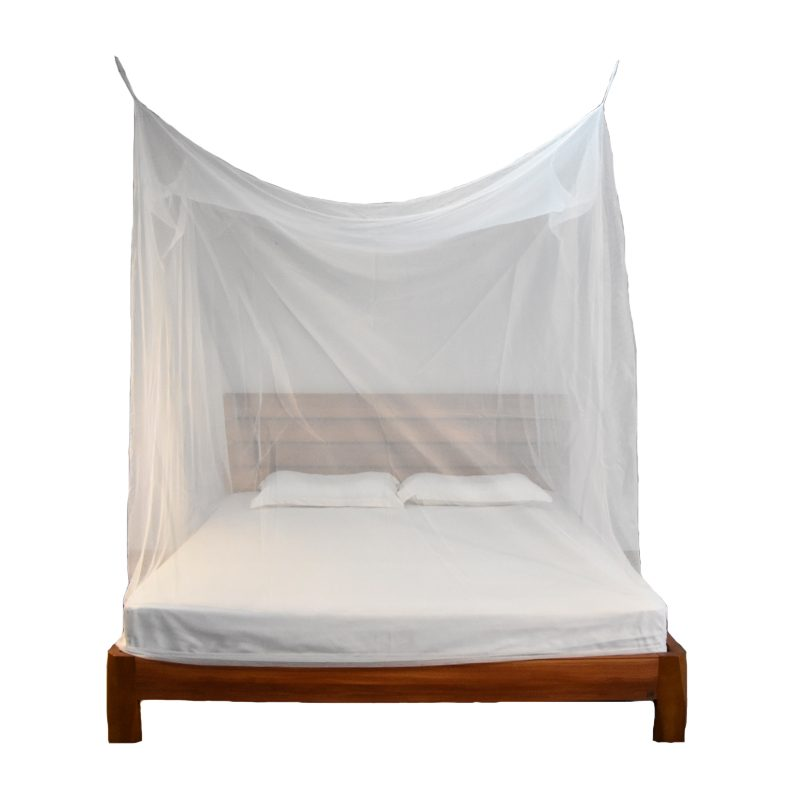
Raw Material Selection: Polyester vs. Polyethylene
The foundation of any durable vector control netting lies in polymer selection. Manufacturers typically use either multi-filament polyester or mono-filament polyethylene to construct rectangular bed nets. Each material exhibits distinct mechanical properties that affect wear resistance, airflow, and user acceptance.
Multi-Filament Polyester Nets
Polyester (polyethylene terephthalate) is preferred for its softness and drapeability, which mimic traditional home bedding materials. Multi-filament yarns consist of multiple fine fibers twisted together to form a single thread. This construction provides high flexibility and quiet usage, which often increases consistent use among end-users in tropical regions.
Denier Rating: Typically ranges from 75D to 100D. A higher denier indicates a thicker thread, which directly relates to higher fabric weight and tensile strength.
Bursting Strength: Standard 75D polyester nets usually provide a bursting strength of 220 to 250 kPa, while 100D variants can exceed 350 kPa when tested under ISO 13938-1 standards.
Weight: Usually averages between 30 and 40 grams per square meter, balancing physical strength with ventilation.
Mono-Filament Polyethylene Nets
Polyethylene is a more rigid polymer, extruded as a single continuous filament. These nets are inherently robust and highly resistant to mechanical tearing, making them suitable for long-term deployments in rugged, non-residential settings like military camps or temporary disaster relief shelters.
Denier Rating: Generally ranges from 100D to 150D, providing a stiffer structure.
Bursting Strength: Often exceeds 400 kPa, making them highly resistant to accidental punctures from bed frames or rough walls.
Acoustics and Texture: The stiffness of polyethylene can cause minor rustling and a rougher texture, which may impact user preference in residential projects.
How a Competent Rectangular Mosquito Net Supplier Assures Structural Integrity
Physical durability is verified by the fabric structure. Rectangular nets are subjected to continuous tension at the corners and friction against bed frames. A professional manufacturer like Yamei uses specific structural designs to ensure the net remains intact throughout its expected lifespan.
Warp Knitting Technology
Mosquito netting must be produced using warp knitting rather than weft knitting. Warp knitting uses high-precision machinery (such as Karl Mayer tricot machines) to lock the loops together. This structure ensures that if a single thread is cut or punctured, the hole does not run or unravel under tension. The mesh density must be precisely calibrated, typically to 156 holes per square inch (25 holes per square centimeter), which is fine enough to stop anopheles mosquitoes while allowing adequate air circulation in hot climates.
Reinforced Border Panels and Corner Loops
The corners and the lower border of a rectangular net experience the highest physical stress during installation and daily tucking.
Corner Reinforcements: Double-layered fabric patches sewn at each hanging point prevent the metal eyelets or fabric loops from tearing out when the hanging strings are pulled tight.
Sewing Construction: Quality suppliers use double-needle flat-lock seams with high-tensile polyester sewing thread to assemble the rectangular panels.
Bottom Border (Skirting): A heavy-duty polyester ribbon or a wider hemmed band (often 10 cm to 15 cm wide) along the bottom edge protects the netting from abrasion against the floor or rough wooden bed frames.
Insecticide Treatment and Chemical Binding Methods
For nets destined for public health programs, simple physical barriers are often insufficient. Long-lasting insecticide-treated nets (LLINs) require a chemical formulation that kills or repels vector insects over several years, even after repeated washings.
The manufacturing process relies on two primary chemical application methods:
Surface Coating Technology
This method applies a wash-resistant polymer binder mixed with an insecticide, such as deltamethrin or alpha-cypermethrin, to the surface of the knitted polyester fibers. The binding agent acts as a reservoir, slowly releasing the active ingredient to the surface over time. If a rectangular mosquito net supplier uses high-quality polymer binders, the netting can maintain its bio-efficacy for up to 20 standard washes according to World Health Organization (WHO) testing protocols.
Polymer Incorporation Technology
This technique is used for polyethylene nets, where the insecticide (commonly permethrin or alphacypermethrin) is blended directly into the liquid polymer masterbatch before extrusion. As the insecticide on the outer surface degrades, active molecules migrate from the inner core to replenish the surface. This approach provides excellent durability and resistance to UV degradation, making it suitable for long-term use in sunny tropical environments.
To verify these chemical properties, procurement departments should request standard laboratory reports, including gas chromatography-mass spectrometry (GC-MS) analysis. These tests confirm the initial insecticide dose and the retention rate after successive wash cycles.
Addressing B2B Procurement and Supply Chain Pain Points
Large-scale buyers often face challenges related to logistical delays, container capacity, and quality variations. When partnering with a rectangular mosquito net supplier like Yamei, addressing these issues early in the contracting phase is helpful for smooth project execution.
Container Space Utilization and Packaging Density
Mosquito nets are bulky, lightweight products. If packaged loosely, shipping costs per unit can rise quickly. To prevent this, specialized factories use hydraulic baling presses to pack the nets into dense, compressed bales.
Standard packaging configurations include packing 50 to 100 individual nets into a single woven polypropylene bale. This high-density packing allows a standard 40-foot High Cube (40HQ) container to hold up to 80,000 to 100,000 rectangular nets, depending on the dimensions and fabric weight, which significantly reduces shipping costs per unit.
Customization Capabilities for Diverse Target Regions
No single size or color fits all regions. A capable manufacturer must offer customization options to match local preferences and bed dimensions:
Dimensional Variations: Single bed configurations typically require sizes like 190 x 90 x 150 cm, whereas double and king-size beds require wider dimensions such as 190 x 180 x 150 cm or 200 x 200 x 150 cm.
Hanging Accessories: The supply of durable hanging kits, including wall plugs, screw hooks, and adjustable suspension cords, must be coordinated to ensure immediate usability upon distribution.
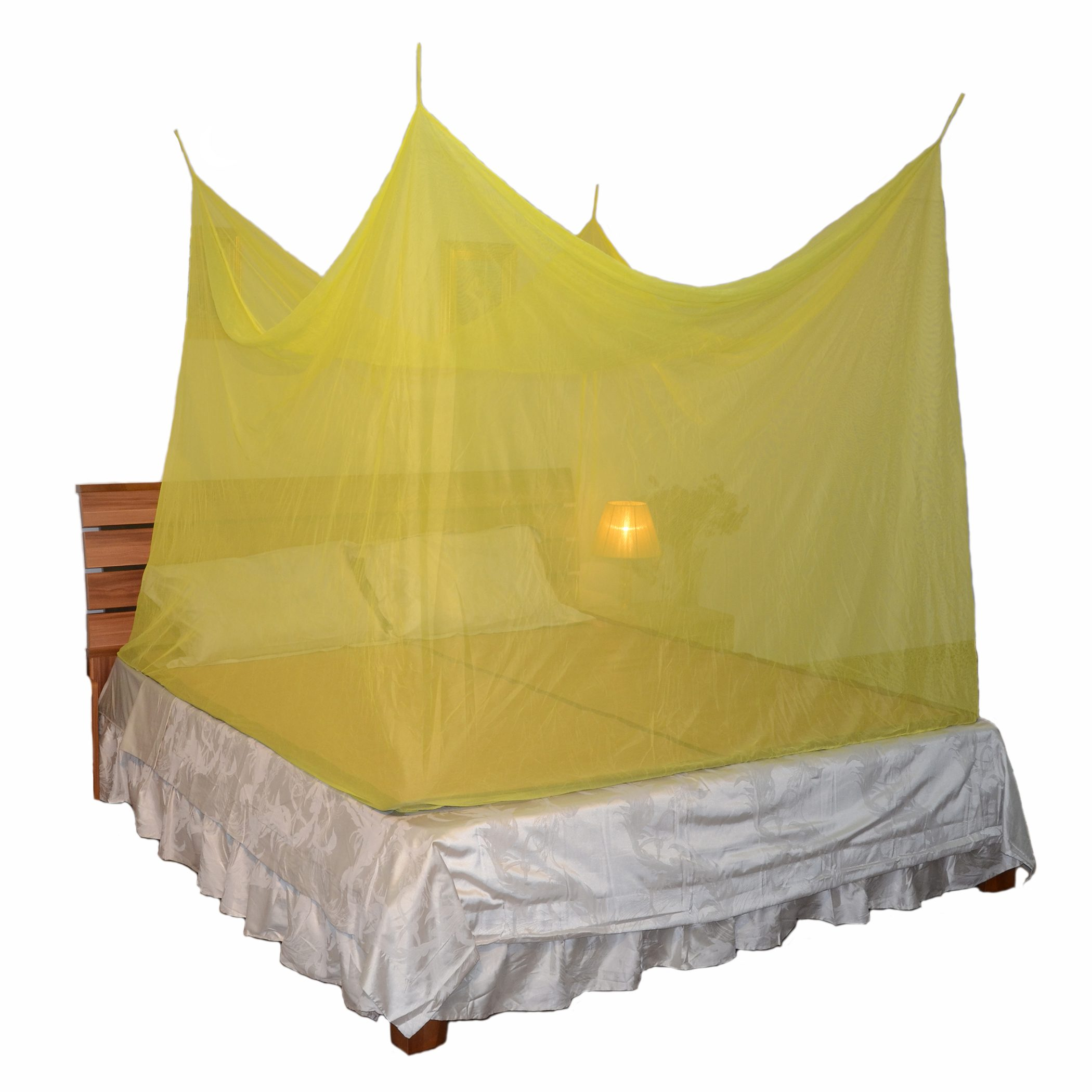
Color Customization: While white is common, deep blue, green, and sand colors are often requested in regions where dust or soil would quickly stain lighter fabrics.
Quality Control and International Compliance
Ensuring compliance with international standards is vital when participating in ministerial tenders or NGO-backed purchasing programs. Quality control processes must cover every stage, from yarn extrusion to final packaging.
Reliable manufacturers run in-house testing laboratories to verify physical and chemical specifications before dispatching goods. Key testing procedures include:
Dimensional Stability: Measuring the shrinkage or stretching of the net panels after washing at specified temperatures.
Flammability Testing: Ensuring the polyester or polyethylene fabric meets safety standards (such as 16 CFR Part 1610) to prevent rapid flame spread in residential settings.
Colorfastness: Verifying that dyes do not rub off or bleed excessively when exposed to water, sweat, or direct sunlight.
An ISO 9001:2015 certified production line ensures consistent assembly tolerances and traceable batch numbering, which is valuable for tracking material batches if field issues occur.
B2B Inquiry and Request for Quotation
If you are managing a public health tender, coordinates-based aid distribution, or wholesale commercial distribution, choosing a certified rectangular mosquito net supplier is key to meeting your technical specifications and delivery timelines. Yamei provides tailored solutions, high warp-knitting capacity, and experienced logistics management to support your procurement needs.
To receive a detailed technical quote, material samples, or laboratory compliance certificates, please contact our B2B sales team with your project requirements, including denier specifications, size dimensions, target quantities, and target delivery ports. Our team is ready to provide comprehensive technical support and competitive pricing models for your next purchasing cycle.
Frequently Asked Questions
Q1: What is the standard lead time for a bulk order of 50,000 rectangular mosquito nets?
A1: For an order of 50,000 units, the manufacturing phase typically takes 25 to 35 days, depending on raw material availability and the requested customization options. This timeline does not include ocean freight shipping, which varies based on the destination port.
Q2: Can the mesh size be modified to protect against very small insects like sandflies?
A2: Yes, the mesh structure can be customized. While the standard malaria-control mesh is 156 holes per square inch, we can produce high-density mesh options (such as 196 holes or more per square inch) to block smaller biting midges and sandflies, though this will slightly reduce airflow.
Q3: What are the primary packaging options for retail-ready distribution?
A3: We offer several packaging configurations. For commercial retail, nets can be individually packed in printed PVC bags with zipper closures and color insert cards. For humanitarian aid, we recommend simple, high-density polyethylene heat-sealed bags to minimize waste and packaging costs.
Q4: How do you verify that the active insecticide is distributed evenly across the net?
A4: Our quality control laboratory conducts batch-wise sampling using chemical titration and gas chromatography to analyze yarn from different sections of the warp knitting roll. This process ensures the concentration of deltamethrin or permethrin remains uniform across the entire panel.
Q5: What is the minimum order quantity (MOQ) for custom-colored rectangular mosquito nets?
A5: The minimum order quantity for custom dyed fabrics is typically 10,000 units. This requirement is due to the minimum liquid capacity of industrial dyeing vats. For standard white or deep blue nets, lower order quantities can often be accommodated depending on our current production schedule.