
Global public health bodies, tactical distributors, and retail importers are fundamentally changing how they procure vector control products. As infectious disease containment expands across both disaster-hit regions and commercial travel sectors, demand for self-erecting, chemical-treated screening has surged. Procurement teams can no longer afford to treat mosquito netting as a generic textile commodity.
At YAHE LN, we build high-capacity manufacturing programs that pair instant mechanical deployment with certified active protection. If you are preparing tenders, refreshing brand inventories, or securing contingency stocks for the coming season, submit an inquiry today to receive our detailed technical documentation and wholesale pricing schedules.
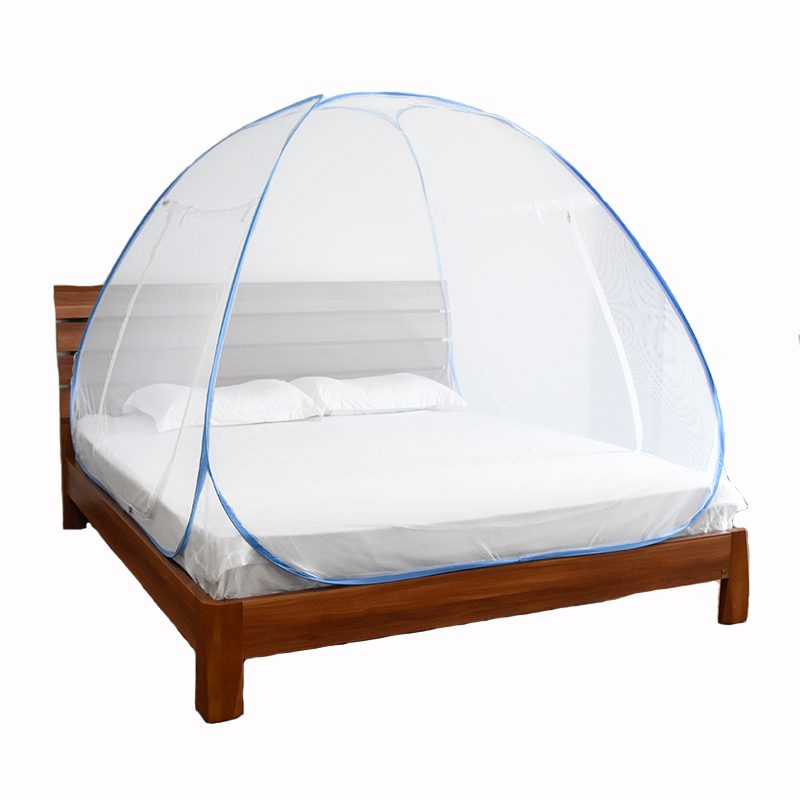
The 2026 Shift: Instant Deployment Meets Residual Protection
Traditional bed nets face persistent operational challenges in field conditions. Hanging a standard rectangular or conical net requires ceiling hooks, support frames, wall fixtures, and significant setup time. In emergency relief camps, conflict zones, or rapid tactical operations, those structures do not exist. Beneficiaries and personnel often end up sleeping without protection.
This reality has triggered a structural transition toward self-supporting, pop up frames. These nets deploy within three seconds without mounting hardware. However, early commercial designs failed public health requirements because they used standard, untreated mesh that only offered basic mechanical barriers.
In 2026, the market insists on the convergence of mechanical convenience and pharmaceutical-grade chemical intervention. Sourcing professionals now look for pop up mosquito net wholesale partners capable of delivering certified Long-Lasting Insecticidal Net (LLIN) technology built directly into high-tensile collapsible frames.
Humanitarian speed: Relief teams can distribute pre-assembled nets that pop open instantly on floors, camp cots, or uneven ground.
Vector containment: Certified insecticide treatments actively knock down and kill mosquitoes on contact rather than merely redirecting them to untreated victims nearby.
Commercial durability: E-commerce and retail buyers increasingly demand professional-grade tear resistance and long-lasting chemical performance for camping, overland travel, and patio use.
The Engineering Puzzle: Building a Custom LLIN Pop Up Net
Merging memory metal wire with pesticide-impregnated or incorporated polymer yarn is an intricate mechanical and chemical process. Most budget factories simply purchase off-the-shelf netting and stitch it around cheap carbon steel wire. That method causes rapid structural failure and inconsistent chemical dosage.
A true custom LLIN pop up net requires three critical engineering balances:
1. Mechanical Torsion Resistance
Pop up nets rely on continuous spring tension. When packed, the steel frame twists into three concentric rings under high torsion. Cheap wire kinks or snaps after a dozen cycles. The inner wire must use oil-tempered, corrosion-resistant spring steel wrapped in heavy-duty synthetic binding.
This binding protects the mesh from friction tears along the perimeter during twisting and storage. If the wire wears through the fabric sleeve, the entire unit becomes useless.
2. Wash Resistance and Active Ingredient Retention
True LLIN performance requires the insecticidal formulation—typically a synthetic pyrethroid such as deltamethrin or alpha-cypermethrin—to withstand repeated washing and aggressive environmental wear. Standard topical dipping washes out within two to three wash cycles.
High-tier long-lasting insecticidal nets wholesale programs utilize controlled-release polymer technology. The insecticide resides inside the yarn matrix or bonds through a specialized wash-resistant polymer resin system. The net must retain lethal efficacy against target vector populations even after 20 standardized washes.
3. Frame-to-Fabric Stress Distribution
Standard mosquito netting lacks the mechanical elasticity needed to endure the violent snap of a pop up frame opening. The sewing line where the mesh meets the steel casing must feature reinforced multi-needle lock-stitching.
Tension imbalances across the net structure pull mesh apertures open. This uneven pull widens the holes beyond maximum permissible sizes, allowing small biting midges or secondary malaria vectors to pass through. Fabric tension must be balanced across every quadrant of the cut pattern.
Global Regulatory Standards: Navigating WHO PQ and Lab Certifications
Procuring insecticidal pop up nets without institutional compliance exposes organizations to catastrophic regulatory rejections and field failures. Institutional buyers like UNICEF, UNHCR, and national health ministries adhere to zero-tolerance compliance protocols.
The WHO Prequalification (WHO PQ) Mandate
The World Health Organization Prequalification system serves as the definitive global benchmark for vector control products. Securing WHO PQ certified mosquito nets status requires exhaustive, multi-year laboratory and field trials. Evaluators verify that the net delivers predictable bio-efficacy, safe handling profiles, and operational longevity across diverse climate regimes.
Working with a manufacturer that holds WHO PQ credentials guarantees that the factory maintains traceable active ingredient formulation, tight batch testing, and certified chemical safety. An uncertified supplier cannot legitimately bid on institutional vector control tenders.
Independent Laboratory Testing: The French TEC Protocol
Rigorous private buyers verify technical performance using third-party laboratories. Testing at independent facilities, such as the renowned French TEC (Techniques Environnement et Chimie) laboratory, validates claims through strict entomological bio-assays:
Knockdown Rate (KD60): The percentage of test mosquitoes knocked down within 60 minutes of brief exposure to the treated mesh.
24-Hour Mortality: The verified kill rate of vectors after 24 hours of controlled post-exposure observation.
Wash Resistance: Measuring chemical retention and mortality curves across 5, 10, 15, and 20 wash intervals.
In addition to entomological assays, the net must satisfy Good Laboratory Practice (GLP) standards for active ingredient homogeneity. Mechanical metrics require strict monitoring, including bursting strength (ISO 13938-1) and flammability parameters under standards such as 16 CFR Part 1610.
The Triple-ISO Foundation
A reliable bulk pop up mosquito net manufacturer must operate under integrated quality, environmental, and occupational safety frameworks. Demanding ISO 9001 (Quality Management), ISO 14001 (Environmental Management), and ISO 45001 (Occupational Health and Safety) confirms that the plant operates consistent batch-to-batch controls and follows safe chemical handling procedures.
Manufacturing Scale and Infrastructure: The YAHE LN Advantage
Global supply chains frequently break down at the intersection of raw material extrusion and finished product assembly. When chemical coating, frame fabrication, and sewing operations occur in separate facilities, delivery timelines slip and quality tracking fails.
YAHE LN resolves this operational vulnerability through full vertical integration. Operating from a massive 66,700-square-meter (100-mu) industrial manufacturing base backed by a 100-million-RMB capital investment, our facility controls every phase of the manufacturing process under one roof.
Unmatched Capacity: We produce up to 100,000 finished nets per day and knit over 500,000 square meters of high-grade base fabric daily.
Dedicated Formulation Infrastructure: Our plant includes a specialized 200-square-meter environmental chemical mixing laboratory, engineered specifically for precision active ingredient blending.
Historical Authority: YAHE LN has engineered professional vector control solutions since 2003. We earned early WHO PQ credentials in 2015 and hold multiple national invention patents for advanced netting mechanics.
Because we draw yarn, knit mesh, compound active formulations, form memory steel, and sew final enclosures within a single monitored perimeter, our facility provides absolute traceability and ironclad delivery security for large-scale institutional contracts.
Customization Parameters for 2026 Sourcing Programs
Wholesale buyers have diverse end-user requirements. A humanitarian emergency deployment requires completely different product specifications than an ultralight tactical bivouac or an Amazon direct-to-consumer travel brand. We calibrate every structural dimension to your target use case.
1. Frame Materials and Geometries
We configure memory frames using high-tensile manganese spring steel for maximum rebound performance, or flexible pultruded fiberglass rods for ultralight tactical models. Configurations include:
Single-Point Instant Pods: Single-person ground-folding shelters engineered for camp cots and field mattresses.
Double and Family Formats: Multi-span pop up dome designs with internal cross-bracing that accommodate two adults and a child.
Crib and Bassinet Covers: Fine-gauge pop up canopies designed with child-safe closures and non-toxic physical barriers.
2. Mesh Specifications and Yarn Density
Netting performance relies directly on mesh count and thread denier. We supply knitted fabrics ranging from durable 75-denier yarns up to heavy-duty 150-denier high-tenacity polyester or polyethylene filaments.
Apertures can be customized from the WHO-recommended standard of 156 holes per square inch (ideal for tropical ventilation and malaria vector control) up to dense 225-hole or micro-mesh constructions designed to stop sandflies, no-see-ums, and midges in marshland environments.
3. Tailored Chemical Formulations
Depending on import regulations and destination pathogen profiles, we apply certified active ingredients formulated to exact concentration limits:
Deltamethrin: Highly effective, durable active ingredient engineered for institutional LLIN vector containment.
Permethrin: Widely accepted active chemistry preferred by military supply networks and outdoor lifestyle retailers.
Synergized Formulations: Advanced formulations incorporating Piperonyl Butoxide (PBO) to counter pyrethroid-resistant mosquito strains in high-risk zones.
4. Logistical Compression and CBM Optimization
Ocean freight rates remain volatile. Shipping loose, hollow pop up nets inflates cubic meter (CBM) volume and destroys operating margins. We design high-compression packaging solutions that compress circular folded nets down to flat discs under automated pneumatic presses.
Custom zippered disc carry-cases, high-density bale packing, and moisture-barrier vacuum polybags allow buyers to maximize container utilization, packing thousands of additional units into every 40-foot High Cube container.
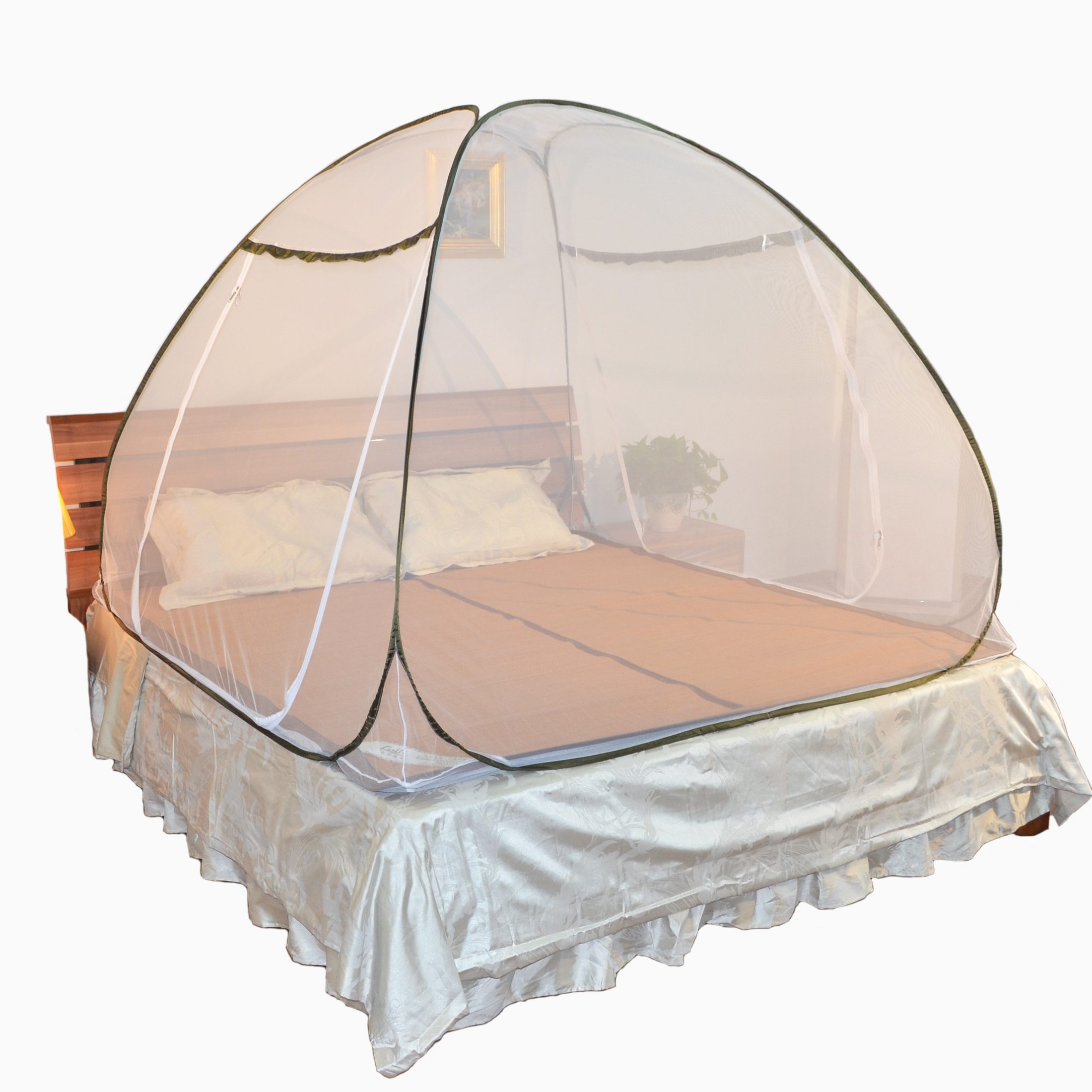
Procurement Checklist: Auditing a Pop Up Net Supplier
Before issuing purchase orders for pop up mosquito net wholesale inventory, supply chain auditors must verify the operational capabilities of their vendor candidates. Demand tangible proof against these three structural checkpoints:
Verification 1: Audited Tender Supply Record
Has the factory served as a direct or Tier-1 supplier to major global agencies like UNICEF, UNHCR, or the International Federation of Red Cross societies? Request verified bills of lading, tender award records, and third-party inspection releases proving track-record credibility.
Verification 2: Environmental Chemical Safety Compliance
Does the supplier formulate their own active chemicals on-site within an environmentally compliant, permitted formulation room? Or do they manually soak fabric in unmonitored plastic drums? Chemical handling must feature automated dosing, closed-loop scrubbers, and compliant wastewater management systems.
Verification 3: Comprehensive Mechanical Sample Testing
Never approve a production run based solely on a hand-made sales sample. Put samples through rigorous mechanical screening:
Torsion Drop Testing: Twist and fold the net 50 consecutive times. The steel wire must snap cleanly back into a flat, true plane without buckling, twisting, or splitting the edge binding.
Seam Burst Evaluation: Inspect seam joints along the floor and zipper runs. Under lateral strain, stitching must maintain seam integrity without elongating adjacent mesh holes.
Lab Chemical Assays: Request HPLC (High-Performance Liquid Chromatography) reports demonstrating active ingredient homogeneity across both the top apex and base edges of the net.
Streamline Your Vector Protection Supply Chain
Procuring insecticidal pop up netting requires high-precision manufacturing. You need a trusted partner who can balance mechanical durability, strict chemical safety, and high-volume delivery. YAHE LN delivers the full manufacturing baseline: certified WHO PQ quality, millions of meters of internal yarn and fabric production, and world-class testing credentials.
Whether you are organizing global vector relief tenders or scaling a private-label consumer outdoor brand for the upcoming retail cycle, our engineering and production teams stand ready to deliver.
Contact the YAHE LN B2B Sourcing Desk right now to request our comprehensive 2026 wholesale catalog, custom OEM specifications, and accredited French TEC test reports. Secure production capacity today.
Frequently Asked Questions
Q1: What separates a standard pop up mosquito net from a certified
LLIN pop up net?
A1: A standard pop up net relies entirely on
mechanical mesh to block insects, providing zero protection if mosquitoes land
on the net or find small tears. A certified LLIN (Long-Lasting Insecticidal Net)
pop up incorporates an active, wash-durable pyrethroid inside or onto the
polymer fiber. This active chemical knocks down and kills target vectors on
contact, remaining lethal across 20 or more standardized washes.
Q2: Why is WHO PQ certification critical for institutional mosquito
net procurement?
A2: World Health Organization Prequalification (WHO
PQ) guarantees that a manufacturing site and its insecticidal products comply
with stringent international standards for human safety, bio-efficacy, and batch
consistency. Major international aid agencies, non-governmental organizations,
and national health departments mandate WHO PQ status as a prerequisite for
tender participation.
Q3: How do you prevent the pop up steel frame from rusting in humid
tropical climates?
A3: We manufacture our pop up frames using
high-tensile spring steel treated with heavy zinc galvanization or proprietary
anti-corrosion barrier coatings. The frame is then encased in reinforced
synthetic polyester or nylon webbing sleeves that block sweat, rain, and
environmental condensation from reaching the metal wire.
Q4: Can we order custom sizes, colors, and mesh apertures for our
brand?
A4: Yes. We provide complete OEM and ODM customization across
structural dimensions, floor configurations, zipper designs, mesh counts (from
156 to 225+ holes per square inch), fabric deniers, edge piping colors, and
custom branded carry bags. Private labeling and custom instruction artwork are
fully supported.
Q5: What is your typical production lead time for full-container
wholesale orders?
A5: Our 66,700-square-meter facility produces up
to 100,000 finished nets per day. Standard 20-foot or 40-foot container orders
typically ship within 30 to 45 days following final specification sign-off and
lab formulation approval. We also maintain contingency materials to fulfill
accelerated schedules for emergency humanitarian crisis relief contracts.