
Global disease prevention programs, particularly those targeting malaria, lymphatic filariasis, and dengue, rely heavily on physically reliable barrier methods. Textile selection determines the longevity and success of these interventions. When procurement agencies, non-governmental organizations, and commercial wholesale distributors evaluate options, sourcing 100% polyester mosquito nets in bulk becomes a primary strategy. Polyester offers an advantageous balance of tensile strength, weight-to-performance ratio, and cost efficiency. Yamei provides high-performance netting manufactured to meet rigorous physical standards for humanitarian aid, commercial resale, and public health ministries.
Understanding the micro-level properties of polyester fibers, warp-knitting configurations, and bulk logistics allows procurement officers to make informed decisions. This analysis examines the material parameters, manufacturing quality controls, and supply chain considerations necessary to execute successful large-scale distribution campaigns.
Physical Parameters and Fabric Specifications
Evaluating the suitability of netting for vector control requires a detailed examination of yarn construction and physical properties. The performance of a mosquito net is determined long before the sewing stage, beginning with the molecular quality of the polyester polymer.
Yarn Denier and Fiber Structure
Denier is the unit of measure indicating the mass in grams per 9,000 meters of yarn. In large-scale vector control, the standard options for polyester netting are 75 Denier (75D) and 100 Denier (100D). Choosing between these options requires balancing durability requirements with budget parameters. A 75D yarn produces a lighter net that allows higher airflow, which is often preferred by end-users in hot, humid climates. A 100D yarn offers greater physical strength, making it suitable for rugged environments where nets are frequently handled, washed, or suspended under tension. Yamei utilizes multi-filament virgin polyester yarn to prevent micro-structural variations that could lead to premature thread breakage.
Mesh Size and Aperture Geometry
The efficacy of a physical barrier depends on mesh size, which is calculated by counting the number of holes per square inch. The global standard for mosquito prevention is a minimum of 156 holes per square inch (typically arranged in a 12 by 13 grid pattern). This configuration creates apertures small enough to prevent the passage of Anopheles, Aedes, and Culex mosquitoes, while maintaining sufficient ventilation. Airflow is necessary to ensure consistent usage; if a net is too dense, the interior temperature rises, leading users to discard the net. The geometry of the warp-knitting process ensures that these apertures remain uniform across the entire fabric roll.
Fabric Weight and Grammage
Fabric weight, measured in grams per square meter (GSM), is directly linked to denier and mesh density. Standard 75D polyester netting typically ranges from 30 to 32 GSM, whereas 100D netting ranges from 38 to 40 GSM. Verifying the consistency of this weight across production batches is a fundamental quality control step. Fluctuations in grammage indicate uneven yarn extrusion or tension variations during knitting, which compromise the physical integrity of the final product.
Challenges in Bulk Procurement and Quality Management
Managing the procurement of 100% polyester mosquito nets in bulk involves navigating manufacturing complexities and logistics hurdles. Large production runs are subject to variables that do not affect small-batch manufacturing.
One primary challenge is maintaining batch-to-batch consistency. When producing hundreds of thousands of nets, variation in yarn tension on warp-knitting machines can lead to uneven netting zones. If tension is too high, the fibers are pre-stressed, leading to a reduction in tear resistance. If tension is too low, the mesh size becomes irregular, allowing insects to penetrate. Yamei addresses this by utilizing automated tension-monitoring systems on all knitting lines, ensuring uniform mechanical properties throughout the batch.
Another concern is the avoidance of chemical contaminants. Although polyester is synthetic and highly stable, the dyeing and finishing agents used must comply with strict international environmental and safety guidelines. Netting must be free from harmful azo dyes, heavy metals, and formaldehyde. Ensuring compliance with REACH or localized consumer safety regulations is a standard part of our quality management protocol.
Volume packaging and shipping efficiency represent a third challenge. Because netting is inherently voluminous, shipping uncompressed nets in bulk results in high shipping costs. Implementing high-pressure hydraulic baling processes is required to compress the finished products into tight, seaworthy packages without damaging the polymer structure or creating permanent creases that weaken the yarn.
Material Comparison: Polyester versus Polyethylene (HDPE)
When selecting materials for bulk programs, procurement teams frequently compare polyester with High-Density Polyethylene (HDPE). Both polymers are widely used in vector control, but they have distinct physical characteristics.
Polyester is a multi-filament yarn, meaning each thread consists of multiple extruded micro-fibers twisted together. This structure gives the fabric a soft texture and high drapability. The material conforms easily to bed frames and sleeping mats, reducing acoustic noise when handled. HDPE, in contrast, is typically a monofilament yarn, resulting in a stiffer, rougher fabric texture. While HDPE offers high abrasion resistance, its stiffness can lead to lower user acceptance in domestic settings.
Regarding dimensional stability under heat, polyester exhibits excellent performance. During production, polyester fabric is heat-set at temperatures between 180°C and 200°C. This thermal processing locks the crystalline structure of the polymer, preventing the netting from sagging or stretching out of shape when subjected to high humidity and ambient temperatures in tropical regions. HDPE has a lower melting point and can sag over time under prolonged heat stress.
From a chemical application perspective, the multi-filament structure of polyester provides a larger surface area than monofilament HDPE. This makes polyester highly receptive to binders used in long-lasting insecticidal treatments, facilitating even distribution and retention of active ingredients like deltamethrin or alpha-cypermethrin throughout the life of the net.
Manufacturing Standards and Quality Control at Yamei
The production of high-performance netting requires precise engineering at every stage, from raw polymer handling to final sewing construction.
Warp-Knitting Process
Yamei employs advanced tricot warp-knitting machinery to produce the greige fabric. Unlike circular knitting or weaving, warp knitting loops the yarn in a zigzag pattern along the length of the fabric. This creates a lock-stitch structure. If a single filament is severed or punctured during field use, the lock-stitch prevents the tear from running or expanding. This structural stability is a necessary requirement for nets distributed in rural or forested environments where contact with sharp wooden bed frames or tools is common.
Dyeing, Tensioning, and Thermal Setting
Following the knitting stage, the greige fabric is moved to pressurized dyeing vessels. Dyeing polyester requires high temperatures (typically around 130°C) and pressure to allow the disperse dyes to penetrate the hydrophobic polyester fibers. Once dyed, the wet fabric is fed into a stenter frame. The stenter frame applies precise lateral and longitudinal tension while heating the fabric. This process dries the netting, sets the final width, stabilizes the mesh apertures, and ensures the colorfastness rating meets international standards (typically Grade 4 or higher against water and washing).
Sewing and Reinforcement Architecture
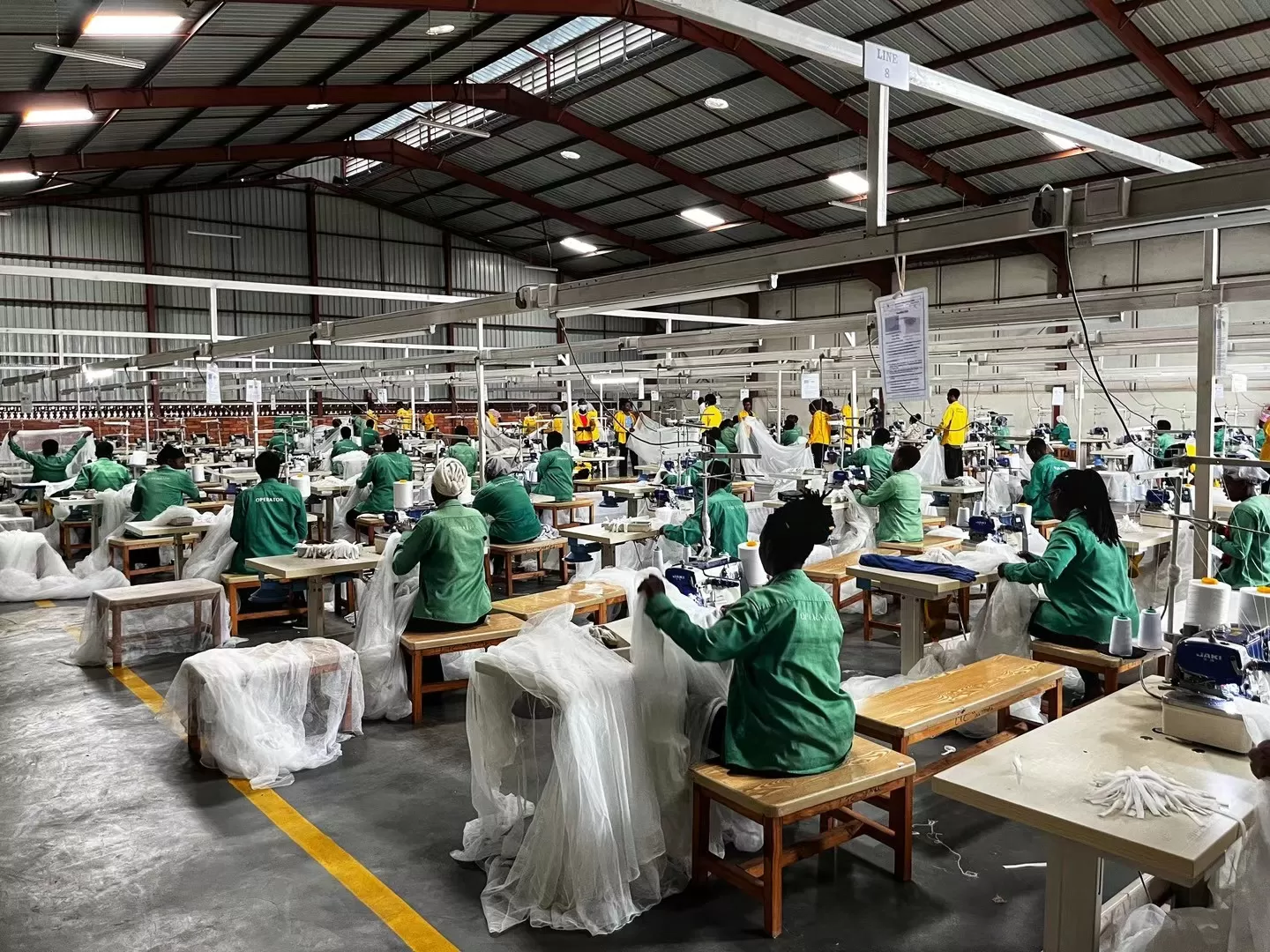
The conversion of flat netting into finished mosquito nets requires skilled sewing operations. Rectangular and conical nets feature specific stress points, particularly around the suspension loops and corners. Yamei incorporates reinforced double-stitched seams along all borders. To improve mechanical durability, we can integrate a continuous sheeting border (skirt) at the base of the net. This border, typically made from solid woven polyester fabric, measures 10cm to 30cm in height. It protects the delicate mesh from tearing when it is tucked under a mattress or weighted down on the floor.
Logistics and Supply Chain Management
Fulfilling orders for 100% polyester mosquito nets in bulk requires reliable logistics planning to meet the strict distribution timelines of international aid agencies and commercial importers.
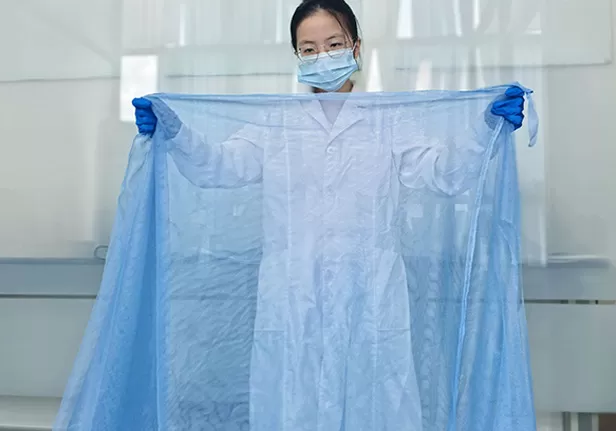
Our production scheduling is coordinated with major shipping lines to minimize port storage times. Because shipping volume is a major cost driver, Yamei utilizes heavy-duty hydraulic pressing machines to pack finished nets into dense bales. Depending on the net size and denier, a single bale can contain 50 to 100 individually packed nets, wrapped in waterproof woven polypropylene sheeting and secured with high-tensile plastic strapping. This compression reduces shipping volumes by up to 60%, allowing a standard 40-foot High Cube (HC) container to hold up to 80,000 to 100,000 finished nets, lowering the per-unit landing cost for the importer.
We provide comprehensive documentation support, including Certificates of Analysis (CoA), bills of lading, packing lists, and phytosanitary certificates where required. This attention to administrative detail ensures smooth customs clearance at destination ports, avoiding demurrage charges and distribution delays.
Inquiry and Partnership Options
Sourcing high-quality textile barriers is an important step in protecting communities and meeting commercial distribution targets. Yamei is committed to providing consistent material quality, verified physical specifications, and dependable supply chain execution for your bulk requirements.
Whether you require untreated white netting for commercial packaging, custom-colored nets for regional retail brands, or specific reinforced borders for humanitarian aid distribution, our technical sales team can assist with your planning. To request detailed material samples, discuss custom specification adjustments, or obtain a comprehensive quotation for 100% polyester mosquito nets in bulk, please submit your inquiry to our sales department. We will provide a structured proposal aligned with your project requirements.
Frequently Asked Questions
Q1: What are the main physical performance differences between 75D and 100D polyester netting?
A1: The main difference lies in weight and bursting strength. 75D netting is lighter (approx. 30 GSM) and allows higher airflow, making it suitable for very hot climates. 100D netting is heavier (approx. 38-40 GSM) and offers higher tensile and bursting strength, making it ideal for rugged, long-term use where physical wear is common.
Q2: How does Yamei ensure the mesh size remains consistent across a high-volume production run?
A2: We use automated warp-knitting machinery with continuous electronic tension control. This computerized system monitors the feed rate of the yarn constantly, preventing the loops from stretching or contracting, which guarantees a consistent mesh count of 156 holes per square inch or greater throughout the run.
Q3: Can these bulk orders of polyester mosquito nets be customized with reinforced sheeting borders?
A3: Yes. We can customize the nets to include a solid woven polyester border (skirt) at the bottom, typically ranging from 10cm to 30cm in height. This modification protects the net from physical abrasion and tearing at the tucking zone, extending the functional lifespan of the product.
Q4: What is the standard packaging format for shipping large quantities of mosquito nets?
A4: To maximize container space, we package the nets in highly compressed bales using hydraulic presses. Each bale contains 50 to 100 nets (depending on size and specifications) wrapped in a water-resistant, woven polypropylene protective cover. This method reduces shipping volume and lowers freight costs per unit.
Q5: What physical testing standards do the fabrics undergo before shipment?
A5: Our quality control laboratory performs several standardized tests on each production batch. These include bursting strength testing (according to ISO standards), weight verification (GSM tracking), dimensional stability checking after washing, and colorfastness testing to ensure compliance with procurement requirements.