
Large-scale vector control initiatives and commercial distribution networks increasingly rely on robust technical specifications to combat vector-borne diseases effectively. Securing a reliable double bed mosquito net wholesale supply chain requires understanding the balance between textile engineering, chemical integration, and human-factor compliance. International programs targeting malaria, lymphatic filariasis, and arbovirus transmission recognize that net dimensions directly influence user adoption rates. When transitioning from individual sleeping shelters to multi-occupant domestic environments, double bed dimensions become vital for family-level protection, optimizing intervention coverage per square meter of deployed fabric.
The Evolution of LLIN in Institutional Sourcing
Long-Lasting Insecticidal Nets (LLINs) have largely superseded conventionally treated bed nets across international procurement frameworks. Early vector control models depended on dipping finished polyester mesh into pyrethroid emulsions, a technique that suffered from inconsistent chemical uptake and rapid loss of biocidal efficacy after limited wash cycles. Contemporary manufacturing embeds or permanently binds active ingredients directly within the synthetic polymer matrix. This evolution ensures that insecticidal potency persists over multi-year deployments, even under harsh tropical conditions and repeated domestic washings.
Procuring entities managing regional health programs, institutional dormitories, or hospitality supply chains evaluate performance based on residual bio-efficacy, physical durability, and mechanical integrity. A double bed mosquito net wholesale contract must align with these operational requirements, as large netting structures face higher mechanical tension and shear stress than smaller single-occupancy variants. If the structural integrity fails, the physical barrier diminishes, forcing reliance entirely on chemical repellency.
Polymer Selection and Yarn Mechanics
The core performance of any vector-control textile rests on the chemical composition of the yarn. Manufacturers primarily deploy three synthetic polymer classes, each displaying distinct mechanical and operational characteristics.
Polyethylene (PE): Commonly processed as a high-density monofilament yarn. PE nets offer exceptional tensile strength, puncture resistance, and chemical stability. The extrusion process permits the direct integration of active pyrethroids and synergists throughout the polymer melt, allowing controlled migration to the surface over several years. PE fibers tend to be stiffer, yielding a rigid mesh that maintains open geometry even under poor hanging conditions.
Polyester (PET): Extruded as multifilament yarn, PET produces a softer, more pliable net that drapes smoothly around complex bedding layouts. Chemical treatment for polyester typically employs a specialized resin coating system containing pyrethroids, bonded to the yarn surface via high-temperature curing. PET nets deliver high consumer acceptance due to their tactile comfort and superior airflow.
Polypropylene (PP): Emerging alternatives leverage PP monofilament or multifilament to achieve lower specific gravity and improved chemical resistance, though thermal management during production requires precise control to prevent polymer degradation.
Denier Specifications and Tensile Resistance
Denier, defined as the mass in grams per 9,000 meters of yarn, establishes the baseline structural resistance of the net. Standard institutional procurement specifies yarn density between 75 Denier (75D) and 150 Denier (150D). Monofilament polyethylene nets generally operate at 100D to 150D, providing the structural resilience required for community distribution where handling conditions are unpredictable. Multifilament polyester nets often utilize 75D or 100D configurations, balancing structural integrity with cost efficiency and compact packing volume.
Bursting strength serves as the primary metric for mechanical longevity. Under ISO 13938-2 testing protocols using pneumatic pressure diaphragms, a high-performing netting fabric must demonstrate bursting resistance capable of withstanding physical stress from restless sleepers, bed frames, and rough wall contact. Multifilament 75D polyester typically targets a minimum bursting strength of 250 kPa, whereas 100D configurations exceed 350 kPa. Monofilament polyethylene nets routinely achieve ratings surpassing 400 to 500 kPa, making them the preferred option in settings where replacement logistics are challenging.
Mesh Density and Ventilation Dynamics
The balance between insect exclusion and thermal comfort hinges on mesh density, measured in holes per square inch (HPSI) or holes per square centimeter. International guidelines generally specify a minimum density of 156 holes per square inch (approximately 24 holes per square centimeter). A mesh count below this threshold permits the physical intrusion of smaller vector species, including specific strains of Culicoides or tiny Anopheles variants.
Exceeding 200 HPSI significantly impedes internal air movement. In high-humidity tropical zones lacking artificial ventilation, restricted airflow creates uncomfortable internal microclimates. Users may abandon the netting entirely or tuck it away during sleep, negating the intervention. Maintaining an exact 156 to 180 HPSI configuration preserves protection against biting insects while allowing passive air circulation, securing nightly usage adherence across large populations.
Chemical Impregnation Dynamics and Insecticide Chemistry
The insecticidal component of long-lasting insecticidal nets functions through dual pathways: excito-repellency and lethal neurotoxicity. Pyrethroids remain the industry standard due to their high affinity for the insect nervous system's voltage-gated sodium channels, coupled with very low mammalian toxicity.
Deltamethrin: Extensively utilized in both PET resin coatings (typically applied at 55 mg/m²) and PE incorporated formulas, offering rapid knockdown action against susceptible populations.
Alphacypermethrin: Widely deployed in polyethylene incorporated netting, typically batched at 5.0 to 6.7 g/kg (equivalent to approximately 200 mg/m² depending on fabric weight), displaying prolonged residual persistence.
Permethrin: A first-generation pyrethroid, generally required at significantly higher dosages (e.g., 20,000 mg/kg in PE matrices) to achieve equivalent biological performance.
Target populations increasingly exhibit metabolic resistance to pyrethroids, mediated by elevated levels of cytochrome P450 monooxygenases. To restore operational efficacy, modern vector control integrates Piperonyl Butoxide (PBO), a synergist that inhibits metabolic resistance pathways in the target insect. Advanced multi-layer or dual-active nets incorporate both a pyrethroid and PBO, or novel biocides such as Chlorfenapyr, which disrupts cellular respiration at the mitochondrial level.
Migration Kinetics and Wash Resistance
The active compound in incorporated polyethylene nets does not sit entirely on the fiber surface. The majority stays held within the core of the polymer matrix. When the surface layer is depleted through handling, abrasion, or routine laundering, a concentration gradient forms. This gradient drives active ingredient molecules to migrate toward the surface at a predictable rate governed by ambient temperature and the polymer's crystalline architecture.
Standard quality verification mandates that nets withstand up to 20 standard laboratory wash cycles without dropping below established thresholds for insect knockdown (assessed at 60 minutes post-exposure) and mortality (measured 24 hours post-exposure). Coating-based polyester nets achieve this wash resistance through polymer cross-linking agents within the chemical emulsion, creating an insoluble, flexible resin sleeve around each multifilament strand.
Technical Matrix for Double Bed Mosquito Net Wholesale Operations
Structural configuration substantially affects manufacturing complexity, logistics volume, and end-user setup. Entities engaging in double bed mosquito net wholesale sourcing must choose between two dominant geometries: rectangular (box) and conical (circular canopy) frames.
Rectangular nets require multiple anchor points—typically four to six ceiling or wall suspension lines. This design provides maximum internal volume, ensuring that occupants do not accidentally press their limbs against the net during the night, an occurrence that allows vectors to bite through the mesh. Standard international double bed dimensions are categorized across specific structural profiles:
Medium Double: 160 cm (width) x 180 cm (length) x 150 cm (height)
Standard Double: 180 cm (width) x 190 cm (length) x 150 cm (height)
King / Family Sizing: 190 cm to 200 cm (width) x 200 cm (length) x 160 cm to 180 cm (height)
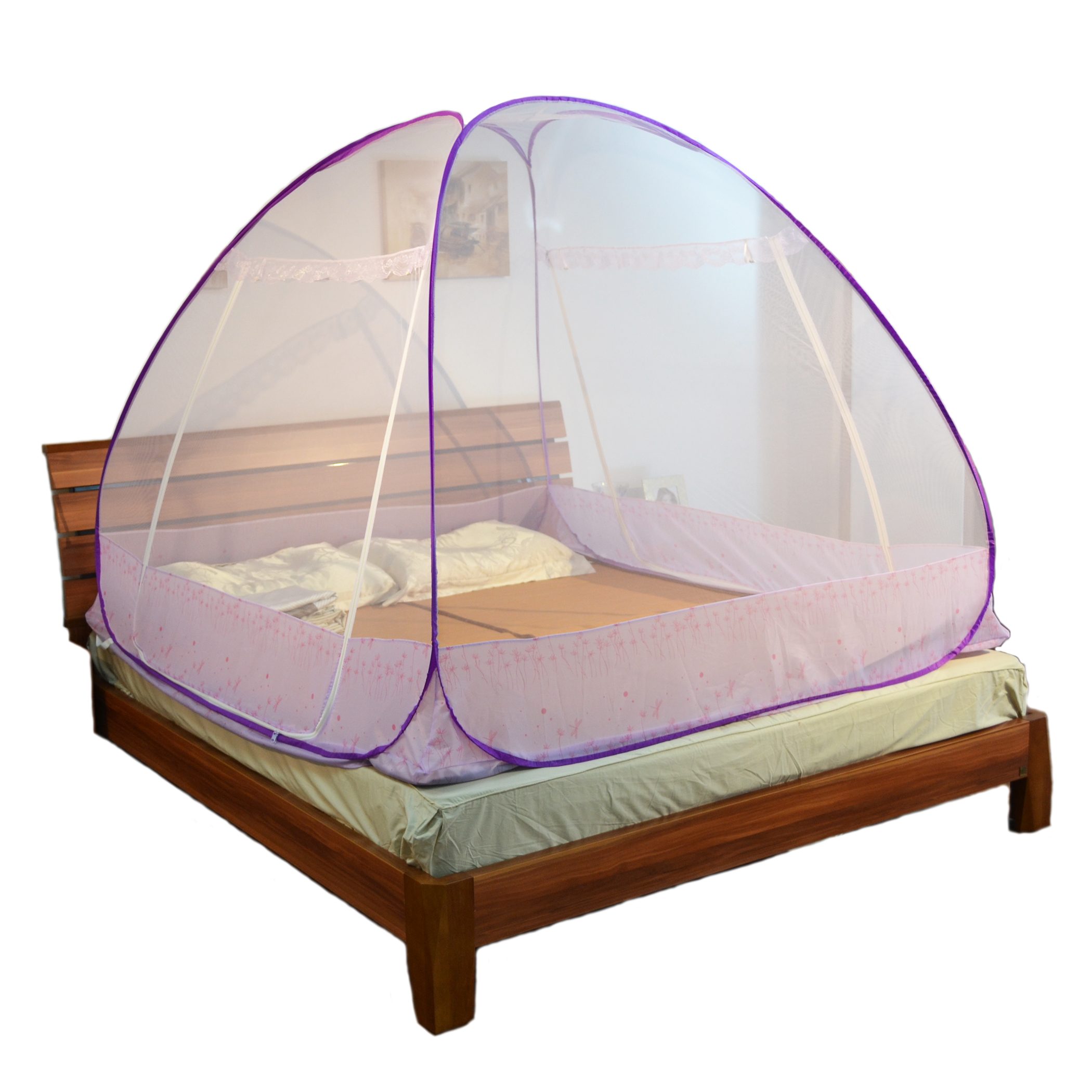
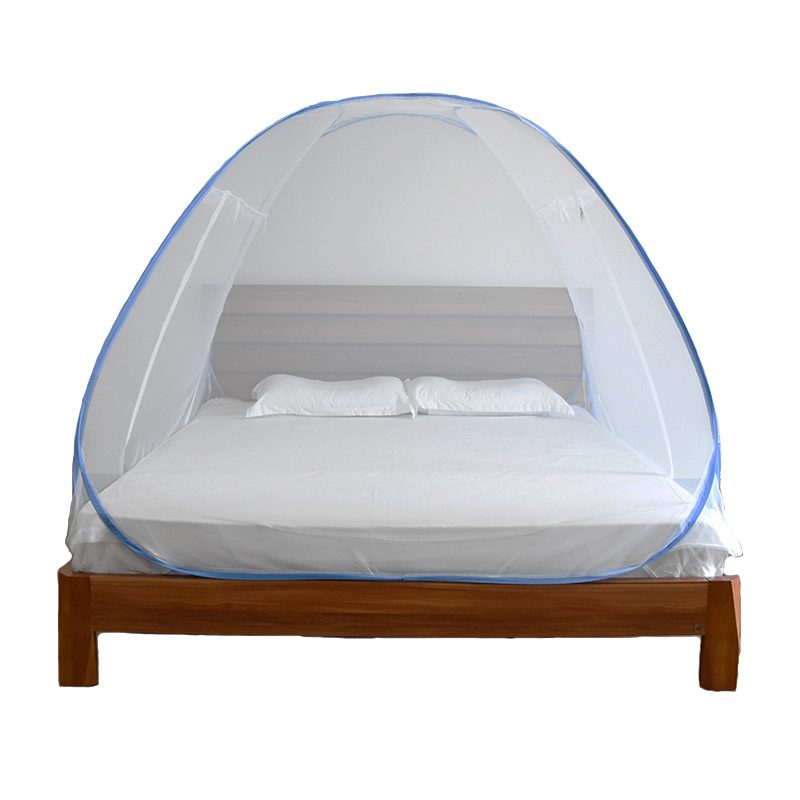
Conical designs utilize a central suspension ring, dramatically simplifying installation in residential environments with single hanging points. The trade-off lies in fabric geometry: the sloping sides decrease usable headroom and bring the netting closer to the sleeper's body. Sourcing organizations working with technical providers like YAHE LN frequently configure custom perimeter dimensions to mitigate fabric encroachment while retaining the single-point installation benefits of conical patterns.
Seam Construction and Reinforcement Detailing
The seams of large double-bed netting bear significant tension during installation and daily tucking beneath mattresses. Overlock stitching using high-tenacity, synthetic continuous-filament thread prevents fraying along the cut fabric edges. Industrial specifications generally mandate a minimum stitch density of 4 to 5 stitches per centimeter.
The lower perimeter of the net experiences direct mechanical abrasion against bedding frames, floor surfaces, and rough concrete walls. Premium technical nets incorporate a reinforced fabric border—often referred to as a sheeting skirt or kick-border—extending 15 cm to 30 cm upward from the hemline. This border, constructed from tightly woven non-treated or lightly treated polyester fabric, protects the lower mesh from catching on bed frames and provides weight that improves net draping.
Hanging loops represent another critical failure point. High-volume procurement requires reinforced bar-tack stitching on all suspension points, with integrated structural fabric reinforcement patches sewn into the upper seam to spread dynamic loads across several square centimeters of netting.
Quality Assurance Protocols and Laboratory Testing
Institutional procurement demands verifiable compliance testing prior to dispatch. Sourcing agencies avoid reliance on visual inspection alone, employing destructive and non-destructive laboratory analyses conforming to ISO, ASTM, and CIPAC (Collaborative International Pesticides Analytical Council) standards.
Active Ingredient Content (CIPAC 333 / 57): Validated through gas chromatography (GC-FID) or high-performance liquid chromatography (HPLC). Samples cut from specified coordinates across the netting verify that the chemical dose remains homogeneous within a +/- 10% to 15% tolerance window of target formulation.
Flammability Assessment (16 CFR Part 1610): Assesses flame spread dynamics. Given the synthetic nature of the fibers and potential proximity to open flame sources (such as kerosene lamps or candles in rural regions), netting must meet Class 1 textile flammability parameters, demonstrating melting characteristics that resist rapid, self-sustaining combustion.
Dimensional Stability (ISO 5077 / ISO 6330): Quantifies fabric shrinkage following repeated washing. Thermal relaxation of polyester or high-density polyethylene should not exceed +/- 5% in either length or width, ensuring the deployed double bed net preserves adequate coverage over the mattress throughout its service life.
During the manufacturing verification phase, coordinated technical workflows supported by engineering teams at YAHE LN focus on batch-level traceability, validating raw polymer batch testing and tracking production parameters through extrusion, weaving, cutting, and stitching.
Supply Chain Logistics and Packaging Strategy
Shipping large textiles across borders introduces substantial transport costs driven by volumetric weight. Uncompressed netting traps large volumes of air between the knit mesh, resulting in poor container volume utilization unless managed through mechanical baling.
Large-scale double bed mosquito net wholesale orders are packaged under hydraulic compaction presses into industrial bales wrapped in reinforced polypropylene outer layers. A standard 40-foot High Cube (40HC) container can accommodate approximately 25,000 to 45,000 standard single nets, but double-bed formats—possessing significantly greater fabric surface area (often exceeding 20 to 25 square meters per unit)—require strict packaging optimization. Through hydraulic baling, double-bed units can achieve packaging densities permitting between 14,000 and 22,000 units per 40HC container, depending on denier rating, whether the design is rectangular or conical, and the presence of reinforced skirting.
Individual consumer packaging choices must align with the target program's handling conditions. Individual heat-sealed polyethylene bags protect the integrated insecticide from degradation caused by ambient ozone, airborne moisture, and UV exposure during prolonged warehouse storage. Clear, pictorial hanging and maintenance instructions printed directly on the exterior packaging reduce installation errors in low-literacy field environments.
Installation Integrity, Maintenance, and Lifecycle Stewardship
The operational effectiveness of an installed double bed net relies entirely on correct deployment. Even small installation errors—such as permitting the net to hang loosely on the floor or failing to seal entry overlapping panels—undermine vector protection.
The net must be securely suspended so that the bottom hem tucks completely under the sleeping mattress or pad. When deploying nets in environments lacking traditional raised beds, field teams recommend anchoring the netting base with smooth stones, timber blocks, or custom ground stakes to create an unbroken barrier.
Cleaning protocols must avoid aggressive detergents containing high concentrations of chlorine, caustic soda, or optical brighteners, which break down active pyrethroid coatings or strip integrated surface chemicals. Gentle hand-washing in ambient-temperature water using mild soap preserves chemical reserves. The net should always be dried flat or hung in shaded environments; direct solar exposure subjects synthetic fibers to UV radiation that degrades both polymer tensile strength and active insecticide compounds.
Post-deployment management frameworks are focusing more on circular economy practices. Spent nets, once decommissioned from protective use after three to five years, retain trace levels of synthetic chemical compounds. Institutional procurement teams should plan local collection strategies to divert used nets away from open agricultural reuse or freshwater fisheries, channeling retired materials toward controlled industrial recycling loops or municipal high-temperature energy recovery systems.
Frequently Asked Questions
Q1: How do polyester and polyethylene compare for institutional double bed net applications?
A1: Polyethylene (PE) uses monofilament yarn that features high tensile strength and puncture resistance. It is often preferred in rugged rural settings where nets face rough handling and friction against walls or bed frames. Polyester (PET) utilizes multifilament yarn that provides superior drape, softer hand-feel, and smaller compressed packing volume, making PET a preferred choice for hospitality, emergency relief, and urban settings.
Q2: What is the optimal denier balance for long-term double bed mosquito net wholesale procurement?
A2: Sourcing programs balancing durability with cost-efficiency typically choose 100D for polyester multifilament or 100D to 150D for polyethylene monofilament. While 75D polyester offers lower procurement and shipping costs, 100D netting delivers approximately 40% higher bursting strength, substantially reducing the risk of tearing during nightly tucking beneath heavy mattresses.
Q3: What methods verify chemical dose uniformity across a large manufacturing run?
A3: Chemical uniformity is verified through destructive sampling protocols conforming to CIPAC methods using gas chromatography (GC) or high-performance liquid chromatography (HPLC). Samples are extracted from multiple structural points across a statistically representative number of nets per production batch, confirming that active ingredient concentrations fall within the specified milligrams-per-square-meter tolerance limits.
Q4: How does mesh count affect user compliance in high-temperature environments?
A4: A 156 HPSI (holes per square inch) mesh represents the optimal balance between insect exclusion and user comfort. If the mesh count exceeds 200 HPSI, ventilation drops dramatically, generating high internal humidity and heat that often prompts users to sleep outside the net. A 156 HPSI count effectively excludes vector mosquitoes while maintaining the passive airflow necessary for consistent compliance.
Q5: Can double bed netting be customized to meet specific institutional installation environments?
A5: Yes. Netting can be customized with varied suspension points, reinforced corner gussets, weighted lower hems, integrated zip entry portals, or non-mesh fabric skirts. Manufacturers such as YAHE LN regularly adjust pattern templates, hanging hardware, and fabric treatments to align with the technical specifications of global health programs and private label buyers.
For custom engineering consultations, large-scale supply contracts, or technical data sheets regarding long-lasting insecticidal netting, contact the technical export team at YAHE LN to review tailored vector-control options: info@fjyamei.com.