Long-lasting insecticidal nets (LLINs) remain the frontline defense against vector-borne diseases. Global malaria eradication efforts depend on reliable distribution networks and durable gear. As health ministries and humanitarian agencies plan their 2026 procurement budgets, demand for specialized insecticidal netting continues to rise.
Procurement teams increasingly request olive and forest green finishes for large-scale field deployments. Sourcing green rectangular mosquito net bulk consignments requires strict attention to international compliance, fabric durability, and chemical safety. YAHE LN has supported international relief organizations and health ministries with certified vector control products since 2003.
This guide reviews critical technical specifications, manufacturing standards, and supply chain strategies for sourcing bulk rectangular LLINs in 2026.
Why Custom LLIN Projects Favor Green Rectangular Mosquito Nets
Net geometry and color directly affect user adoption and protective performance. While white nets are common in domestic markets, specialized field operations demand different features.
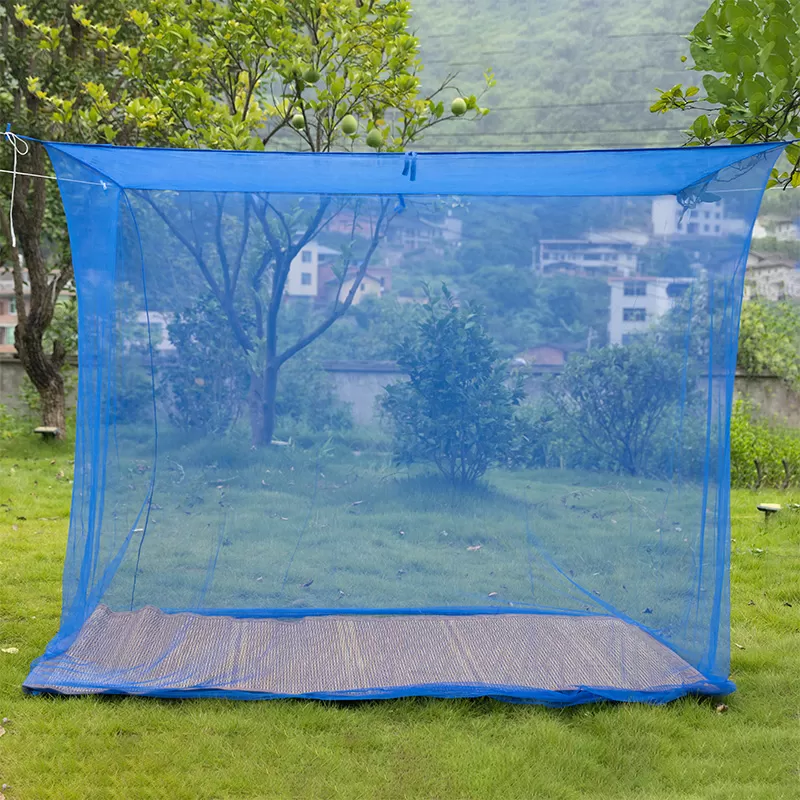
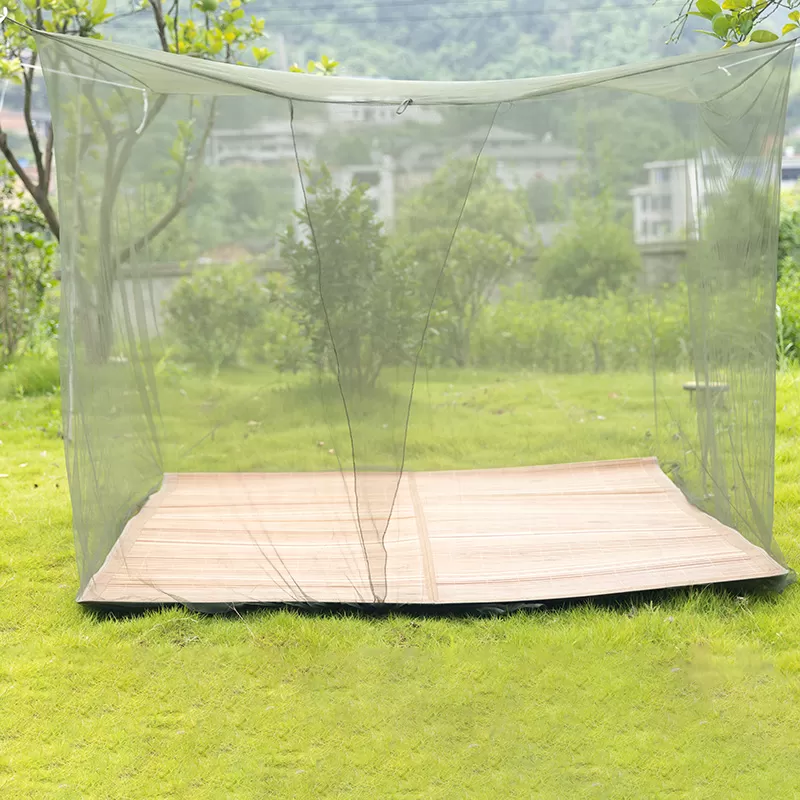
Green rectangular nets provide distinct advantages in field settings, refugee assistance programs, and military operations:
Superior Dirt Resistance: In rural environments with open hearths and dusty terrain, white nets soil quickly. Users often wash soiled nets too frequently, depleting surface insecticides prematurely. Green fabrics mask soot and dust, preserving the net's structural and chemical integrity.
Visual Camouflage for Field Operations: Defense agencies, forestry teams, and border patrols require low-visibility gear. Olive-drab and dark green nets blend into natural vegetation and temporary tactical shelters.
Maximized Sleeping Space: The rectangular profile provides vertical side walls. This box shape keeps the mesh away from the user's skin during sleep, preventing mosquitoes from feeding through the netting.
Flexible Suspension: Rectangular nets feature 4 to 6 hanging loops. Users can secure them to bed posts, ceiling joists, tree branches, or temporary shelter poles with minimal hardware.
Higher Community Acceptance: Field studies show that rural communities often prefer darker colors. When recipients value the appearance of their nets, daily usage rates increase significantly.
Core Technical Metrics for Bulk LLIN Procurement in 2026
Buying insecticide-treated netting in volume requires clear technical benchmarks. Low-grade commercial netting fails quickly in tropical environments. Global procurement officers assess four core engineering factors before issuing purchase orders.
1. WHO PQ Certification and Compliance
The World Health Organization Prequalification (WHO PQ) system sets the baseline for public health vector control products. A WHO PQ listing verifies that the manufacturing site enforces clean chemical blending, consistent active ingredient dosing, and rigorous batch tracing.
Procuring non-prequalified nets risks delivering ineffective products to vulnerable populations. Always request valid WHO PQ documentation and current factory inspection summaries during vendor pre-qualification.
2. Wash Retention and Active Ingredient Efficacy
An effective LLIN must retain its insecticidal potency through multiple wash cycles. Factory incorporation methods blend pyrethroids (such as deltamethrin or alphacypermethrin) directly into the polymer matrix before yarn extrusion.
This slow-release mechanism allows the insecticide to migrate to the fiber surface continuously. Quality LLINs must withstand at least 20 to 21 standardized WHO washes while maintaining total mosquito knockdown and mortality rates above target thresholds.
3. Yarn Denier and Bursting Strength
Physical durability prevents holes that let mosquitoes enter. Yarn weight and knit patterns determine how well the net resists tears, snags, and daily wear.
75 Denier: Lightweight and cost-effective, ideal for short-term emergency distributions.
100 Denier: The industry standard for balance between airflow, weight, and tensile strength.
150 Denier: Heavy-duty yarn designed for rugged field conditions, disaster relief camps, and military deployment.
Bursting Strength: High-grade polyester nets must achieve bursting strength ratings between 250 kPa and 405 kPa (ISO 13938-2) depending on yarn denier.
4. Mesh Density and Airflow
Standard public health nets feature a minimum mesh density of 156 holes per square inch (approx. 24 holes/cm²). This density stops Anopheles mosquitoes while allowing enough airflow to keep users comfortable in hot, humid climates.
Tightly woven micro-mesh options are also available for environments with smaller biting vectors, such as sandflies and midges.
Why Global Agencies Partner with YAHE LN
Selecting the right production partner prevents costly shipping delays and quality failures. YAHE LN brings over two decades of dedicated manufacturing experience to international public health initiatives.
The company maintains a vertical manufacturing framework that covers every production phase, from polymer compounding and yarn drawing to automated weaving, precision cutting, and automated packaging.
Global procurement teams rely on YAHE LN for several operational reasons:
Trusted by Major Global Agencies: YAHE LN manufactures vector control textiles used by UNICEF, UNHCR, the Global Fund, and national public health bodies worldwide.
Proprietary Technology: The engineering team holds multiple patents in insecticide incorporation, masterbatch formulation, and reinforced seam fabrication.
Certified Quality Systems: Production facilities operate under ISO 9001, ISO 14001, and ISO 45001 management systems, ensuring strict environmental safety and worker protection standards.
Comprehensive Product Catalog: YAHE LN manufactures rectangular LLINs, circular canopy nets, and pop-up vector control tents for mobile field personnel.
Step-by-Step Guide to Custom Bulk Sourcing
Executing an international tender for green rectangular mosquito net bulk shipments involves distinct operational stages. Following a structured sourcing path avoids customs holdups and ensures timely arrivals.
Step 1: Finalize Dimensional Specifications
Match net dimensions to target sleeping arrangements. Common institutional dimensions include:
Single / Cot: 100 cm (W) x 190 cm (L) x 150 cm (H)
Double: 130 cm (W) x 180 cm (L) x 150 cm (H)
Family / King: 190 cm (W) x 180 cm (L) x 150 cm (H) or customized oversize dimensions.
Specify reinforced hanging points and bottom hem binding to resist abrasion against rough floorboards or metal bed frames.
Step 2: Define Color and Additive Requirements
Select your exact shade (e.g., Olive Green Pantone 18-0521 TCX or Forest Green). Ensure the polymer formulation includes UV stabilizers if nets will see daylight in temporary open-sided shelters.
Step 3: Engineer Packaging for Shipping Efficiency
Freight costs significantly impact landed prices. YAHE LN uses specialized hydraulic baling presses to maximize container utilization.
Individually wrapped nets pack into compressed, multi-layer waterproof woven bales. Standard 40-foot high-cube (40HC) shipping containers hold between 35,000 and 85,000 nets, depending on denier, dimensions, and packaging compression.
Step 4: Establish Factory QA and Pre-Shipment Inspection
Include independent pre-shipment testing in your procurement contracts. Independent testing agencies (such as SGS or Intertek) can inspect factory floor batches to verify yarn denier, chemical concentration (g/kg), bursting strength, and seam construction before final container loading.
Procurement FAQs
Q1: How does compressed bale packaging reduce total freight costs for bulk mosquito nets?
A1: Standard loose cartons leave unused volume inside shipping containers. YAHE LN uses heavy-duty hydraulic balers to compress individually wrapped nets into dense, water-resistant bales. This compression cuts cargo volume by up to 40%, allowing buyers to load significantly more units per 40HC container and lowering the landed cost per net.
Q2: How is insecticide concentration verified across large production runs?
A2: Chemical uniformity starts with automated masterbatch dosing during polymer extrusion. Quality assurance technicians run gas chromatography and high-performance liquid chromatography (HPLC) tests on samples from every shift. These tests verify that active ingredient levels match target specifications across the entire production run.
Q3: Can we customize multilingual instructions and branding on individual net packaging?
A3: Yes. Institutional projects typically require customized individual polybags printed with pictograms, safety warnings, donor recognition logos, and local language instructions (such as French, Spanish, Arabic, or Swahili). Outer bales can also carry custom stenciling and barcoding for smooth warehouse processing.
Q4: What is the typical production lead time for full container orders?
A4: Standard lead times for container loads (FCL) run between 30 and 45 days after lab dip approval and final specification sign-off. High-volume tender orders may ship in staggered monthly batches to match your in-country distribution timelines.
Q5: Why are dark green rectangular nets preferred over circular models for institutional aid projects?
A5: Circular canopy nets rely on a single overhead hanging point, which can be hard to secure inside tents or irregular shelters. Rectangular nets use 4 to 6 anchor points, offering stable coverage over cots, sleeping mats, and bunk beds while withstanding windy, austere conditions.
Start Your 2026 Procurement Planning with YAHE LN
Meeting global public health goals requires reliable, certified manufacturing partners. High-durability insecticidal nets protect vulnerable populations, support field teams, and ensure donor funds deliver lasting value.
YAHE LN provides certified production capacity, transparent batch tracking, and reliable logistics support for your vector control projects. Contact the YAHE LN institutional sales team today to request 2026 technical spec sheets, factory audit reports, or custom quotations for your green rectangular mosquito net bulk requirements.