Public health tenders for vector control demand absolute precision. When governments, humanitarian organizations, and non-governmental bodies release requests for proposals (RFPs) to fight malaria and dengue, procurement teams face strict compliance mandates. Long-Lasting Insecticidal Nets (LLINs) remain the frontline defense against mosquito-borne pathogens. Among the various styles, the blue circular mosquito net—often referred to as a conical net—stands out as a preferred option for community acceptance and ease of installation.
Selecting the right manufacturing partner can make or break your bid. Bidding requirements leave no margin for late deliveries, failed chemical assays, or defective seams. To win contracts and execute them without penalties, you must partner with an established blue circular mosquito net supplier capable of handling rigorous international standards. Industry leaders like YAHE LN demonstrate how strict quality management and vertically integrated production simplify complex tender fulfillment.
Why Blue Circular Mosquito Nets Dominate Public Health Programs
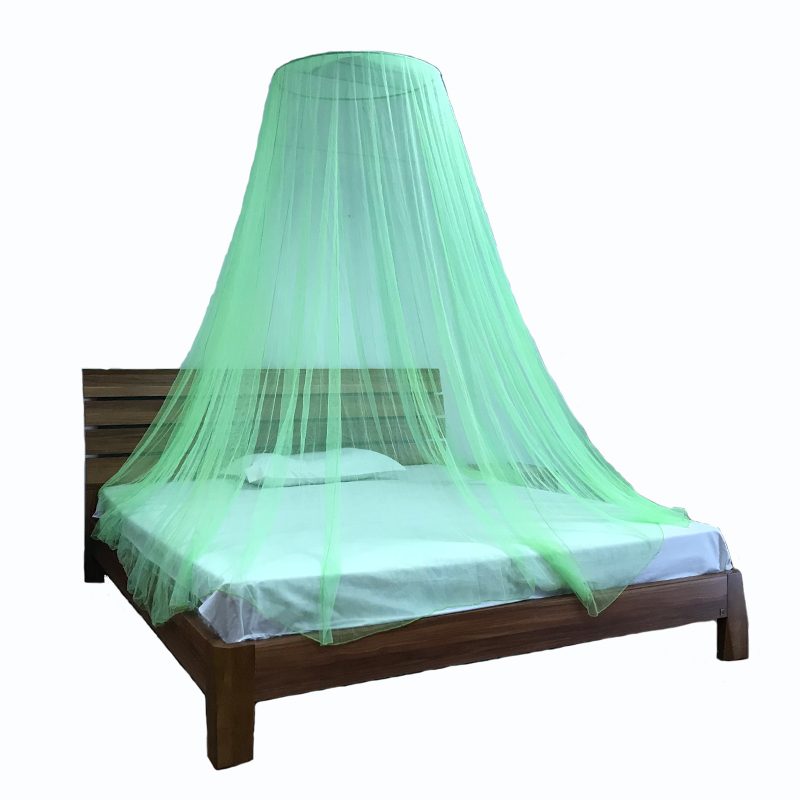
Net geometry and color play a crucial role in field adoption. While rectangular nets are standard in many institutional facilities, circular nets offer distinct operational advantages that appeal to both end-users and procurement officers.
Single-Point Suspension: Circular nets require only one ceiling anchor point. This feature makes them much easier to hang in rural, temporary, or unstructured shelters where multiple anchor points do not exist.
Internal Volume and Airflow: The top ring expands the fabric outward, creating an airy dome. This prevents the net from resting against the sleeper's skin, reducing the risk of mosquito bites through the mesh.
Cultural Acceptance of Blue: Field studies show that communities often prefer royal blue or navy netting over white. Darker shades hide dirt, maintain a cleaner appearance over months of continuous use, and reduce frequent washing that might degrade insecticides prematurely.
These practical benefits mean that international aid agencies frequently specify circular blue nets in their tender schedules. However, producing these nets at scale requires advanced technical capabilities.
1. World Health Organization Prequalification (WHO PQ) and ISO Compliance
The first filter in any tender evaluation is regulatory compliance. In international vector control procurement, non-certified goods face immediate disqualification during technical audits.
Your manufacturing partner must hold active WHO Prequalification (WHO PQ) for their LLIN lines. This certification confirms that the net formulation consistently releases active insecticide to kill mosquitoes upon contact while remaining safe for human use over several years.
Beyond product-level prequalification, verify factory-wide quality and environmental management systems. A qualified supplier should maintain:
ISO 9001: For rigorous quality control from raw material to packaged goods.
ISO 14001: For environmentally conscious chemical management and waste disposal.
ISO 45001: For occupational health and safety standards on the production floor.
YAHE LN established its reputation early by securing WHO PQ status in 2015. Backed by proprietary patents and full ISO certifications, the company provides verified documentation that eliminates compliance risks for bidding contractors.
2. Insecticidal Efficacy and Verified Wash Resistance
A standard mosquito net provides physical exclusion, but a tender-grade LLIN must deliver lethal chemical bio-efficacy. Tender specifications typically demand proven performance across long operational lifespans.
Inspect the supplier's technical dossier for two critical performance metrics:
Wash Durability (21+ Standard Washes): The net must retain adequate insecticide bioavailability after at least 21 standardized wash cycles. In real-world terms, this ensures protective efficacy for 3 to 5 years under tropical conditions.
Knockdown and Mortality Rates: According to standard WHO cone bioassays, the fabric must achieve over 95% knockdown (KD60) or over 80% 24-hour mortality against target mosquito vectors such as Anopheles and Aedes species.
Independent laboratory validation is mandatory. Professional manufacturers maintain their own pesticide formulation facilities while submitting products to accredited testing bodies such as the TEC laboratory in France or GLP (Good Laboratory Practice) certified facilities.
YAHE LN operates a dedicated 200-square-meter pesticide blending room with advanced analytical equipment. This setup ensures that every square meter of blue circular netting contains the exact active ingredient concentration required by tender specifications.
3. End-to-End Production Capacity and Risk Mitigation
Tender awards often come with aggressive delivery schedules. Winning a contract to supply hundreds of thousands—or millions—of nets means you cannot rely on suppliers who outsource steps to third-party workshops. Subcontracting creates quality variations, chemical dosage fluctuations, and delivery delays.
A dependable blue circular mosquito net supplier must run a fully integrated, end-to-end manufacturing operation. This vertical integration should cover:
Polymer Masterbatch Blending and Monofilament Yarn Extrusion
Warp Knitting of High-Density Mesh Fabric
Continuous Finishing, Heat-Setting, and Insecticidal Coating
Automated Cutting, Ring Assembly, and Precision Stitching
Individual Baling, Vacuum Packing, and Export Loading
Consider the scale of YAHE LN. The enterprise operates a manufacturing plant spanning 66,700 square meters (100 mu) following an initial investment of 100 million RMB. With an annual production value exceeding 200 million RMB, the facility outputs up to 100,000 finished mosquito nets and 500,000 square meters of technical mesh every day.
This massive daily throughput allows prime contractors to meet tight shipping schedules and protect themselves against liquidated damages caused by late fulfillment.
4. Technical Specifications of Circular Blue Netting
Circular nets present unique manufacturing challenges compared to square models. The radial geometry demands consistent stitching along the canopy and secure attachment points for the suspension ring. When reviewing factory samples, inspect the following engineering aspects:
Mesh Density and Bursting Strength
Public tenders typically specify mesh density between 156 and 200 holes per square inch. This balance blocks small insects while preserving adequate airflow in humid climates. The fabric yarn—commonly 75 Denier or 100 Denier polyester or high-density polyethylene (HDPE)—must deliver high bursting strength (often >250 to 400 kPa under ISO 13938-1 standards) to resist tearing during rough handling.
Colorfastness and Dye Penetration
The characteristic blue shade must not bleed, wash out, or degrade under direct sunlight. Premium suppliers use dope-dyeing techniques or advanced binder systems that lock the color and active pesticide molecules deep inside or securely on the surface of the synthetic fibers.
Collapsible Support Rings
The top circular ring must be flexible yet sturdy. It should easily fold into a compact figure-eight for shipping and spring back into a perfect circle without warping. Faulty rings damage packaging, tear the net mesh during transit, and cause rejections during pre-shipment inspections.
5. Proven Track Record with Institutional Buyers
Institutional procurement operates on strict protocols. Experience working with major global buyers indicates that a factory understands export procedures, documentation, and compliance inspections.
Verify whether the manufacturer has a track record of fulfilling contracts for organizations such as:
The United Nations Children's Fund (UNICEF)
The United Nations High Commissioner for Refugees (UNHCR)
National Ministries of Health (MoH)
The Global Fund to Fight AIDS, Tuberculosis and Malaria
Experienced suppliers routinely handle third-party pre-shipment inspections (PSI) conducted by agencies such as SGS, Cotecna, or Bureau Veritas. They know how to produce comprehensive certificates of analysis (CoA), detailed batch tracking, customized bale markings, and barcoding without delays.
Over years of international service, YAHE LN has built a strong record of successful contract execution for major UN programs and global relief agencies, making the brand a trusted choice for B2B tender participants.
Evaluating Your Sourcing Checklist Before Bidding
Before submitting your final tender bid, review this supplier checklist to avoid costly surprises during project execution:
WHO PQ Documentation: Is the specific blue circular net formulation listed on current public health registries?
Lab Assays: Are recent GLP/TEC test reports available for wash resistance and insecticide retention?
Capacity Proof: Does the factory have sufficient verified daily output to hit your delivery windows?
Tender Support Services: Will the manufacturer supply unbranded bidding samples, technical datasheets, and compliance guarantees rapidly?
Packing Optimization: Does the supplier use high-pressure hydraulic baling to minimize container freight costs?
Frequently Asked Questions (FAQ)
Q1: What is the main difference between 75D and 100D polyester blue circular mosquito nets?
A1: Denier (D) measures the linear mass density of the yarn. A 75D net is lighter, softer, and more cost-effective, making it common for broad community distributions where budget optimization is paramount. A 100D net uses thicker filament, offering higher bursting strength and tear resistance for rugged environments or longer operational lifespans. Tenders will always state the required denier rating.
Q2: Why are blue circular mosquito nets preferred over white nets in humanitarian relief?
A2: Field conditions in disaster zones and refugee settlements often involve dust, soot, and mud. Blue nets hide dirt much better than white nets. This reduces washing frequency by end-users, preserving the insecticidal coating on LLINs and extending effective malaria protection.
Q3: How are circular mosquito nets packaged to reduce international ocean freight costs?
A3: Circular nets use flexible, folding spring-steel or plastic-coated wire rings. Workers fold the net and ring into compact circles, seal them in individual polybags, and compress them into bales using heavy-duty hydraulic baling presses. This compression reduces the cubic meter (CBM) volume by up to 50%, maximizing container loadability.
Q4: Can YAHE LN customize dimensions and mesh counts to meet specific tender documents?
A4: Yes. As an integrated manufacturer, YAHE LN customizes height, base circumference, top ring diameter, mesh hole count (e.g., 156 vs. 196 holes/sq inch), and fabric denier according to specific RFP technical sheets.
Q5: What documentation should I request from a blue circular mosquito net supplier before bidding?
A5: Request valid WHO PQ listing references, ISO 9001/14001/45001 certificates, pesticide formulation assay reports, independent wash durability test certificates (GLP/TEC), and past performance references for institutional contracts.
Secure Your Tender Success with YAHE LN
Winning and executing public health supply contracts requires a manufacturing partner with proven technical ability and dependable capacity. Working with an experienced blue circular mosquito net supplier ensures that your products clear all laboratory checks, pass pre-shipment inspections, and arrive on schedule.
YAHE LN provides complete bidding support for international procurement projects. From providing tender-compliant samples and complete technical dossiers to delivering daily outputs of 100,000 nets from our 66,700 m² facility, our team helps you submit competitive, risk-free bids.
Preparing your next tender bid? Contact the technical sales department at YAHE LN today to request current product specifications, certificates of analysis, and competitive factory-direct quotations.