
Large-scale vector control operations require precise product engineering, predictable supply chain timelines, and strict adherence to international public health parameters. Institutional buyers, non-governmental organizations, and commercial distributors evaluating YAHE mosquito net wholesale contracts must navigate complex structural and chemical variables. Long-Lasting Insecticidal Nets (LLINs) serve as both a mechanical barrier and a chemical lethal agent against disease-carrying vectors. Evaluating the baseline polymer, active ingredient formulation, dimensional stability, and container load efficiency determines the real-world operational life and financial feasibility of field deployments.
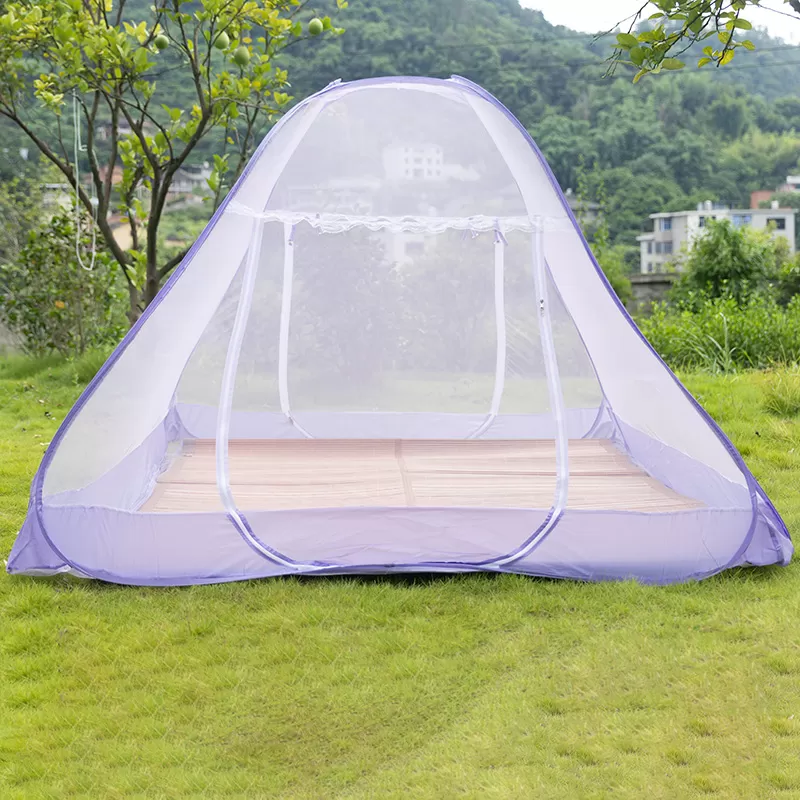
Polymer Selection and Textile Engineering
The durability of a mosquito net begins at the molecular base. Bulk buyers must choose between two primary raw material formulations: multifilament polyester (PET) and monofilament high-density polyethylene (HDPE). Each polymer provides distinct functional profiles based on the operational theater.
Polyester nets utilize multifilament yarn structures, typically ranging from 75 Denier to 100 Denier for public health deployments. A 75 Denier polyester yarn provides a softer hand-feel, enhanced drape, and superior baseline airflow, which directly correlates with higher user compliance rates in tropical zones where nighttime humidity is severe. 100 Denier polyester yields a higher tensile and bursting strength, suited for humanitarian relief camps where physical abrasion against rough bedding or ground mats occurs regularly.
High-Density Polyethylene nets rely on thicker monofilament yarns, commonly 150 Denier or higher. HDPE fibers offer exceptional intrinsic mechanical resistance against snagging and tearing. The rigidity of monofilament HDPE ensures the mesh apertures remain uniform even under constant physical tension, though the added material weight affects packing volume and ocean freight logistics during international transport.
Mesh construction follows strict entomological density standards. The global metric standard requires a minimum of 156 holes per square inch (24 holes per square centimeter). This specific geometry creates an impenetrable barrier for Anopheles, Aedes, and Culex mosquito species while preserving adequate cross-ventilation. Structural integrity is quantified through standard ball burst and pneumatic burst testing:
Polyester 75D: Minimum burst resistance of 250 kPa
Polyester 100D: Minimum burst resistance of 405 kPa
Polyethylene 150D: Burst resistance exceeding 500 kPa
Insecticide Incorporation and Surface Migration Kinetics
Long-lasting protection requires precise chemical engineering rather than simple post-production dipping. Modern vector management demands that active ingredients remain stable within the textile matrix across multi-year lifecycles. High-capacity manufacturing operations under the YAHE LN portfolio integrate specialized synthetic pyrethroids to guarantee vector knockdown and mortality rates.
Two primary methodologies govern chemical binding in large-scale manufacturing:
Polymer Incorporation: Primarily utilized in HDPE production, the pyrethroid is blended directly into the molten polymer masterbatch prior to extrusion. The active ingredient continuously migrates from the core of the monofilament to the surface via controlled diffusion kinetics. When surface insecticide is depleted through washing or handling, the internal reservoir replenishes the perimeter layer.
Polymer Coating: Primarily applied to polyester textiles, the active ingredient is suspended within a proprietary wash-resistant resin binder. This binder encapsulates the multifilament yarn surface, locking the active chemical agent onto the individual filaments while resisting aqueous degradation during laundering.
The primary active ingredients applied in programmatic supply include:
Alpha-Cypermethrin: Target loading of 5.8 g/kg for incorporated HDPE or 200 mg/m² for coated polyester, delivering rapid neurotoxic knockdown.
Deltamethrin: Target loading of 1.8 g/kg to 2.0 g/kg for HDPE, or 55 mg/m² to 65 mg/m² for polyester formulations.
Piperonyl Butoxide (PBO) Synergists: Integrated alongside pyrethroids on top-roof or side panels to neutralize metabolic cytochrome P450 enzymes in areas with documented pyrethroid resistance.
Longevity verification adheres to standard international wash-resistance parameters. Laboratory testing requires the retention of biological efficacy after at least 20 standardized sequential washes. Efficacy is verified using WHO cone bioassays and tunnel tests, measuring 60-minute knockdown rates above 95% and 24-hour total mortality above 80% on susceptible Anopheles colonies.
Dimensional Variations and Structural Integrity for Institutional Programs
Standardized sizing optimizes factory output while meeting diverse regional bedding habits. Procurement officers handling a YAHE mosquito net wholesale requisition must balance surface area protection with fabric yield per production run.
Rectangular nets represent the standard for institutional and military procurement. They provide maximum internal usable volume and prevent the sleeper from contacting the netting walls during sleep, minimizing bite-through incidents. Common dimensions include:
Single: 100 cm (W) x 180 cm (L) x 150 cm (H)
Double: 130 cm (W) x 180 cm (L) x 150 cm (H)
Family/Queen: 160 cm (W) x 180 cm (L) x 150 cm (H)
Extra Large/King: 190 cm (W) x 180 cm (L) x 150 cm (H)
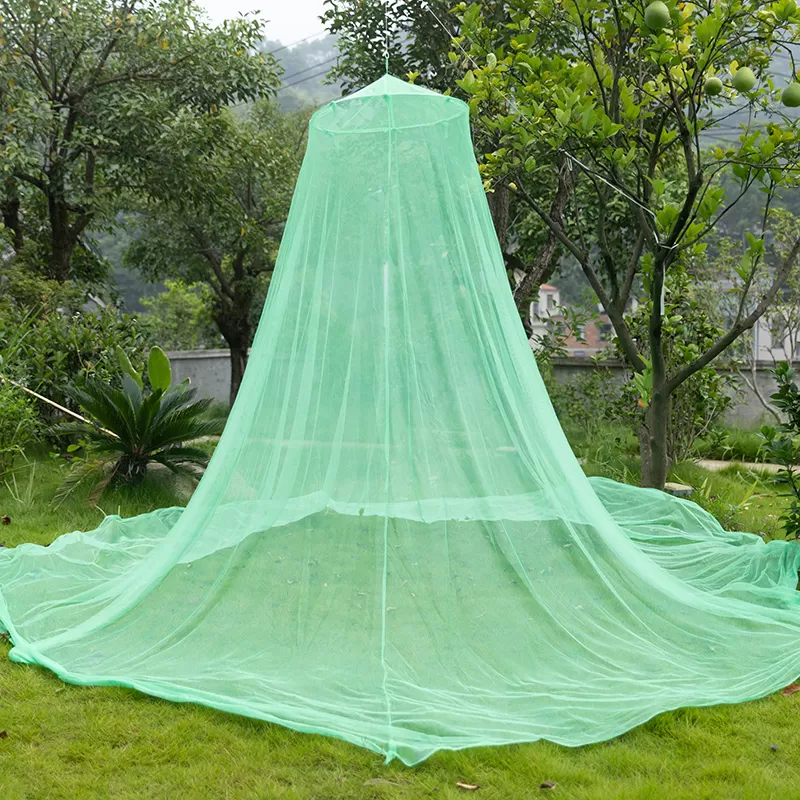
Conical (circular) designs feature a single suspension point with a flexible top ring (typically rattan or coated spring steel). While preferred in consumer retail and specific seasonal distribution campaigns due to rapid setup convenience, conical profiles yield less interior volume per square meter of fabric than rectangular equivalents.
Structural assembly relies on industrial-grade double-needle chain stitching or four-thread overlock seaming. Hanging loops, manufactured from high-tensile woven polyester tape, are double-stitched into reinforced corner seams to prevent failure under physical stress. Reinforced bottom borders, extending 10 cm to 15 cm from the base, incorporate higher-density yarn to resist tearing when tucked beneath mattresses, cots, or reed mats.
Supply Chain Optimization and Bulk Packaging Engineering
Logistical efficiency dictates the final landed cost per unit in large-scale public health programs. Standard loose packing creates massive volumetric dead space, inflating container shipping costs. Factory direct YAHE mosquito net wholesale orders utilize high-density hydraulic baling systems to compress finished units into dense, stackable modules.
Packaging configurations must withstand multi-modal shipping across maritime routes, inland waterways, and unpaved road networks. The standard packaging hierarchy includes:
Primary Unit Packaging: Individual biodegradable or low-density polyethylene (LDPE) sealed pouches, heat-welded with customized multi-lingual user instructions, hazard pictograms, production lot numbers, and tracking barcodes.
Secondary Master Bales: 50 to 100 individually packed nets compressed under hydraulic presses and wrapped in heavy-duty woven polypropylene outer sheeting, secured with high-tensile poly strapping bands.
Carton Packaging Alternative: Sturdy corrugated 5-ply cartons for commercial retail channels requiring upright retail shelf display boxes.
Compressing polyester nets allows procurement teams to load up to 80,000 to 100,000 units within a single 40-foot High Cube (40HC) ocean shipping container, drastically reducing the freight cost per distributed net. Monofilament HDPE nets, possessing greater fiber spring-back and structural mass, average between 45,000 and 60,000 units per 40HC container depending on denier and dimensional footprint.
Quality Management Protocols Under YAHE LN
Maintaining chemical and dimensional consistency across multi-million-meter textile runs demands complete vertical integration. Facilities operating under the YAHE LN manufacturing standard implement inline testing throughout the texturing, knitting, heat-setting, chemical impregnation, and stitching stages.
Automated visual inspection systems scan warp-knitted fabric webs in real-time to detect dropped stitches, broken filaments, and mesh size variances prior to chemical treatment. Batch-level high-performance liquid chromatography (HPLC) and gas chromatography-mass spectrometry (GC-MS) confirm active ingredient concentration tolerances within strict acceptable margins (typically within ±10% of target formulation values).
Factory-level traceability requires that every outgoing bale links directly to raw polymer lot numbers, insecticide batch certifications, environmental parameter records during chemical curing, and individual sewing line shift logs. Independent third-party inspection agencies regularly pull random samples for ISO 13934 tensile testing, ISO 13938 bursting testing, and CIPAC chemical extraction verification before issuing international shipping clearance.
Evaluating Factory Direct Programs for Institutional Procurement
Procuring large volumes directly through manufacturer channels offers significant programmatic advantages over intermediary trading houses. Establishing a direct YAHE mosquito net wholesale procurement relationship secures direct accountability for production timelines, batch chemistry verification, and custom dimensioning. When structuring long-term vector control tenders, procurement teams should align production capacity with seasonal disease transmission peaks, factoring in standard ocean transit and customs clearance lead times.
High-volume vector management initiatives depend entirely on zero-defect manufacturing. By understanding the structural trade-offs between filament Deniers, polymer matrix compositions, and wash retention chemistry, procurement professionals can precisely match product specifications to the geographic and epidemiological realities of their targeted deployment zones.
Frequently Asked Questions
What is the difference between 75 Denier and 100 Denier polyester nets in field deployments?
Denier measures the linear mass density of the fiber in grams per 9,000 meters. A 75 Denier polyester net utilizes a finer filament, yielding a lighter total weight, softer drape, and higher cross-ventilation, making it ideal for standard residential vector control. A 100 Denier net has 33% more fiber mass, significantly increasing mechanical tear resistance and burst strength for challenging environments such as refugee settlements, disaster zones, or schools.
How does the incorporation of Piperonyl Butoxide (PBO) improve LLIN performance?
In regions where mosquito populations have developed metabolic resistance to standard pyrethroids, their internal cytochrome P450 enzymes detoxify the insecticide before it causes lethality. Piperonyl Butoxide acts as a chemical synergist by inhibiting these specific defense enzymes, allowing the co-applied synthetic pyrethroid (such as Deltamethrin or Alpha-Cypermethrin) to successfully paralyze and kill the insect.
What compression methods are standard for international sea freight?
To reduce shipping volume, factories utilize high-tonnage hydraulic compression balers. Nets are packed in bundles of 50 to 100 units wrapped inside tear-resistant, water-repellent woven polypropylene textiles. This process removes air from the multifilament yarn and packaging, allowing up to 100,000 units of 75D polyester nets to fit into a standard 40-foot High Cube maritime container.
How is insecticide wash resistance verified under standard protocols?
Wash resistance is measured by subjecting finished net samples to sequential washing cycles in standard soap solutions at controlled water temperatures (30°C ± 2°C), followed by defined drying periods to allow insecticide migration back to the surface. Samples are evaluated after 1, 3, 5, 10, 15, and 20 washes via HPLC chemical analysis and standard WHO cone bioassays using non-resistant insect strains to verify ongoing mortality above 80%.
What structural reinforcements are available for heavy-use institutional programs?
Custom structural reinforcements include double-stitched corner suspension points, reinforced woven cross-tapes across the roof panel, and heavy-duty 10 cm to 15 cm lower border skirts (reinforcement sheeting). Lower borders resist friction damage from rough wooden cots, concrete flooring, or continuous tucking beneath standard foam mattresses.
What production lead times are standard for factory-direct container shipments?
Standard lead times for full container load (FCL) production run between 20 to 35 business days following formal lab-dip chemical approval, custom packaging design sign-off, and raw material allocation. Transit times vary by port of entry and should be factored into local transmission season planning.
Initiate Direct Procurement and Specification Inquiries
Executing large-scale vector control and public health supply contracts requires access to verified manufacturing capacity, technical dossiers, and certified testing data. For customized size configurations, active ingredient formulation adjustments, institutional bidding documentation, or full container load cost breakdowns under the YAHE mosquito net wholesale program, contact the technical sales and export division directly. Submit detailed project parameters, destination ports, and compliance criteria to receive official specification sheets, laboratory bioassay reports, and commercial volume quotations.