
Large-scale vector control initiatives remain one of the most effective methods for reducing the transmission of malaria and other vector-borne infections. For procurement officers, non-governmental organizations, and national health authorities, organizing a treated mosquito net bulk buy requires a thorough understanding of materials, chemical treatments, and international compliance standards. Acquiring these public health assets in volume demands more than simple cost calculations; it involves analyzing textile engineering, chemical retention, and distribution logistics to ensure long-term field performance.
Selecting the appropriate product specifications directly impacts the durability of the netting and the health of the communities receiving them. As a dedicated manufacturer, Yamei works closely with global purchasing networks to provide reliable long-lasting insecticidal nets (LLINs) that satisfy strict regulatory frameworks. This guide outlines the key structural and chemical parameters that should govern volume procurement decisions.
Structural Parameters of High-Performance Netting
The physical composition of a mosquito net determines its physical lifespan under daily field conditions. When planning a bulk purchase, buyers must choose between different polymer bases, yarn densities, and construction patterns.
Polymer Selection: Polyester vs. Polyethylene
The choice of polymer affects the texture, strength, and chemical treatment methods of the net. Polyester netting is generally preferred for its softness and drape, making it highly acceptable to end-users in diverse domestic environments. In polyester nets, the insecticide is typically bound to the outer surface of the fibers using a specialized polymer coating. Polyethylene nets, on the other hand, are stiffer and highly durable. In these nets, the active ingredient is incorporated directly into the polyethylene chips before the extrusion process, allowing the insecticide to migrate to the surface gradually over several years.
Yarn Density and Denier Measurements
Denier measures the linear mass density of the yarn, representing the mass in grams per 9,000 meters of fiber.
75 Denier (75D): Provides a lightweight structure with excellent ventilation, making it suitable for regions with high nocturnal temperatures. While cost-effective for large budgets, it offers lower tear resistance compared to heavier alternatives.
100 Denier (100D): Offers increased tensile strength and resistance to abrasive wear. It is highly recommended for environments where nets are frequently tucked under mattresses or used in rugged rural settings.
150 Denier (150D) and Above: Utilized primarily in heavy-duty or semi-permanent installations where physical durability is prioritized over weight and air circulation.
Selecting the appropriate denier involves balancing local environmental conditions with the expected lifespan of the intervention campaign.
Mesh Size and Ventilation Balance
The standard mesh density recommended for malaria prevention is 156 holes per square inch (approximately 25 holes per square centimeter). This configuration provides a physical barrier small enough to exclude Anopheles mosquitoes while maintaining adequate airflow. Restricting airflow too much can cause users to discard the nets during hot seasons, reducing the overall efficacy of the distribution program. Therefore, maintaining the 156-mesh standard is a fundamental requirement for most public health procurement contracts.
The Chemistry of Long-Lasting Insecticidal Nets (LLINs)
The chemical treatment of the fibers transforms a simple physical barrier into an active vector control tool. Modern LLINs rely on synthetic pyrethroids to repel, knock down, or eliminate mosquitoes upon contact.
Active Ingredients and Dosage Levels
Permethrin, deltamethrin, and alpha-cypermethrin are the primary active ingredients used in modern net production. These substances are selected for their low toxicity to mammals and high efficacy against target insect vectors. The concentration of the active ingredient is carefully calibrated based on the polymer type and the application method. For example, polyester nets coated with deltamethrin typically require a target dose of 55 milligrams per square meter, whereas polyethylene nets with incorporated alpha-cypermethrin may use higher target doses to ensure sustained release over time.
Wash Resistance and Active Lifetime
To qualify as a genuine long-lasting insecticidal net, the product must retain its bio-efficacy after repeated wash cycles. Standard international protocols require LLINs to withstand at least 20 standardized laboratory washes while maintaining a high knockdown rate (typically greater than 95%) and mortality rate (greater than 80%) against target mosquito populations. When arranging a treated mosquito net bulk buy, demanding verified laboratory test reports regarding wash retention is a vital step in quality assurance.
Quality Control Standards and Compliance Frameworks
Procurement departments must verify that the products they source comply with international regulatory benchmarks. This ensures that the nets distributed in public health campaigns perform reliably in the field.
WHO Prequalification and International Specifications
National regulatory bodies and major international funding agencies usually require nets to be produced by manufacturers that meet the World Health Organization (WHO) Prequalification Team requirements. This process involves rigorous laboratory testing, semi-field trials, and factory inspections. Sourcing nets that align with these prequalification guidelines guarantees that the manufacturing processes follow strict safety and performance controls.
ISO Quality Management Systems
Production facilities should operate under ISO 9001 quality management systems. This certification indicates that every batch of netting undergoes systematic testing for burst strength, mesh count, dimensional stability, and chemical consistency. Regular batch audits prevent the shipment of substandard products that could compromise the success of vector control campaigns.
Strategic Planning for a Treated Mosquito Net Bulk Buy
Managing the procurement of thousands of nets requires careful consideration of shipping configurations, packaging formats, and distribution realities.
Packaging Formats: Bales vs. Individual Boxes
For large-scale public health programs, packaging design is a major factor in transport efficiency. Nets are typically compressed and packed into heavy-duty polythene bales, containing 50 to 100 units each. This compression maximizes shipping container capacity, significantly reducing sea freight costs per unit. For community distribution, individual plastic packaging containing clear pictorial usage instructions and safety guidelines helps ensure correct installation by the end-users.
Container Loading Capacities
Maximizing container utilization is key to maintaining a low landed cost. A standard 20-foot dry container can accommodate approximately 35,000 to 40,000 rectangular polyester nets, depending on the denier and packaging compression. A 40-foot High Cube (HC) container can hold up to 80,000 to 100,000 nets. Logistics coordinators should plan order volumes that align with full container load (FCL) thresholds to minimize transport overheads.
Customization Options for Regional Variations
Different regions have distinct housing structures, cultural preferences, and sleep habits, which influence the ideal shape and size of the nets.
Rectangular vs. Conical Designs
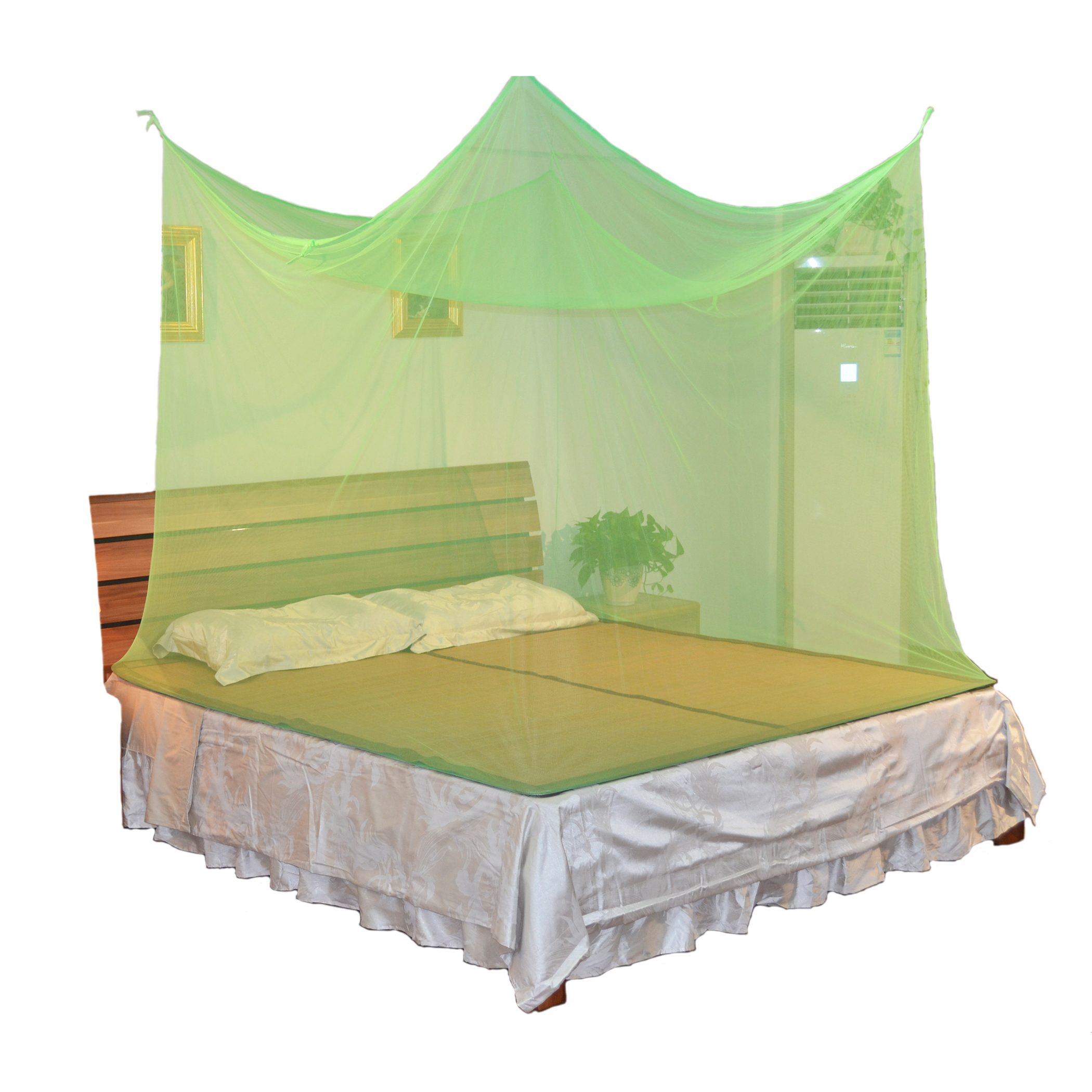
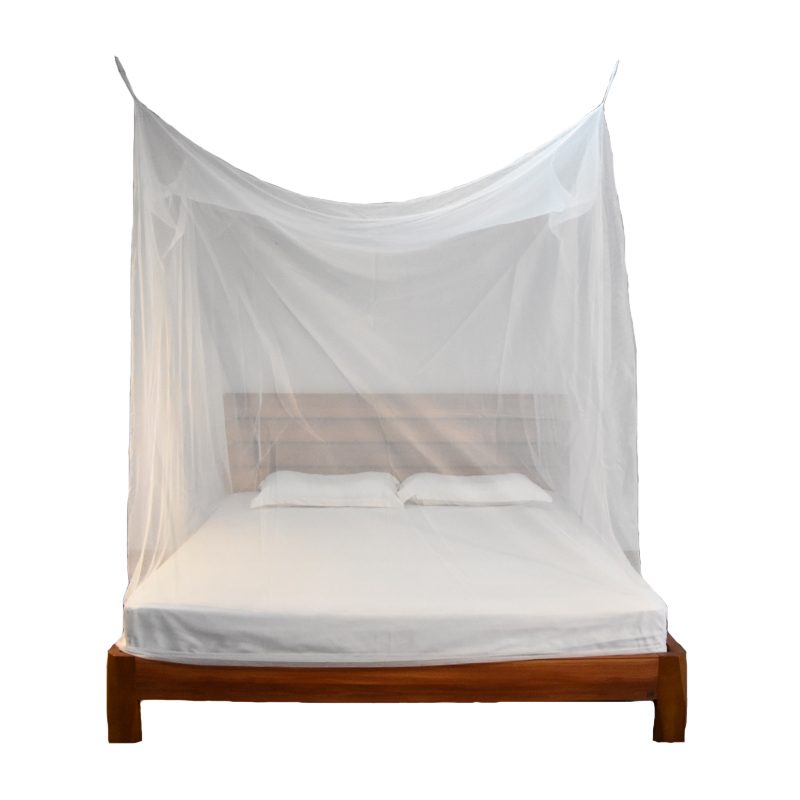
Rectangular nets are highly versatile and are typically suspended from four corners, making them ideal for standard beds, sleeping mats, and structured rooms. Conical (or circular) nets use a single hanging point with a top ring expansion, which simplifies installation in homes with irregular ceiling structures. Sourcing a mix of both styles can help accommodate the diverse housing types found within a single target region.
Color Preferences and Soil Visibility
While white is the traditional color for mosquito netting, light blue, green, and pink are often preferred in rural areas where dust and soil are prevalent. Colored nets help conceal dirt over time, reducing the frequency of washing and thereby extending the useful life of the chemical treatment. Offering a choice of colors can also encourage higher community acceptance and consistent nightly usage.
Reinforced Borders and Hanging Loops
The lower edge of the net is highly vulnerable to friction against the bed frame or ground. Adding a reinforced lower border (skirt) of double-thickness fabric or a heavy-duty polyester band can dramatically reduce tearing. Similarly, securing the hanging loops with cross-stitched reinforcement patches prevents the net from sagging or tearing loose from its support points under daily tension.
Reliable Supply Chain Management with Yamei
Manufacturing and delivering hundreds of thousands of insecticide-treated nets within strict donor timelines requires a robust production infrastructure. Yamei maintains dedicated yarn extrusion, weaving, and chemical treatment lines to ensure consistent quality control from raw materials to final packaging. By managing the entire production cycle internally, Yamei can adjust parameters such as denier, mesh style, and dimensions to meet specific national tender requirements.
Our facilities are designed to handle high-volume demands while maintaining the precise chemical concentration tolerances required by international standards. This integrated manufacturing model helps prevent the delivery delays and quality variations that often occur when relying on outsourced sub-contractors.
Initiate a Procurement Inquiry
Planning a successful treated mosquito net bulk buy involves matching precise material specifications with strict delivery schedules and regulatory parameters. Whether you are drafting a national tender proposal, coordinating a non-governmental distribution program, or restocking a regional supply depot, our team is prepared to provide detailed technical specifications, product samples, and tailored quotations.
We invite procurement specialists, distribution coordinators, and supply chain managers to submit their specific requirements. Contact Yamei today to discuss material options, custom sizes, chemical formulations, and container logistics for your upcoming vector control initiatives.
Frequently Asked Questions
Q1: What is the estimated field lifespan of a long-lasting insecticidal net (LLIN) sourced in bulk?
A1: Under typical field conditions, a standard LLIN made of 100 Denier polyester or polyethylene is designed to last between three to five years. This durability is contingent upon the net being washed with mild soap, dried in the shade, and protected from unnecessary physical wear or direct sunlight exposure during non-sleeping hours.
Q2: How does the wash resistance of incorporated polyethylene nets compare to coated polyester nets?
A2: Coated polyester nets utilize a chemical binder to hold the insecticide on the outer surface of the fibers, whereas polyethylene nets incorporate the chemical into the polymer matrix itself. Both methods are engineered and verified to survive at least 20 standard laboratory washes while maintaining their insecticidal properties, though polyethylene nets often exhibit a slower, more prolonged release of the active ingredient over time.
Q3: Can the nets be customized with specific hanging accessories and bilingual installation guides?
A3: Yes. Bulk orders can be customized to include pre-cut hanging ropes, tension adjusters, and customized instruction leaflets printed in local languages. These guides can feature simplified diagrams to instruct users on proper hanging heights and tucking procedures, which helps improve user adoption rates.
Q4: What measures are taken to prevent insecticide degradation during transit and storage?
A4: Bulk bales are sealed in heavy-duty, UV-resistant outer packaging to protect the treated nets from sunlight, heat, and moisture during long sea transits and warehouse storage. It is recommended to store the bales in a cool, well-ventilated warehouse away from direct sunlight to maintain the active ingredient's integrity prior to field distribution.
Q5: What are the minimum order quantities (MOQ) for custom-manufactured dimensions and colors?
A5: The minimum order quantity depends on the specific fiber weight, dye requirements, and dimensions requested. Typically, custom manufacturing runs require a minimum volume equivalent to a 20-foot container load to ensure efficient machinery setup and consistent chemical application across the production run.