
The global distribution of protective bedding remains a cornerstone of public health programs, humanitarian aid operations, and commercial supply chains. Distributors, non-governmental organizations, and procurement officers face the challenge of sourcing reliable materials that withstand rigorous field conditions while remaining financially viable. Among the available synthetic fibers, polyester stands out due to its optimal balance of tensile strength, weight, and production efficiency. Partnering with a specialized manufacturer like Yamei allows bulk buyers to secure products that align with rigorous international specifications while managing cost structures effectively. Understanding raw materials, fabrication methods, and international compliance standards determines the success of large-scale procurement campaigns.
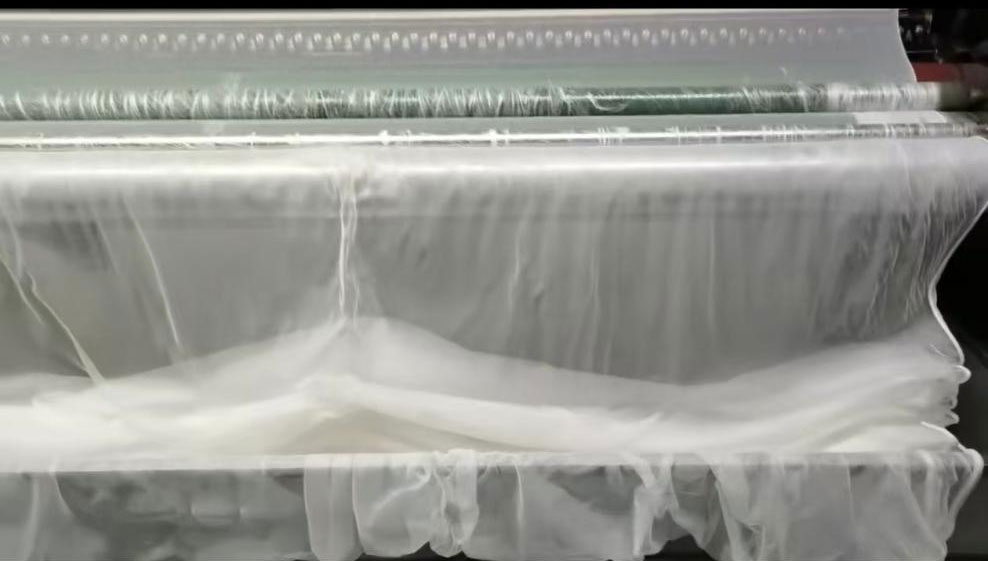
The Structural Science of Polyester: Yarn Metrics and Fabric Density
When evaluating options for 100% polyester mosquito nets wholesale, procurement teams must focus on structural metrics rather than marketing claims. Yarn weight, measured in denier, directly influences durability and weight. Standard options typically range from 50 denier to 100 denier. A 75-denier fabric offers a lightweight profile suitable for standard indoor use, while a 100-denier fabric provides the enhanced tear resistance required for rugged environments, humanitarian relief camps, and military deployments. Comparing these weights is vital when budgeting for long-term campaigns where replacement costs must be minimized.
Mesh density is another primary metric. Calculated as the number of holes per square inch, standard protective netting requires a minimum of 156 holes per square inch, which is typically achieved through a 12 by 13 mesh pattern. This structure prevents the entry of disease vectors like the Anopheles mosquito while preserving adequate airflow. Air permeability is necessary for user compliance in tropical climates, where these products are most frequently deployed. If the mesh is too dense, it restricts ventilation, leading to discomfort and non-use by the target population. Consequently, maintaining a balance between physical exclusion and thermoregulation is a primary engineering goal during the weaving phase.
Beyond denier and mesh count, bursting strength represents the material's resistance to physical pressure. Measured using pneumatic or hydraulic testers complying with international ISO standards, high-quality warp-knitted polyester netting must withstand pressures exceeding 250 kilopascals (kPa) for 75-denier yarn, and 350 kPa for 100-denier yarn. This mechanical integrity prevents accidental tearing from bedposts, fingernails, or frequent washing cycles. The table below outlines the standard physical properties of wholesale polyester netting:
75 Denier Netting: Standard weight (approx. 30-35 g/m²), minimum bursting strength of 250 kPa, suitable for indoor residential and commercial distribution.
100 Denier Netting: Heavy-duty weight (approx. 40-45 g/m²), minimum bursting strength of 350 kPa, designed for emergency relief, military shelters, and high-frequency wash environments.
Mesh Count Standard: 156 holes/inch² (equivalent to 25 holes/cm²), providing a reliable balance of vector exclusion and microclimate ventilation.
Engineering Durability: Warp Knitting and Dimensional Stability
The manufacturing processes at Yamei rely on advanced warp-knitting machinery, specifically Raschel knitting systems. Unlike weft knitting or basic weaving, warp knitting loops the yarn along the length of the fabric. This process creates a run-proof structure. If a single thread breaks, the hole does not unzip or expand across the entire panel, preserving the protective envelope of the net even after sustaining minor physical damage in the field.
Following the knitting phase, the polyester fabric undergoes heat-setting. This step exposes the material to controlled temperatures, typically between 180°C and 200°C, while under tension. Heat-setting stabilizes the molecular structure of the polyester, ensuring that the net retains its dimensional parameters after washing or exposure to high environmental temperatures. Without proper thermal stabilization, the netting may shrink unevenly, distorting the suspension points and compromising the protective coverage of the bed.
Chemical compatibility is another inherent benefit of polyester. Polyester fibers absorb very little moisture (typically less than 0.5%), making them resistant to rot, mildew, and fungal growth in humid climates. This low absorption capacity also facilitates precise chemical application for long-lasting insecticidal nets (LLINs). Insecticides, such as deltamethrin or alpha-cypermethrin, can be incorporated into the polymer matrix or coated on the fiber surface with specialized binders, ensuring sustained efficacy over multiple years and washes.
Addressing Supply Chain Bottlenecks and Compliance
Procurement professionals frequently encounter issues with regulatory compliance and delivery timelines. For international tenders, particularly those funded by multi-lateral development banks or global health organizations, meeting precise specifications is mandatory. Certificates of conformity, such as those indicating adherence to World Health Organization Pesticide Evaluation Scheme (WHOPES) guidelines or ISO 9001 quality management systems, must accompany shipments.
Yamei addresses these compliance challenges by maintaining standardized manufacturing protocols. Each production batch undergoes testing for insecticide concentration retention, dimensional stability, and flammability. Meeting flammability standards, such as 16 CFR Part 1610, is particularly important for commercial retail markets in North America and Europe, where domestic safety regulations are strictly enforced. Ensuring these certifications are in place before shipment prevents costly customs delays and distribution bottlenecks.
Logistics and shipping volume also impact the final cost per unit. Raw polyester fabric is naturally bulky. To manage shipping costs, Yamei utilizes heavy-duty hydraulic baling presses. This equipment compresses hundreds of finished nets into tight, waterproof bales, maximizing container space. For instance, a standard 40-foot high cube container can accommodate up to 100,000 compressed individual nets, depending on the dimensions and packaging configuration. Managing this packaging efficiency reduces transit costs per unit, improving the overall margin for wholesale distributors.
Tailored Design Solutions for Diverse Field Conditions
Operational demands dictate different design configurations. Standard rectangular nets are widely utilized in permanent structures due to their spacious interior volume, which prevents users from sleeping against the netting where mosquitoes can bite through. Triangular or conical designs, requiring only a single suspension point, are preferred for temporary shelters, mobile clinics, and rapid-response humanitarian aid where rapid installation is required.
Color selection also serves operational functions rather than purely aesthetic preferences. While white is standard for retail and clinical settings to monitor cleanliness, colored nets—such as olive green, safari khaki, or navy blue—are favored for military use and rural communities. Darker colors mask dirt and organic stains, encouraging continuous usage without the need for frequent, abrasive washing that can deplete insecticide treatments prematurely.
Reinforced borders, or skirtings, are sewn along the bottom edge of the net. This section, typically made of a denser woven polyester or canvas fabric, protects the net from abrasion when tucked under heavy mattresses or secured with stones on dirt floors. Yamei provides customizable skirting heights, usually ranging from 10 cm to 30 cm, depending on the targeted deployment environment. Proper reinforcement along these wear points extends the operational lifespan of the product by up to 50% under harsh usage conditions.
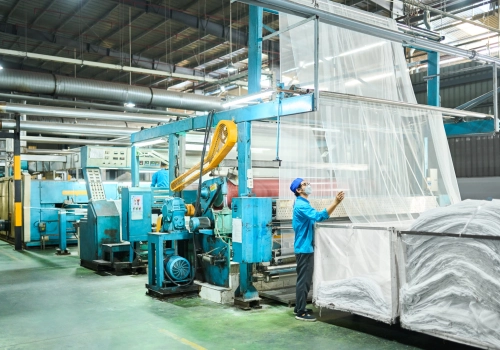
Verifying Quality Control in Mass Production
Maintaining quality consistency across production runs of several hundred thousand units requires systematic testing protocols. Random sampling is conducted throughout the extrusion, knitting, cutting, and stitching phases. The primary objective is to verify that the seam strength matches the durability of the base fabric, as failure most frequently occurs at the stitched joints.
Seams should be stitched using double-needle lockstitches with high-tensile polyester sewing thread. This ensures that the seams retain their integrity under tension. Inspection teams also verify that the hanging loops—often a source of failure—are reinforced with internal fabric patches at the attachment points. These steps prevent the loops from tearing away when the net is pulled taut during installation.
Frequently Asked Questions
Q1: What is the primary difference between polyester and polyethylene
mosquito nets?
A1: Polyester nets are manufactured using
multifilament yarns, resulting in a soft, flexible fabric that drapes easily and
provides high sleeping comfort. Polyethylene nets are typically made from
monofilament fibers, which are stiffer and more rigid. While polyethylene nets
can be highly durable, polyester nets offer superior ventilation and are easier
to pack tightly, making them ideal for bulk shipping and retail packaging.
Q2: How does denier affect the performance of wholesale mosquito
nets?
A2: Denier measures the mass in grams per 9,000 meters of
yarn. In polyester netting, a higher denier, such as 100D, indicates a thicker
thread, which translates to greater tensile strength and resistance to tearing.
A lower denier, such as 75D, offers a lighter weight and higher air
permeability, which is beneficial in extremely hot and humid climates where
maximizing airflow is a priority.
Q3: What quality control standards does Yamei apply to bulk
shipments?
A3: Yamei subjects every production run to quality
control measures. These include testing for bursting strength under ISO
standards, verifying mesh density counts, measuring dimensional shrinkage after
washing, and checking chemical concentration levels for treated nets. Each
shipment is accompanied by a certificate of analysis to verify compliance with
procurement criteria.
Q4: Can the dimensions and suspension configurations be customized
for specific tenders?
A4: Yes, custom specifications are a core
service for wholesale distribution. Nets can be manufactured in single, double,
queen, or king sizes, with options for rectangular, conical, or wedge shapes.
Suspension points can be reinforced with heavy-duty webbing loops or brass
eyelets to meet the specific requirements of military, humanitarian, or
commercial buyers.
Q5: How are bulk orders packaged to manage international shipping
costs?
A5: Finished nets are packed using high-pressure hydraulic
baling systems. This compression significantly reduces the physical volume of
the cargo, allowing more units to fit into standard shipping containers. For
retail-bound orders, individual inner packs (such as printed OPP bags or
zippered PVC bags) are placed in compressed master cartons to balance product
presentation with freight efficiency.
Procurement and Inquiry Management
For wholesale buyers, procurement agencies, and distributors seeking reliable manufacturing partners, securing consistent product quality is paramount. Yamei provides tailored production runs designed to meet precise regional requirements and international standards. Contact the Yamei sourcing team today to request material samples, detailed technical specification sheets, or a competitive quote for your next volume order of 100% polyester mosquito nets wholesale.