
Global public health initiatives continuously prioritize vector control as the primary method to combat vector-borne illnesses. Among the various intervention tools, the distribution of insecticidal bed nets remains the most widely deployed and cost-effective approach. A high-quality treated net for malaria control serves a dual purpose: it acts as a physical barrier preventing mosquito bites and functions as a chemical intervention that reduces the vector population. For procurement officers, non-governmental organizations (NGOs), and ministries of health, understanding the scientific and manufacturing standards behind these nets is necessary to ensure long-term protective efficacy.
Manufacturing partners like Yamei produce these nets using specialized synthetic polymers integrated with active ingredients. This manufacturing approach ensures that the insecticide remains active even after multiple washes, a standard parameter established by international health bodies. By examining the structural specifications, chemical profiles, and supply chain logistics, procurement entities can make informed decisions that align with international standards and maximize the impact of their distribution programs.
The Chemical Science Behind a Treated Net for Malaria Control
The efficacy of a protective canopy relies on the type of insecticide applied and the method of its integration into the textile. Historically, pyrethroids have been the dominant class of chemicals used in vector control due to their low toxicity to mammals and high efficacy against mosquitoes. Active ingredients such as deltamethrin, alpha-cypermethrin, and permethrin are widely utilized in standard deployments.
Two primary methods are used in the manufacturing of long-lasting insecticidal nets (LLINs) to ensure the sustained release of these active compounds:
Polymer Incorporation: In this process, the insecticide is blended directly with the molten polymer resin (commonly polyethylene) before extrusion into monofilament fibers. The chemical slowly migrates to the surface of the fiber over time, replacing molecules lost to washing, friction, and environmental exposure.
Surface Coating: This method involves binding the insecticide to the surface of pre-knitted multifilament yarn (commonly polyester) using a specialized wash-resistant polymer binder. The formulation is engineered to release controlled dosages of the active ingredient upon contact with vectors.
The rate of chemical migration must be calibrated precisely. If the migration rate is too rapid, the insecticide will dissipate prematurely, shortening the operational lifespan of the product. If the migration rate is too slow, the surface concentration will be insufficient to achieve knockdown or mortality in target mosquito populations. Experienced manufacturers manage these polymer dynamics to maintain a stable, lethal dose on the fiber surface throughout the lifecycle of the net.
Physical and Mechanical Specifications of a Treated Net for Malaria Control
Alongside chemical properties, physical characteristics determine how well a net survives in real-world environments. In many rural and tropical regions, nets are subjected to rigorous handling, dust, and mechanical friction. If the material tears easily, the physical integrity of the barrier is compromised, rendering the chemical treatment less effective.
Procurement documents must specify precise mechanical criteria to ensure structural durability:
Fiber Denier: Denier represents the linear mass density of the fiber, defined as the weight in grams of 9,000 meters of yarn. Standard treated nets are manufactured in 75 Denier, 100 Denier, or 150 Denier. Higher denier values indicate thicker fibers, which provide superior tear resistance but increase the total material weight and cost.
Mesh Size: The standard mesh size for public health applications is typically 156 holes per square inch (approximately 25 holes per square centimeter). This spacing is small enough to prevent the penetration of Anopheles mosquitoes while allowing sufficient airflow, which is vital for user comfort and compliance in hot, humid climates.
Bursting Strength: Measured using pneumatic or hydraulic testing equipment according to standards like ISO 13938, bursting strength determines the fabric’s resistance to localized pressure. High-performance nets, such as those produced by Yamei, are engineered to meet strict bursting thresholds to resist accidental punctures from bedposts, fingernails, or domestic items.
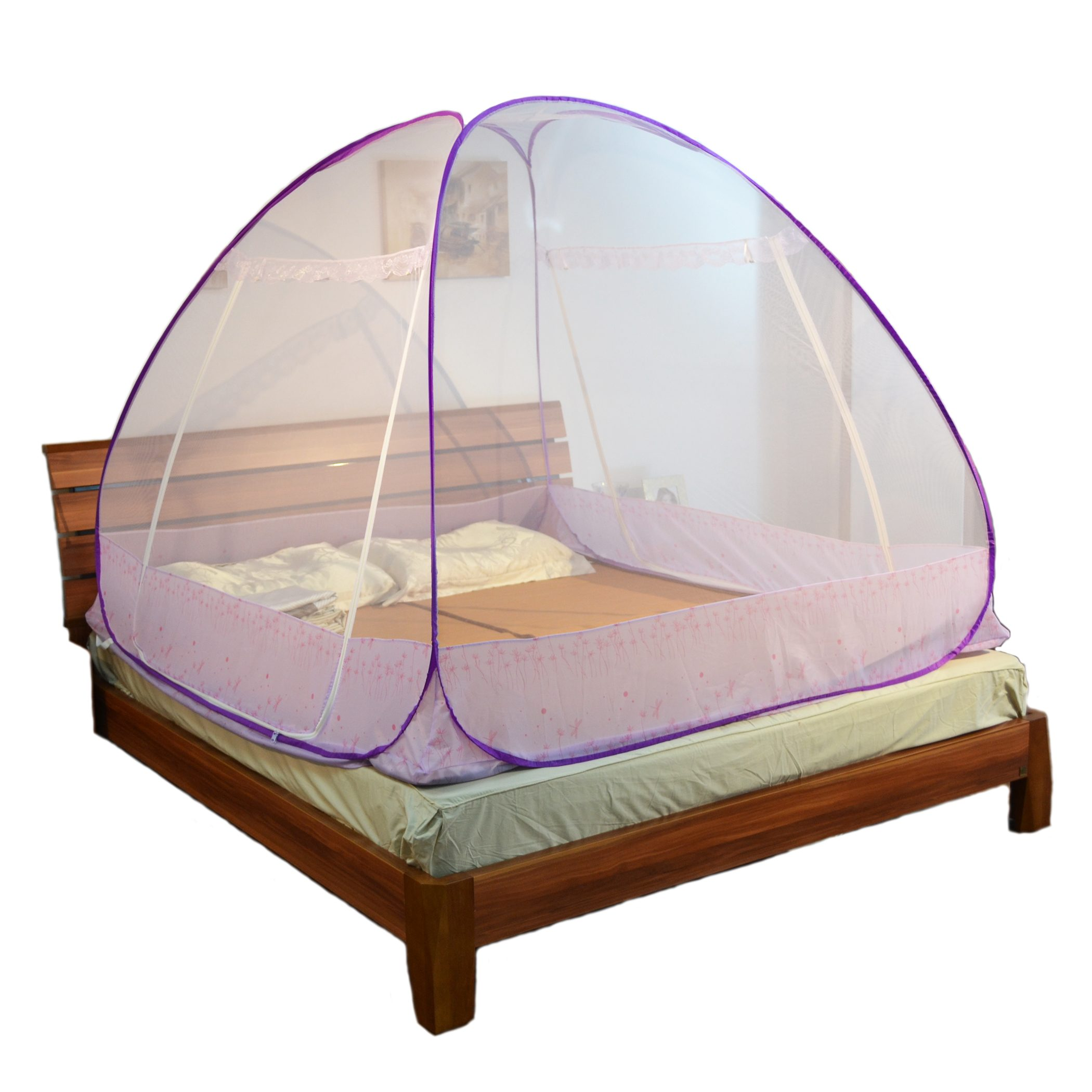
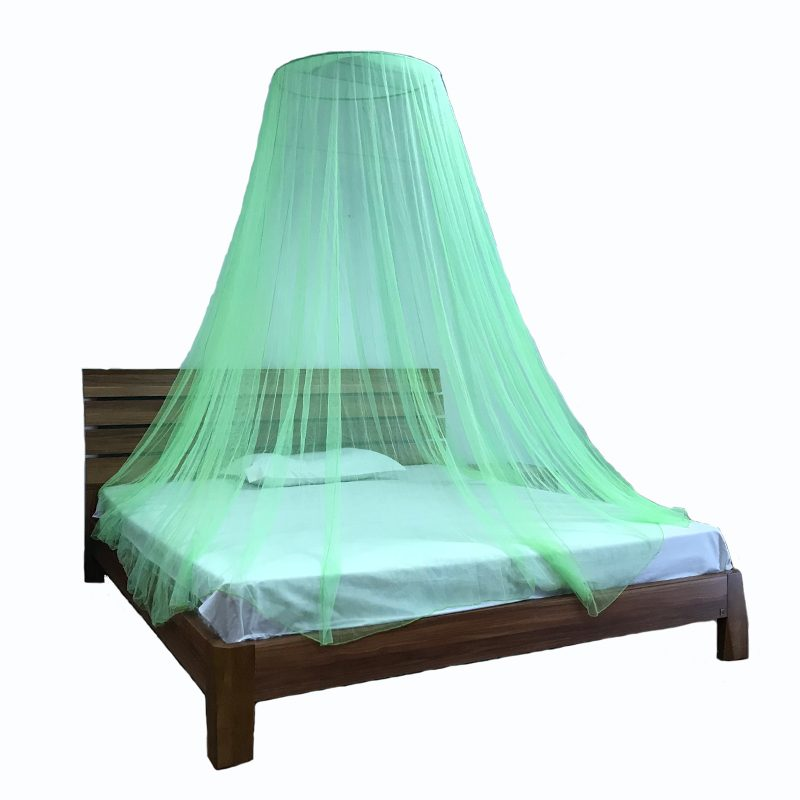
Dimensional Configurations: Nets are produced in rectangular or conical shapes. Rectangular configurations are widely preferred in permanent domestic setups because they maximize the internal volume and prevent contact between the sleeper's skin and the insecticidal netting material.
Addressing Pyrethroid Resistance and Next-Generation Technology
The rapid expansion of pyrethroid resistance among mosquito populations in sub-Saharan Africa and other endemic regions has required the development of alternative chemical strategies. Standard single-insecticide nets are increasingly being supplemented or replaced by advanced formulations designed to bypass resistance mechanisms.
The primary innovation in this area involves synergist nets. These products incorporate piperonyl butoxide (PBO) alongside a standard pyrethroid. PBO is not an insecticide itself; rather, it acts as an inhibitor of the mosquito’s internal detoxification enzymes (specifically cytochrome P450 monooxygenases). By neutralizing these enzymes, the PBO allows the pyrethroid to perform its insecticidal function effectively, even against highly resistant strains.
Another development involves dual-active ingredient nets. These products combine insecticides from different chemical classes, such as pyrethroids paired with pyrroles or insect growth regulators. This multi-target approach reduces the selection pressure for resistance, as it is highly improbable for a vector population to possess resistance mechanisms to both active substances simultaneously. Manufacturing these complex formulations requires sophisticated extrusion and coating lines to ensure uniform distribution of both chemicals across the textile grid.
Quality Assurance, Testing, and Regulatory Compliance
Procuring public health supplies demands strict adherence to international regulatory frameworks. Products must undergo comprehensive bioefficacy and mechanical testing to verify their performance before they are cleared for distribution.
Standardized evaluation methodologies include:
Standard Washing Protocols: Nets are subjected to consecutive, standardized washing cycles (typically up to 20 washes) to simulate years of domestic maintenance. After these washes, the chemical retention and residual bioefficacy are measured.
WHO Cone Bioassays: Susceptible and resistant mosquito strains are exposed to the treated fabric for a fixed duration (commonly three minutes). Researchers measure the 60-minute knockdown rate and the 24-hour mortality rate to confirm chemical efficacy.
Tunnel Tests: This test evaluates both the entry-prevention capabilities of the mesh and the feeding inhibition of the insecticidal treatment in a controlled laboratory simulation, providing realistic data on how the net performs when a host is present.
Chemical Assays: High-Performance Liquid Chromatography (HPLC) or Gas Chromatography (GC) is used to verify that the active ingredient loading matches the targeted specifications within narrow tolerance bands.
Logistics, Packaging, and B2B Procurement Planning
Managing the supply chain for large-scale malaria intervention campaigns requires precise planning and logistical coordination. Because distribution drives often target remote, rural locations with poor road infrastructure, packaging design must protect the product from environmental degradation during transit and storage.
Nets are typically compressed and vacuum-packed into bales. This minimizes the shipping volume, allowing more units to fit into standard sea containers, which significantly reduces shipping costs per unit. The individual packaging must consist of UV-resistant polymer film to shield the chemical treatment from degradation caused by direct sunlight during outdoor storage at local distribution hubs.
Yamei works closely with procurement coordinators to align manufacturing outputs with wet and dry season logistics schedules. This ensures that large shipments arrive in country with sufficient lead time to be transported to community distribution points before seasonal rains make local roads impassable. Proper warehouse inventory management, utilizing first-in, first-out (FIFO) principles, is recommended to preserve the chemical shelf life of the nets prior to deployment.
Frequently Asked Questions
Q1: What is the estimated functional lifespan of a long-lasting treated net for malaria control?
A1: A high-quality long-lasting insecticidal net (LLIN) is designed to retain its insecticidal efficacy and structural integrity for a minimum of three years under normal field conditions. This performance level is validated through laboratory tests that subject the fabric to 20 standardized washes, simulating domestic maintenance over an extended period.
Q2: How does polyester compare to polyethylene as a base material for treated nets?
A2: Polyester nets are typically made from multifilament yarn, resulting in a softer, more flexible fabric that conforms easily to bed spaces and is highly accepted by users. Polyethylene nets are usually made from monofilament fibers, which are stiffer but offer inherently higher mechanical durability and bursting strength, making them highly resistant to tears.
Q3: What are the primary insecticidal ingredients utilized in these nets?
A3: Standard nets rely on synthetic pyrethroids such as deltamethrin, alpha-cypermethrin, or permethrin. For areas with documented vector resistance, modern configurations integrate a synergist like piperonyl butoxide (PBO) or combine a pyrethroid with a secondary active ingredient from a different chemical class to ensure continued vector control.
Q4: Can these nets be washed regularly, and what precautions should be taken?
A4: Yes, these nets are engineered to withstand periodic washing. However, to preserve the active ingredients and polymer binders, they should be washed gently with mild soap and cold water. They must not be bleached, scrubbed aggressively with harsh brushes, or dried in direct, intense sunlight, as ultraviolet radiation can accelerate chemical degradation.
Q5: What are the key packaging standards for bulk international shipments?
A5: For bulk transport, nets are individually sealed in protective plastic bags and then compressed into tightly bound bales wrapped in heavy-duty woven polypropylene sheets. This method minimizes volume, protects the shipment from moisture and dust, and prevents premature degradation of the active chemical compounds during maritime transit.
Partner with a Reliable Manufacturing Partner
Selecting an appropriate treated net for malaria control requires a comprehensive understanding of polymer chemistry, physical specifications, and international public health requirements. Meeting these diverse parameters demands rigorous quality control at every stage of production, from raw material selection to final packaging.
As an experienced industrial manufacturer, Yamei specializes in fabricating durable, high-specification vector control products designed to meet global standards. We provide stable supply capacities, uniform chemical dosage application, and robust packaging configurations tailored to survive demanding distribution environments. To obtain detailed product sheets, request physical samples, or discuss custom production requirements for an upcoming procurement tender, please reach out to our team of specialists. Send your inquiry today to establish a reliable supply partnership.