
Global vector control and retail outdoor supply chains demand highly reliable, rapidly deployable insect barriers. Traditional suspended nets require fixed overhead attachment points, which limits their utility in temporary shelters, military camps, emergency disaster zones, and open-air recreational environments. Self-supporting structures have emerged as a preferred solution to address these challenges. For international buyers, sourcing OEM folding mosquito nets requires an in-depth understanding of polymer science, frame durability, and insecticidal chemistry to ensure field performance and regulatory compliance.
Yamei manufactures high-performance insect barriers, providing customized solutions that meet stringent international distribution standards. By integrating advanced raw material selection with specialized textile engineering, the manufacturing process yields products that withstand rigorous field conditions while ensuring user safety. Understanding the mechanical and chemical variables of these products allows procurement officers to make informed decisions that align with specific operational needs.
Material Engineering and Fiber Specifications
The basic protective barrier of any net relies on the physical properties of its mesh. Fabric selection dictates not only the physical durability of the net but also its breathability, weight, and suitability for chemical treatment.
Polyester vs. Polyethylene Base Fibers
B2B buyers must choose between polyester (polyethylene terephthalate) and polyethylene (PE) monofilament or multifilament yarns. Polyester fibers are naturally soft, quiet when handled, and highly flexible, which makes them ideal for consumer-facing retail and commercial hospitality applications. These fibers are typically configured as multifilament yarns, where multiple small filaments are spun together to form a single thread. This structure allows for excellent insecticide absorption when surface-treated with polymer binders.
Polyethylene, conversely, is used primarily in monofilament configurations, where a single, thicker plastic strand forms the thread. This material is highly durable, offering superior resistance to abrasion, tearing, and UV degradation. Polyethylene is frequently specified for humanitarian relief operations and long-lasting insecticidal net (LLIN) applications, as active insecticidal ingredients can be incorporated directly into the polyethylene masterbatch before extrusion, allowing for a slow, continuous migration of the chemical to the surface over several years.
Denier Selection and Fabric Weight
Fiber thickness is measured in denier (D), representing the mass in grams per 9,000 meters of yarn. The selection of denier directly impacts the tensile strength and overall weight of OEM folding mosquito nets:
50 Denier: Lightweight, offering high airflow but lower tear resistance. Best suited for indoor consumer products where weight is minimized.
75 Denier: The standard balance of strength and breathability, widely accepted for public health distribution programs.
100 Denier to 150 Denier: Heavy-duty specifications designed for military deployment, rugged outdoor camping, and areas where physical contact with abrasive surfaces is frequent.
Fabric weight, measured in grams per square meter (GSM), correlates with denier and mesh density. Standard nets range from 25 GSM to 45 GSM. Higher GSM values indicate a denser, stronger fabric that requires more storage volume and increases shipping costs, making precise specification planning necessary before mass production begins.
Mesh Density and Insect Exclusion Metrics
Mesh density refers to the number of holes per square inch. The World Health Organization (WHO) recommends a minimum mesh size of 156 holes per square inch (approximately 25 holes per square centimeter) for standard protection against Anopheles mosquitoes, which transmit malaria. To protect against smaller biting insects such as midges, sandflies, or no-see-ums, a higher density of 300 to 600 holes per square inch is specified. However, increasing mesh density restricts natural ventilation, which can lead to heat retention inside the net in tropical climates. Engineers at Yamei adjust the knitting pattern to achieve the correct balance between airflow and physical exclusion based on the target deployment region.
Mechanical Frameworks for OEM Folding Mosquito Nets
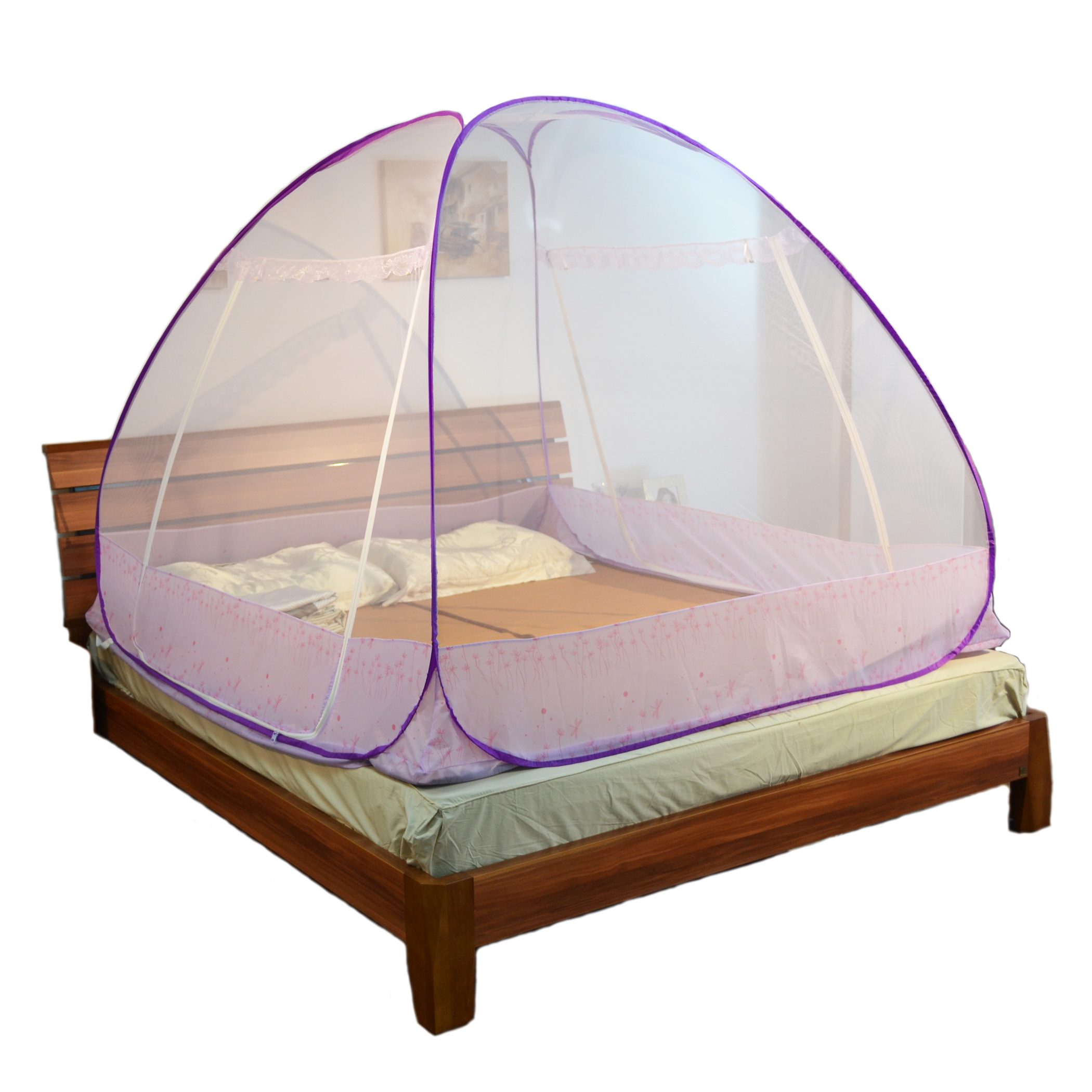
The defining feature of folding nets is their self-supporting frame, which must collapse into a compact, flat profile for transport and pop up instantly when deployed. The choice of structural material determines the longevity and wind resistance of the final product.
High-Tensile Spring Steel Wire
Spring steel is the most common structural material used in pop-up designs. High-carbon steel wire, typically ranging from 2.0 mm to 3.2 mm in diameter, is tempered to maintain its shape memory after thousands of compression cycles. To prevent corrosion in high-humidity environments, the steel wire must undergo hot-dip galvanization or receive a protective polymer coating. Frame joints are secured with heavy-duty metal sleeves or ultrasonic welding of the surrounding textile sleeve to prevent the metal from puncturing the fabric during folding.
Fiberglass Rod Systems
For larger structures or multi-person dome tents, segmented fiberglass rods connected with internal elastic shock cords are used. Fiberglass offers a high strength-to-weight ratio and complete resistance to rust and corrosion. These rods are ideal for marine environments or tropical regions with constant rainfall. The external surface of the fiberglass must be treated with a smooth resin coating to prevent splintering, which could otherwise damage the netting material during setup and teardown.
Fatigue Resistance and Collapse Cycles
A major point of wear in folding designs is the stress placed on the frame hinges and joints during folding. Manufacturing testing protocols at Yamei involve mechanical fatigue testing, where the frame is collapsed and reopened for a minimum of 3,000 cycles. This testing ensures that the structural components do not suffer from plastic deformation or stress fractures, maintaining the structural integrity of the net throughout its intended service life.
Chemical Impregnation and Compliance Standards
For public health campaigns and high-risk vector zones, physical exclusion is often coupled with chemical protection. Treating the netting with safe, long-lasting insecticides increases the protective barrier by repelling or killing insects that land on the mesh.
Long-Lasting Insecticide-Treated Net (LLIN) Processing
Modern procurement guidelines frequently mandate LLIN specifications. Rather than simple immersion dipping, which washes out after a few wash cycles, LLIN technology binds the insecticide to the fiber on a molecular level. For polyester nets, a wash-resistant binder polymer is mixed with the insecticide (typically deltamethrin or alpha-cypermethrin) and applied to the finished fabric. For polyethylene nets, the active ingredient is incorporated directly into the polymer melt. This manufacturing method ensures that the net remains insecticidal even after 20 standard washes, meeting international standards for long-term field distribution.
Wash Retention and Release Dynamics
The chemical formulation must release the insecticide to the surface of the fiber at a controlled rate. If the release is too rapid, the chemical washes away quickly; if it is too slow, the dosage on the surface will be insufficient to knock down mosquitoes. Laboratory testing monitors active ingredient concentration (measured in milligrams per square meter) using gas chromatography-mass spectrometry (GC-MS) to verify that wash retention curves comply with safety and performance guidelines.
Environmental and Safety Regulations
Any insecticide-treated product must comply with regional chemical regulations, such as the Biocidal Products Regulation (BPR) in Europe or registration requirements under the Environmental Protection Agency (EPA) in the United States. Sourcing OEM folding mosquito nets through Yamei ensures that all chemical formulations used are thoroughly documented, non-toxic to humans upon dermal contact, and free from restricted substances under international environmental treaties.
Addressing Supply Chain and Logistics Constraints
Managing the physical dimensions and weight of bulk cargo is a primary concern for international distributors, military logistics units, and disaster relief operations.
Volumetric Packing Efficiency
Shipping empty space is expensive. Standard hanging nets are highly compressible, but the rigid or semi-rigid frames of folding designs introduce volumetric challenges. To address this, folding nets are designed to collapse flat into circular discs or compact zippered pouches. This design allows for high stacking density in shipping containers. By designing the frame to fold into a minimal diameter, Yamei helps buyers maximize container utilization, reducing landed costs per unit.
The table below outlines typical shipping parameters for standard single-person pop-up nets versus traditional hanging nets:
| Net Style | Standard Opened Dimensions (cm) | Folded Packing Size (cm) | Average Weight (kg) | Units per 40ft HQ Container |
|---|---|---|---|---|
| Single Pop-Up Net (Steel Frame) | 190 x 90 x 100 | Flat Disc: 55 x 55 x 3 | 0.85 | Approx. 12,000 |
| Yurt-Style Folding Net (Fiberglass) | 200 x 150 x 140 | Folded Bag: 60 x 12 x 12 | 1.20 | Approx. 9,500 |
| Standard Hanging Net (No Frame) | 200 x 100 x 150 | Compressed Bundle: 30 x 20 x 5 | 0.35 | Approx. 35,000 |
Rapid Deployment Capabilities in Field Operations
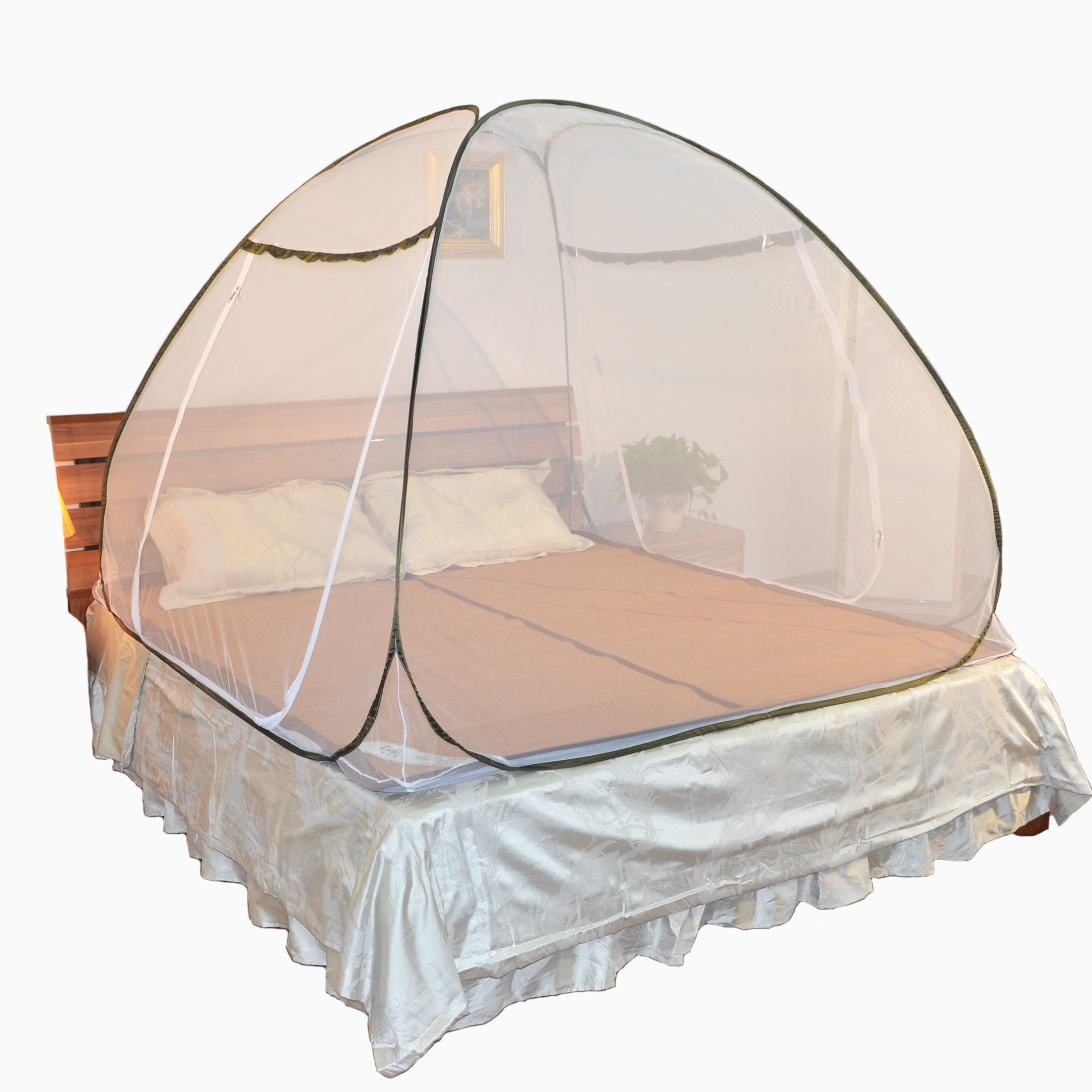
In emergency response scenarios, such as refugee camp setups, speed is paramount. Pop-up folding nets can be set up in seconds without the use of tools, hanging hooks, or support poles. This immediate deployment capability reduces the labor hours needed to secure temporary sleeping quarters, protecting displaced populations from vector-borne diseases immediately upon arrival.
Customization and Private Labeling with Yamei
Commercial brands and humanitarian organizations require specific design adaptations to meet the needs of their target end-users. Yamei provides extensive customization options across multiple design features.
Structural and Size Modifications
Nets can be tailored to fit specific sleeping setups, from single military cots to king-sized domestic beds. Double-door entry configurations with heavy-duty zipper closures allow easy access without compromising the insect seal. The lower perimeter of the net can be reinforced with a high-density taffeta skirt (fabric border) to prevent tearing from friction against bed frames or rough ground surface contact.
Branding, Packaging, and Labelling
For retail outdoor brands, private labeling is integrated directly into the manufacturing process. This service includes custom-printed carry bags, color-coordinated fabric trims, and brand logo labels sewn into the seams. For humanitarian aid agencies, instructions for use, warning labels, and traceability barcodes can be printed directly onto the fabric or the packaging material to comply with international distribution guidelines.
Procurement Process and Global Inquiry Guidelines
Establishing an efficient sourcing pipeline requires clear technical parameters and structural requirements from the initial request for quotation (RFQ). To ensure an accurate manufacturing timeline and pricing structure, buyers are encouraged to compile detailed specifications, including fiber type, denier, mesh density, frame material, dimensional requirements, and compliance certifications.
Yamei supports clients through every stage of production, from initial prototype development and material testing to final container loading and export documentation. The minimum order quantities (MOQs) depend on the level of customization required, with standard frames and colors offering lower entry points for testing new markets.
For customized production schedules, regulatory compliance documentation, or to request physical product samples for field evaluation, please contact our international sales division directly. Submit your technical specifications and volume requirements to our team to receive a comprehensive quotation.
Frequently Asked Questions
Q1: What is the typical lifespan of an LLIN folding mosquito net in the field?
A1: The physical lifespan depends on the fiber denier and environmental exposure. A 75D polyester net typically lasts 2 to 3 years under normal use, while a 150D polyethylene monofilament net used in rugged outdoor or military conditions can last up to 5 years. The chemical insecticide treatment on LLIN models is designed to remain active for up to 20 to 30 standard washes under laboratory testing protocols.
Q2: Can Yamei produce folding nets with custom dimensions for military cots?
A2: Yes, we customize dimensions to fit standard military folding cots (typically 190 cm x 65 cm) and field beds. We can also integrate attachment straps to secure the net directly to the frame of the cot, preventing movement in windy conditions.
Q3: How do you prevent the spring steel frame from rusting in humid tropical environments?
A3: We use zinc-plated, high-carbon spring steel wire which is then encased in a protective polymer sleeve. This double-layer protection prevents moisture contact with the metal, preventing rust even during prolonged storage or use in high-humidity tropical zones.
Q4: What is the minimum order quantity (MOQ) for custom OEM folding mosquito nets?
A4: The standard MOQ for custom sizes or specific Pantone color runs is 1,000 units. For standard sizes and colors using our stock materials, we can accommodate smaller production runs depending on current factory capacity.
Q5: Are the insecticidal treatments used on the nets safe for infants and pregnant women?
A5: Yes, all insecticides applied during our manufacturing process, such as deltamethrin or alpha-cypermethrin, are formulated in strict accordance with WHO safety guidelines. These pyrethroid-based compounds are safe for human contact when bound to the net fibers and do not pose risks to sensitive populations when used as directed.