
Procuring vector-control textiles for institutional programs requires balancing physical dimensions, structural parameters, and active chemical performance. Public health tenders issued by organizations such as UNICEF, UNHCR, and national Ministries of Health consistently specify the box-shaped profile as a core standard. When sourcing from a white rectangular mosquito net wholesale supplier, procurement officers must evaluate how physical engineering choices directly influence epidemiological outcomes in the field.
For more than two decades, YAHE LN has engineered WHO-prequalified vector-control products. Operating since 2003, our manufacturing framework bridges industrial scale with strict textile science. This technical overview explains how custom sizing and mesh density determine long-lasting insecticidal net (LLIN) performance under demanding field conditions.
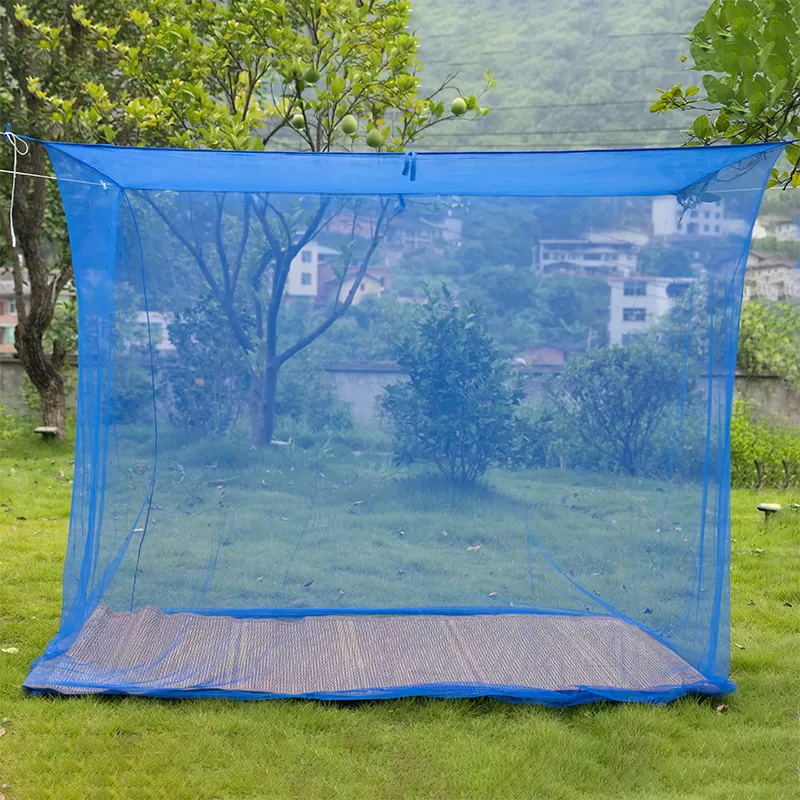
The Functional Standard: Why White Rectangular Nets Dominate Public Health
Tenders
The white rectangular canopy remains the primary specification for institutional vector control. While conical nets offer single-point suspension convenience, the box design maximizes internal sleeping volume. Vertical side panels drop straight down, keeping the insect barrier away from the sleeper's body throughout the night.
The choice of white fabric is deliberate. Institutional field monitors and health workers rely on high visual contrast to detect resting mosquitoes, structural tears, and organic contamination. A clean white surface makes it easy to spot blood-fed Anopheles mosquitoes resting on the netting after an attempted blood meal. This contrast speeds up vector surveillance and efficacy audits in remote regions.
Standardized mass production often delivers generic sizes that fail to match real-world sleeping environments. Procuring through a specialized polyester LLIN supplier allows institutional buyers to configure net geometry for specific field layouts, avoiding common protection failures.
Spatial Engineering: How Custom Sizing Prevents Contact Bites
A mosquito net fails if the occupant makes direct physical contact with the fabric while sleeping. Female Anopheles mosquitoes possess a proboscis length of roughly 1.5 to 2.0 mm. Standard polyester netting measures only a fraction of a millimeter in thickness. If an arm, shoulder, or leg presses against the netting during sleep, mosquitoes can bite directly through the mesh apertures.
Custom sizing resolves this risk by creating adequate clearance around the sleeper. Engineering nets to match specific bed profiles ensures the fabric hangs taut and vertical, maintaining a protective physical buffer.
Application-Specific Net Configurations
Institutional Bunk Beds: Multi-tier bedding in boarding schools, military barracks, and temporary holding centers requires tailored hanging heights. YAHE LN produces rectangular nets with targeted drop lengths that prevent sagging onto the lower occupant while maintaining full floor closure.
Humanitarian Relief & Refugee Camps: Field cots and ground mats vary widely across displacement settlements. Oversized footprints allow beneficiaries to tuck excess netting securely beneath sleeping pads, preventing vectors from entering at ground level.
Family and Communal Sleeping Spaces: Rural households frequently share large communal bedding. Custom wide-span canopies provide full coverage without forcing sleepers toward the perimeter where contact bites occur.
YAHE LN integrates reinforced suspension points and robust bottom hems into every tailored unit. These mechanical reinforcements distribute tensile stress evenly across the structure, preventing tears during daily tucking and adjustment.
The Science of Mesh Density and Fiber Denier
The structural integrity of an LLIN depends on two fundamental textile metrics: mesh density, measured in holes per square inch, and yarn weight, measured in denier. Balancing these factors determines whether a net provides reliable physical exclusion while allowing sufficient airflow in tropical environments.
The World Health Organization specifies 156 holes per square inch (approx. 24 holes per cm²) as the benchmark for polyester malaria nets. This hole diameter blocks target vector species while maintaining convective heat transfer. If the mesh is too dense, indoor temperatures rise, causing occupants to discard the net. If the mesh is too loose, small vectors can squeeze through.
Denier Selection: 75D vs. 100D vs. 150D
Denier defines the linear mass density of the polyester yarn, directly affecting the net's bursting strength and mechanical service life:
75 Denier (75D): The lightweight standard for large-scale mass distribution campaigns. It balances sufficient tensile strength with low unit weight, reducing global freight and shipping costs for high-volume tenders.
100 Denier (100D): The preferred specification for stable humanitarian missions and institutional housing. It offers higher resistance to abrasion, snagging, and repeated washing without adding excessive bulk.
150 Denier (150D): Engineered for rugged emergency response, military operations, and harsh field environments where nets experience daily friction, rough handling, and prolonged mechanical stress.
YAHE LN verifies batch quality through rigorous burst testing according to ISO 13938-2 standards. Textile evaluations performed at France's TEC Laboratory and independent GLP-accredited facilities confirm that our custom mesh density mosquito net configurations maintain uniform hole geometry and reliable tensile strength across every production run.
Chemical Integration: Delivering Multi-Year LLIN Efficacy
A physical barrier alone cannot provide complete protection in areas with high vector density. Long-lasting insecticidal nets combine physical exclusion with active chemical control. When mosquitoes land on the treated netting, the surface-available insecticide delivers a rapid knockdown effect, reducing overall vector density within the living space.
Achieving stable, long-term efficacy requires advanced polymer chemistry. Insecticide molecules must bind securely to the polyester fibers to withstand environmental exposure and routine laundering while steadily migrating to the surface over a multi-year service life.
Wash Resistance and Chemical Stability
Standard retail mosquito nets lose their chemical protection after one or two washes. Industrial-grade LLINs from YAHE LN retain effective insecticidal performance through more than 21 standardized wash cycles, translating to 3 to 5 years of continuous field protection.
Our production campus features a dedicated 200-square-meter standardized chemical formulation workshop. Automated dosing systems prepare high-purity pyrethroid formulations, ensuring uniform active ingredient distribution across every square meter of fabric. This controlled process eliminates chemical hot spots and weak zones, meeting strict international safety and efficacy tolerances.
WHO Prequalification Compliance
Sourcing long-lasting insecticidal nets wholesale requires verifiable regulatory compliance. YAHE LN has maintained World Health Organization Prequalification (WHO PQ) status since 2015. Our proprietary formulation technologies and national invention patents confirm that our products satisfy the stringent biological, chemical, and physical safety standards demanded by institutional procurement agencies.
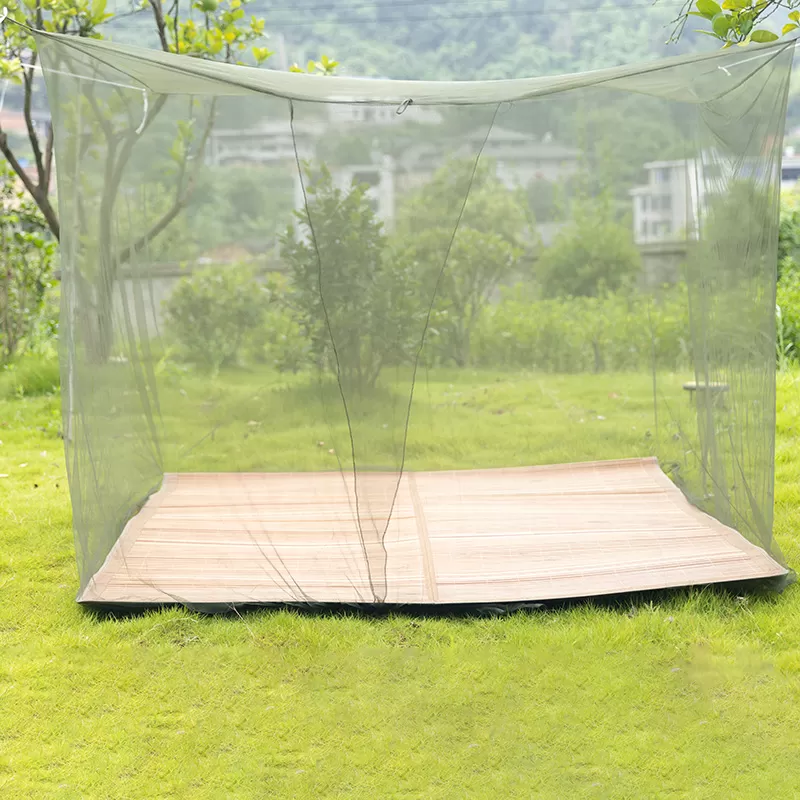
Industrial Capacity and Supply Chain Control: Why Partner with YAHE LN
Fulfilling large-scale humanitarian tenders requires massive, dependable manufacturing capacity. Supply chain disruptions or delayed shipments can leave vulnerable populations unprotected during seasonal vector surges.
YAHE LN operates a 66,700-square-meter (100 mu) vertically integrated manufacturing facility designed for large-volume B2B and institutional fulfillment:
Daily Output: 100,000 finished mosquito nets and 500,000 square meters of warp-knitted mesh fabric per day.
End-to-End Vertical Control: We manage every step of the process in-house, from monofilament extrusion and knitting to chemical treatment, laser cutting, and precision stitching.
International Quality Certifications: Fully certified under ISO 9001 (Quality Management), ISO 14001 (Environmental Management), and ISO 45001 (Occupational Health and Safety).
Institutional Track Record: Trusted, long-term manufacturing supplier for global relief organizations, including UNICEF and UNHCR, as well as national disease-control programs.
By controlling the complete supply chain, YAHE LN eliminates third-party markups, maintains tight physical tolerances, and delivers cost-efficient white rectangular mosquito net wholesale solutions directly to global ports and field hubs.
Frequently Asked Questions (FAQ)
Q1: Why is 156 holes per square inch the global standard for white rectangular LLINs?
A1: A density of 156 holes per square inch (approx. 24 holes/cm²) provides the ideal balance between physical exclusion and airflow. The aperture size stops major malaria vectors like Anopheles mosquitoes while allowing convective cooling in hot, humid climates. This helps ensure people use the nets consistently throughout the night.
Q2: What is the primary operational difference between 75D and 100D polyester nets in field deployment?
A2: The difference lies in yarn thickness and durability. 75D yarn produces a lighter net that lowers unit shipping costs for large-scale mass distribution. 100D yarn provides higher bursting and tearing strength, making it better suited for long-term institutional installations, refugee camps, and environments with high mechanical wear.
Q3: How does YAHE LN verify the wash retention rate of its long-lasting insecticidal nets?
A3: Chemical retention is validated according to WHO testing protocols. Nets undergo standardized machine washings followed by regeneration periods. Bioassays and chemical titration assays run at independent GLP laboratories (including France's TEC Laboratory) confirm that knockdown and mortality rates remain within WHO thresholds after 21 consecutive wash cycles.
Q4: Can YAHE LN manufacture custom-dimension rectangular nets for specialized relief or military cots?
A4: Yes. With fully integrated warping, knitting, and sewing workshops, YAHE LN customizes length, width, height, and suspension point configurations. We routinely produce tailored dimensions for double-deck barracks, military cots, and non-standard institutional beds.
Q5: What compliance documentation accompanies a YAHE LN wholesale shipment for tender audits?
A5: Every institutional shipment includes Certificates of Analysis (COA), ISO compliance records, WHO PQ reference documentation, and batch-specific laboratory test reports covering denier, mesh density, bursting strength, and active ingredient loading.
Secure Your Institutional Mosquito Net Supply Chain
Procuring vector-control textiles requires uncompromising structural quality, verified chemical efficacy, and high-volume manufacturing capacity. YAHE LN supplies institutional buyers, tender contractors, and global relief distributors with certified, high-performance LLIN products engineered to protect vulnerable populations worldwide.
Contact our technical sales team today to request a wholesale quotation, order laboratory sample swatches, or review our WHO PQ technical data sheets (TDS).