
Vector-borne diseases present continuous challenges for public health initiatives, disaster relief operations, and military deployments globally. Self-supporting pop-up mosquito net tents serve as a primary line of defense, offering rapid deployment and immediate protection in volatile environments. Sourcing these specialized items in bulk demands a thorough understanding of the physical and chemical requirements that govern their performance. For procurement officers managing large-scale budgets, partnering with a competent POP mosquito net tent manufacturer is a vital step in securing durable, compliant, and cost-effective protective assets.
Determining Frame Durability: A Pivotal Responsibility of a POP Mosquito Net
Tent Manufacturer
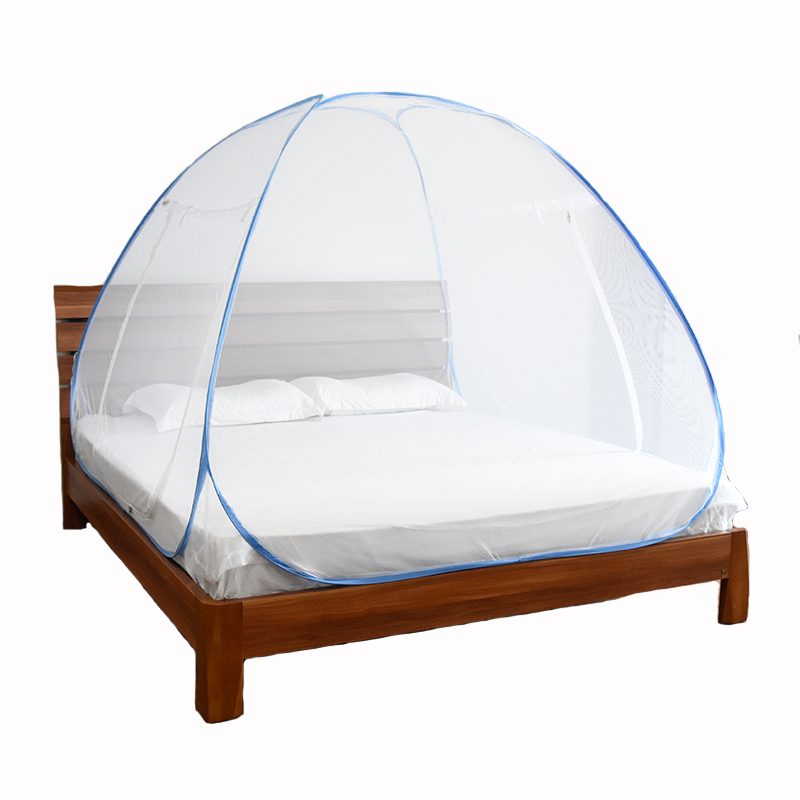
The structural reliability of a self-supporting net tent relies entirely on its frame mechanism. Unlike traditional nets that require external suspension points, pop-up designs use a continuous, high-tension loop to shape the enclosure. For industrial and humanitarian use, carbon spring steel wire stands as the standard frame material due to its high elastic limit. A certified POP mosquito net tent manufacturer must source steel wire that undergoes strict tempering. This thermal conditioning ensures the frame can withstand thousands of compression cycles without bending out of shape or breaking.
Frame failure poses significant risks in field environments. If a low-grade steel wire breaks, the sharp metal tip can easily tear through the protective fabric sleeve, rendering the entire net useless and potentially injuring the occupant. To mitigate this hazard, the wire must be sheathed in heavy-duty polymer coatings. This protective layer acts as a barrier against friction and wear during repeated folding and deployment cycles, ensuring the frame remains safely contained within its sleeve.
Corrosion resistance is another structural requirement for long-term storage and use in tropical areas. High humidity levels can rapidly degrade raw steel, causing rust that weakens the frame and stains the surrounding white mesh. Reliable manufacturers apply a hot-dip galvanization or continuous plastic coating to the wire prior to assembly. This barrier prevents moisture contact, allowing the tents to be stored in non-climate-controlled warehouses for years without losing structural integrity. This level of material stability is a fundamental benchmark that buyers must verify during factory audits.
Textile Specifications and Bursting Strength Requirements
The mesh canopy serves as the physical barrier against disease vectors such as the Anopheles mosquito. To ensure effective protection while maintaining sufficient airflow, the textile parameters must be precisely controlled. Polyester (polyethylene terephthalate) is the preferred polymer for these applications due to its natural resistance to stretching under humid conditions and its superior stability when exposed to ultraviolet radiation. This ensures that the canopy maintains its shape and tension over months of continuous outdoor exposure.
Mesh density is a primary specification that determines which insects are successfully excluded. International public health organizations recommend a minimum hole density of 156 holes per square inch (approximately 25 holes per square centimeter). This density is tight enough to block mosquitoes while allowing adequate air circulation, which is vital in hot, humid climates where heat-induced discomfort can discourage consistent net use. For regions facing sandflies or biting midges, the weave density must be increased to 225 or 324 holes per square inch to prevent these smaller vectors from penetrating the barrier.
The strength of the fabric is directly tied to its denier rating, which measures the mass of the yarn in grams per 9,000 meters. A 75-denier (75D) yarn provides a practical balance between cost, weight, and durability, making it suitable for standard distributions. For heavy-duty military or emergency situations, a 100-denier (100D) or higher yarn is recommended to withstand rough handling. Bursting strength is evaluated using the ISO 13938 pneumatic test method, where the fabric must withstand a minimum pressure of 250 kilopascals (kPa). Buyers should request certified laboratory reports to confirm these physical properties before confirming order placements.
Long-Lasting Insecticidal Net (LLIN) Technology Integration
Integrating chemical treatments into the fabric transforms a passive physical barrier into an active vector control system. Long-lasting insecticidal nets utilize pyrethroid-based compounds, such as deltamethrin or alphacypermethrin, to repel and kill mosquitoes upon contact. This chemical barrier is vital in areas with high transmission rates of malaria, dengue, or Zika virus. The integration is achieved either by incorporating the insecticide directly into the polymer masterbatch before fiber extrusion or by coating the finished yarn with a durable polymer-based binder.
A major challenge in chemical formulation is maintaining insecticidal efficacy over the lifespan of the tent. To meet international public health standards, the chemical treatment must survive a minimum of 20 standardized washes while retaining sufficient insect knockdown and mortality rates. This wash resistance is achieved through controlled-release technology, which allows the active ingredient to gradually migrate to the fiber surface as the outer layers are washed or worn away. This ensures a consistent level of protection over multiple years of regular use.
Applying these treatments to a pop-up tent requires specialized assembly processes. The mechanical friction generated when folding and packing the spring steel frame can scrape off surface-level chemical coatings. Working with an experienced POP mosquito net tent manufacturer like Yamei helps resolve these concerns, as they utilize specialized double-bonded binding agents that anchor the insecticide deep within the textile fibers. This keeps the chemical active even in areas subject to mechanical rubbing, ensuring uniform protective coverage throughout the canopy.
Manufacturing Workflows and Quality Control at Yamei
Producing thousands of consistent pop-up net units daily requires highly structured manufacturing workflows. At the Yamei facility, the process begins with raw material verification, where every batch of incoming polyester yarn is tested for denier consistency, tensile strength, and color fastness. Once approved, the yarn is processed on high-speed warp knitting machines, which create a locked loop structure. This specific knit pattern ensures that if a small tear occurs in the field, the mesh will not run or unravel, keeping the damage localized and easy to patch.
Following the knitting stage, the fabric undergoes heat-setting at temperatures exceeding 180 degrees Celsius. This stabilization process locks the structural dimensions of the mesh, preventing shrinkage or warping during subsequent chemical treatments or high-temperature shipping. Once stabilized, the mesh is precision-cut using automated laser systems. Laser cutting seals the edges of the polyester panels, reducing fraying and ensuring consistent dimensions during the assembly phase.
The assembly stage involves the integration of the spring steel frame into the reinforced fabric sleeves. Heavy-duty industrial sewing machines equipped with puller attachments are used to maintain uniform tension on the seams. Every unit undergoes a strict manual inspection at the end of the line. Operators deploy each tent to verify correct frame alignment, clean stitching, and smooth folding functionality. Any unit displaying uneven tension or misaligned frames is rejected, maintaining a high standard of quality for bulk shipments.
Design Configurations for Diverse Environments
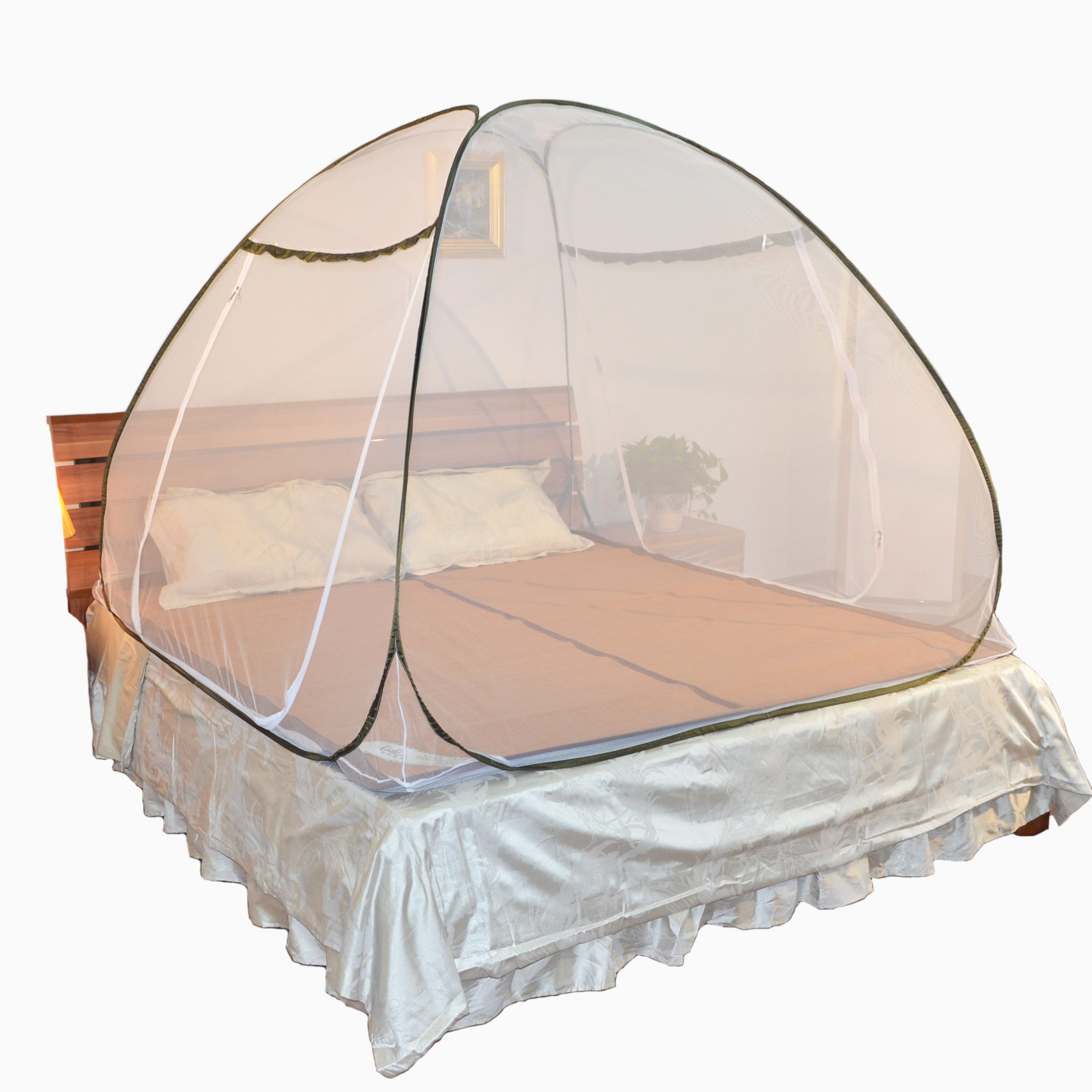
Pop-up mosquito net tents are deployed across various sectors, each requiring specific design adjustments to ensure field utility. In emergency humanitarian camps, large multi-person family tents are preferred. These models feature dual-door systems to facilitate easy access and exit for multiple occupants without leaving the net open for extended periods. These larger structures utilize dual-loop frame designs, which distribute the structural tension more evenly to handle wind loads when used in outdoor shelters.
For military and field research applications, single-person low-profile tents are the standard. These designs are configured to fit directly onto military cots or sleeping pads. They often feature dark, non-reflective fabrics, such as olive green or desert tan, to match field environments. They also integrate heavy-duty groundsheets made from polyurethane-coated Oxford polyester, providing a water resistance rating of at least 2000mm hydrostatic head. This prevents ground moisture from seeping into the sleeping area, a key feature when sleeping directly on damp soil.
Commercial outdoor recreational models prioritize user convenience and ventilation. These designs often feature zippered entryways with high-grade double-sided nylon zippers that run smoothly without snagging the fine mesh. Some variants also include overhead gear loops for hanging lanterns, internal utility pockets for personal items, and reinforced corners to resist abrasion against rocks or rough ground. By offering customizable design options, a manufacturer can cater to the specific requirements of different procurement organizations.
Quality Assurance and Factory Compliance
When selecting a POP mosquito net tent manufacturer, verification of international certifications is a fundamental step in the procurement process. Factories operating under ISO 9001:2015 quality management systems demonstrate a commitment to consistent manufacturing procedures and continuous improvement. For public health and humanitarian tenders, social compliance is equally important. Certifications such as BSCI (Business Social Compliance Initiative) or SMETA audits confirm that the factory maintains fair labor practices, safe working conditions, and ethical environmental policies.
Product-specific safety testing is another screening metric. Since these tents are used inside shelters where cooking or heating equipment might be present, flammability standards are of primary concern. The fabric must comply with flammability tests such as CPAI-84 Section 6, which restricts flame spread rates and prevents the fabric from dripping when exposed to fire. Additionally, the materials must meet OEKO-TEX Standard 100 requirements, proving they are free from harmful substances and safe for continuous skin contact by infants and adults alike.
To ensure long-term physical performance, factories must have in-house testing laboratories. These facilities should be equipped with tensile strength testers, pneumatic burst testers, wash-test machines, and gas chromatography equipment to monitor insecticide concentration levels. Regular chemical and physical testing during production ensures that each batch matches the approved pre-production samples. This reduces the risk of bulk rejections at port of entry, preventing delays in critical public health campaigns.
Logistics, Volume Production, and Packaging Efficiencies
Shipping bulk quantities of pop-up structures requires meticulous logistical planning. Because these tents feature high-tension steel frames, they occupy a large volume when fully assembled. To minimize international shipping costs, efficient compression packing methods are necessary. The tents are folded into compact circular shapes and compressed using mechanical presses before being sealed in heavy-duty polyethylene bags and packed into double-wall corrugated export cartons.
This high level of compression allows logistics managers to maximize container load factors, significantly lowering the shipping cost per unit. However, prolonged exposure to extreme heat and humidity during ocean transit can cause inferior steel frames to lose their spring tension, or cause the plastic packaging to stick to the netting. To prevent these transport-related issues, Yamei performs environmental chamber testing on packed cartons, simulating the transit conditions of tropical shipping routes to verify frame recovery and fabric stability.
In addition to packaging durability, manufacturers must demonstrate reliable volume capacity to meet tight procurement deadlines. Public health emergencies often require the rapid delivery of tens of thousands of units within a few weeks. A vertically integrated facility that controls warp knitting, chemical treatment, and final sewing under one roof is far better equipped to scale production rapidly. This reduces dependence on external component suppliers, protecting the production timeline from supply chain disruptions.
Sourcing from a Trusted POP Mosquito Net Tent Manufacturer
Sourcing high-quality protective equipment in bulk requires deep collaboration between the procurement agency and the production team. Clear communication regarding structural dimensions, chemical treatment levels, and compliance standards helps avoid misunderstandings during production. Working with a reliable POP mosquito net tent manufacturer like Yamei ensures access to professional manufacturing processes, robust quality control, and full regulatory documentation.
For governments, non-governmental organizations (NGOs), and commercial distributors preparing for upcoming public health or retail campaigns, establishing a direct relationship with the manufacturer is highly recommended. This allows for the development of custom prototypes, detailed material testing, and factory audits to confirm capacity before signing contracts. By selecting a partner with proven manufacturing experience, you can secure reliable vector protection solutions that perform in the most challenging field conditions.
For detailed product specifications, custom design options, or to request a direct factory quote for your upcoming tender, please reach out to our commercial supply team. We provide comprehensive documentation, physical samples, and structural testing reports to support your procurement requirements. Submit your formal inquiry today to discuss your project needs and receive a tailored quotation.
Frequently Asked Questions Regarding Bulk Procurement
Q1: What is the expected lifespan of a pop-up mosquito net tent in humanitarian field conditions?
A1: The average lifespan ranges from 12 to 24 months of continuous daily use, depending on exposure to UV light, physical handling, and environmental conditions. Tents made from 100-denier polyester generally offer greater durability in rugged outdoor settings compared to lighter 75-denier models.
Q2: How do reliable manufacturers ensure the safety of chemical treatments?
A2: A certified POP mosquito net tent manufacturer uses pyrethroid-based insecticides that are pre-approved by international public health bodies for human contact. The treatments are bound to the textile fibers using specialized polymer binders or integrated directly into the yarn, preventing loose chemical runoff and ensuring the nets remain safe for skin contact, even for children and infants.
Q3: Can the spring steel frame be replaced if it gets damaged?
A3: Because the frame is sewn directly into the reinforced fabric sleeves to maintain tension and structural integrity, it cannot be easily replaced in the field. To mitigate this, manufacturers focus on using high-grade galvanized spring steel wire that resists snapping and corrosion under standard operating conditions.
Q4: What are the packaging dimensions for bulk shipping, and how many units fit into a standard container?
A4: Single-person tents are typically folded into flat circles with a diameter of approximately 50-60 cm and a thickness of 2-3 cm. When compressed and packed into standard export cartons, a 40-foot high-cube container can accommodate between 8,000 and 12,000 units, depending on the specific design and groundsheet thickness.
Q5: Are custom colors and sizes available for large-scale military or NGO orders?
A5: Yes. Vertically integrated factories can customize the yarn dyeing process to produce specific colors such as olive green, desert tan, or deep blue. The physical dimensions of the tent, the number of doors, and groundsheet specifications can also be customized to match the targeted field cot dimensions or shelter sizes.